
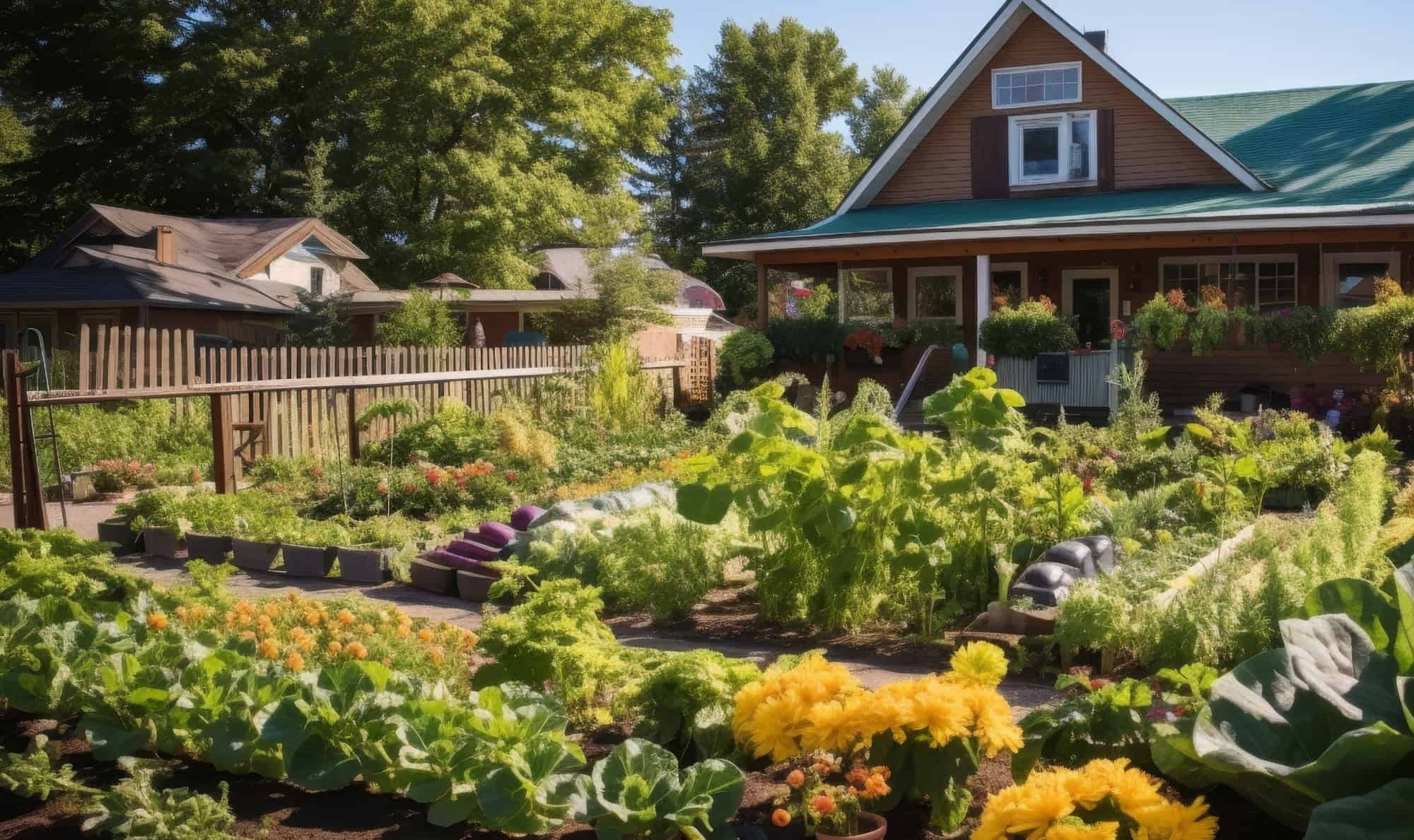
Ready to Go Shopping?
Know your yard’s microclimates before you head to the plant sale

Kari Ranten
Perhaps nothing thrills a home gardener more than the abundance of plants available for sale in spring. A walk through a nursery lures the gardener to marvel at beautiful perennial blooms; to desire the look, texture, and color of a tree or shrub; or to seek out the amazing native plants that call the Pacific Northwest home.
With so many beautiful choices, it’s easy to quickly fill a wagon with one (or three) of everything that looks beautiful in the moment. Before making those impulse buys, take some time to think about what will thrive in your landscape. A little homework will improve the success rate for your new plants. Research your local microclimates and keep the unique details of your yard in mind to make careful selections of the right plants for the right places – a standard master gardener mantra.
Home gardeners in northwest Washington share the Zone 8b assignment on the U.S. Department of Agriculture’s (USDA) Plant Hardiness Zone map. Type in your zip code in the map tool to learn more. This resource provides an excellent overview of plants' overall frost tolerance and offers a broad overview of the area's climate.
Gardeners should pair this up with localized information and knowledge of their own property.
Sunset’s Western Garden Book defines a microclimate as “a small area (such as a backyard or even a portion of it) with a slightly different climate than that of its larger surroundings. . . Plants that might not survive in a specific climate zone may grow well in the right microclimate.”
Individual yards likely have one or more unique microclimates that the home gardener should learn about and understand. Microclimates include areas of shade, sun, wind, moisture, soil, and topographic features such as elevation. In northwest Washington, proximity to rivers, lakes, and the Puget Sound also plays a role. In addition, structures, pavement, and fences can create varying conditions.
Armed with this information, gardeners can review plant qualities online or at the library ahead of time, take a list of desired plants or qualities along for the shopping trip, and make smart purchases. Once at the nursery or plant sale, shoppers will benefit from a close evaluation of plant tags (with hardiness zone compatibility and other notes for proper planting conditions) and the option to talk to the experts.
Start by doing your research
Evaluate your yard by drawing a simple map and taking notes. Observe the direction each area faces, note any low-lying areas or slopes, and learn more about the soil quality. Pay attention to the location of structures or hard surfaces that may store heat on a sunny day, creating overnight warm spots, as well as large vegetation that may bring a sphere of shade and cooler temperatures. Perform timed checks every few hours (say 9 a.m., noon, and again at 3 p.m.) during the day to monitor sun and shade patterns. Be aware of elevation and rainfall.

32nd Annual Plant Fair Set for
Saturday, May 9 ~ 8 am - 2 pm
at the Skagit County Fairgrounds
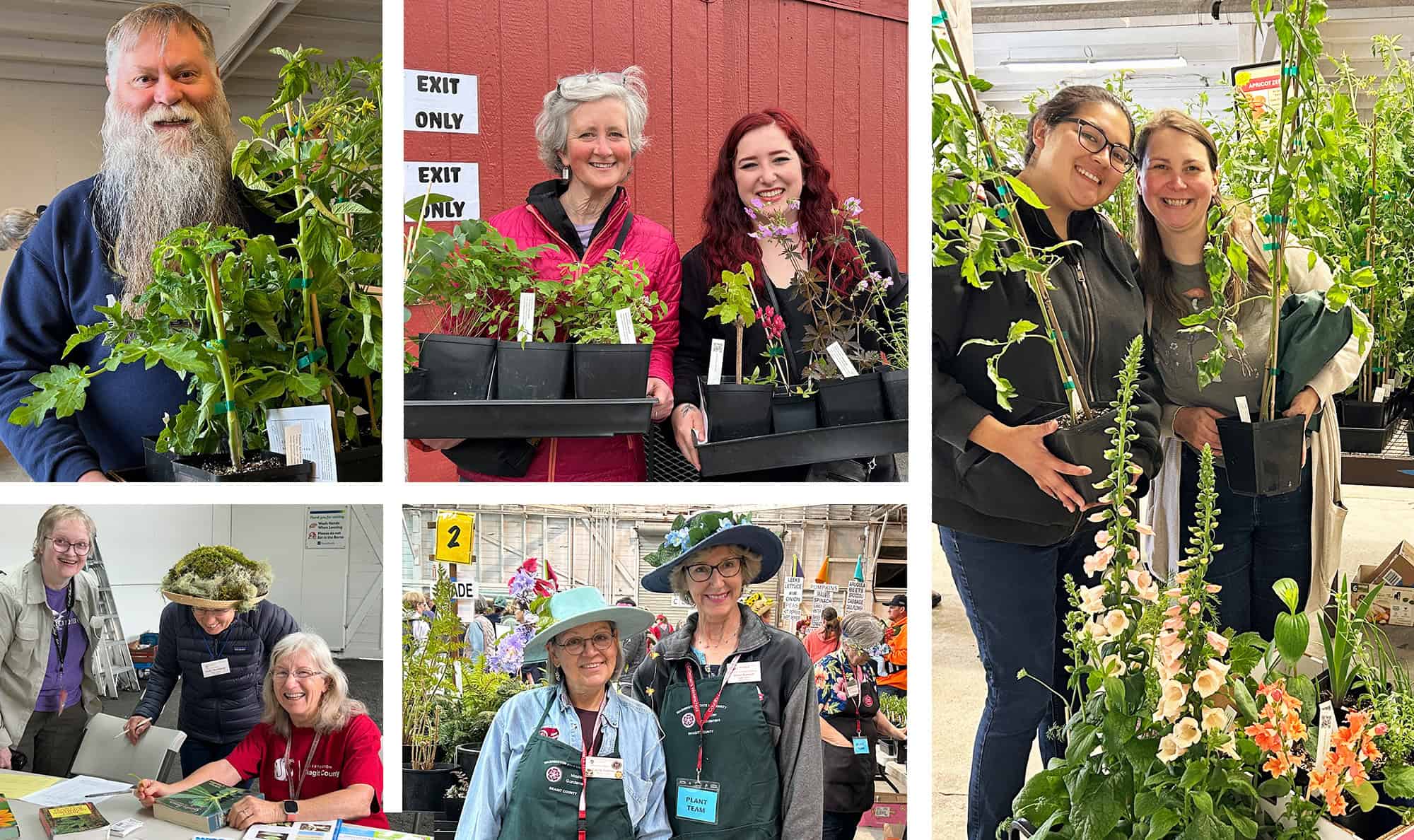
Kick off your spring plant-buying season at the Skagit County Master Gardener Foundation Plant Fair set for 8 a.m. to 2 p.m. on Saturday, May 9, 2026, at the Skagit County Fairgrounds in Mount Vernon. The event will feature more than 10,000 plants grown or tended by Skagit County WSU Extension Master Gardeners for success in northwest Washington. More than 50 varieties of tomatoes and thousands of annuals, vegetables, herbs, perennials, trees, shrubs, berries, and more will be available. In addition, dozens of vendors will be on site with many offering plants and garden-related items. Admission and parking are free. Read the full press release>
Customers can plan ahead and prepare a shopping list by reviewing lists of plants that master gardeners will offer:
- List of tomato varieties>
- Lists of greenhouse-grown annuals, flowers, and herbs and Perennial Plant House propagated and grown perennials, trees, berries, figs and grapes>
The Skagit County WSU Extension Master Gardener Program helps our communities with their gardening needs by providing science-based education, answering plant questions, and helping with plant problems. Proceeds from the annual Plant Fair benefit the nonprofit Skagit County Master Gardener Foundation, which supports the Skagit County Master Gardener Program.
Soil tests from several locations in the yard will help you understand what your soil may need to support healthy plants.
Washington State University’s Ag Weather Net provides regional climate information from several locations in Skagit and surrounding counties about wind, temperature, and precipitation information. A home garden weather station can help gather and archive data at your specific location.
The University of California Agriculture and Natural Resources Marin County Master Gardeners provides a detailed spreadsheet to help assess microclimates and the factors to consider when planning a garden or landscape.
Another research opportunity is to observe thriving landscapes or yards in your neighborhood or community, and to visit botanical gardens in the region to see and learn about plants that thrive in the northwest environment. The 30-plus garden “rooms” of the Skagit County WSU Extension Master Gardener Discovery Garden on Memorial Highway west of Mount Vernon offer many ideas and inspiration for gardens with themes ranging from naturescape and shade to dryscape or succulents. The Discovery Garden is open daily from dawn until dusk.
Say you have a one-third-acre lot with a single-level home in central Skagit County:
Watch the frost and snow patterns. It’s not uncommon for the north side of the house to harbor frost eight to 10 feet north of the structure for hours after the white frosty layer has melted from the rest of the yard. Snow can remain in place for days in that swath. Plants in that area must be cold and moisture-tolerant. That’s a microclimate. Well-established plants such as a June-blooming rhododendron or a David viburnum (Viburnum davidii) can continue to thrive. Adding shade-loving ferns like Asian saber fern (Polystichum neolobatum), western sword fern (Polystichum munitum), or dragon tail fern (Asplenium ebenoides) along with a couple of perennials like bleeding heart (Dicentra spectabilis) and Solomon’s seal (Polygonatum) add texture and interest in the spring and appear year over year.

Pruning Shrubs for the Home Gardener
May Know & Grow
Free. No registration required.
Presentor: Anne Kurt, Skagit County WSU Extension Master Gardener and Certified Master Pruner
Tuesday, May 19, 2026 ~ 1 p.m.
Sakuma Auditorium
16650 SR 536, Mount Vernon, WA 98273
Come learn some simple seasonal pruning tips to encourage the health and appearance of your garden shrubs. Learn to identify growth habit and determine the right time to prune and how. You will gain confidence and your garden will thrive.
Photo © Skagit County Master Gardener Foundation
The south side of the house can be quite a different microclimate. A large, south-facing patio and the house's siding would make a true hot spot, even on warm spring days, much less on a 90-degree summer afternoon. A few plants in hanging baskets could thrive through the summer without an irrigation system. A raised bed or large pots tucked next to a south-facing wall or fence provide warmth and light reflection that tomatoes love, yielding lots of delicious fruit, steps away from the kitchen.
With careful plant selection and regular (sometimes twice daily) watering, larger pots filled with annuals and perennials can produce a beautiful abundance of color for the season. Plants with bright red and orange flowers, such as firecracker plant (Cuphea hybrid), Mexican lobelia (Lobelia laxiflora), and lantana (Verbenaceae) attract a number of pollinators including hummingbirds.


Make good plant selections. Create a list of plants that suit the landscape's microclimates. This includes trees, shrubs, perennials, and annuals. Photos © Adobe Stock
Based on research and data gathered for your yard, you have options:
- Make changes to manage a microclimate:
- Consider adding organic matter to improve soil moisture capacity or install an irrigation system for dry areas.
- Use raised beds for plants that need drainage and warmer soil temperature.
- Look into drains for slopes to allow water to flow in wet areas.
- Move and group plants that appreciate similar conditions.
- Protect more fragile plants with a shelter of tall plantings or a fence.
- Make good plant selections. Create a list of plants that suit the landscape's microclimates. This includes trees, shrubs, perennials, and annuals. Gardeners have access to a variety of resources for plant lists, including:
- Sunset’s Western Garden Book offers 30 lengthy lists with photos and plant details based on climate qualities, including sun, shade, dry areas, moisture lovers, and wind resistance.
- Great Plant Picks, the educational program of the Elisabeth C. Miller Botanical Garden in Seattle, offers many lists to support plant selections for gardeners living west of the Cascade Mountains from Eugene, Oregon, to Vancouver, British Columbia, Canada. Lists focus on drought tolerance, sun and shade, containers, and more.
- The Washington State Noxious Weed Control Board offers a printable list of noxious weeds.
- The Washington Native Plant Society provides information on invasive non-native plants that compete with native plants, plus lists on the plethora of Washington native plants that are special to Washington.
Armed with details about your landscape, soil, light, and weather, along with a list of plants that are of interest, head out to the nursery or local plant sale with a disciplined plan to start with. Ask questions. Look at lots of plants. Make a measured selection of choices. Take those home, size up your status and, if needed, make another trip — oh, joy! The fun can stretch over a period of growing years as you watch and enjoy the maturation of your well-planned garden spaces tailored to your unique microclimates.
References and Resources
City of Seattle Public Utilities. (2010) Natural Lawn & Garden Series: Choosing the Right Plants for a Beautiful, Trouble-Free Garden.
Elisabeth C. Miller Botanical Garden. (2026) Great Plant Picks.
McMoran, D, Huter, S. and Buller, S. (2015) How to Determine your Garden Microclimate. Washington State University Extension Bulletin FS181E.
Sunset Western Garden Book (2007) Sunset Publishing Corporation. Menlo Park, CA. 94025
University of California Agriculture and Natural Resources Marin County Master Gardeners. (2026) Garden Site Microclimate Evaluation Form.
U.S. Department of Agriculture’s (USDA) Plant Hardiness Zone Map. (2026) https://planthardiness.ars.usda.gov/
ABOUT THE AUTHOR: Kari Ranten is a retired journalist and health care communicator who became a certified Skagit County WSU Extension Master Gardener in 2024.
Questions about home gardening or becoming a master gardener may be directed to Skagit County WSU Extension Office, 11768 Westar Lane, Suite A, Burlington, WA 98233; by phone: 360-428-4270; or via the Skagit County WSU Extension website.
Washington State University Extension helps people develop leadership skills and use research-based knowledge to improve economic status and quality of life. Cooperating agencies: Washington State University, US Department of Agriculture, and Skagit County. Extension programs and policies are available to all without discrimination. To request disability accommodations contact us at least ten days in advance.
Thanks Kari. Just in time for our Plant Fair sale!