

The Vital Role of Trees in Our Ecosystem and Well-Being
By Kathy Wolfe, Skagit County WSU Extension Master Gardener

Kathy Wolfe
Imagine for a moment that you are in a woodland. Every shade of green, from the deepest emerald to the lightest celadon, is represented in the surrounding landscape. The air is filled with scents from tree oils and the earth: cedary bark, musty decaying wood, leafy freshness. Overhead boughs scratch and moan as the wind blows through the canopy. A squirrel scampers across the forest floor, and birds sing overhead. Your step slows. Your breath softens. This is the feeling the Japanese describe as “forest bathing.” Being in the company of trees is said to reduce stress, boost the immune system, and improve your overall feeling of well-being. This is but one benefit of having trees in our lives.
Humans have revered trees in religions and cultures throughout time. European Druids worshiped oak trees, believing them to be a connection between the earth and spiritual worlds. The Native American cultures often viewed trees as sacred and integral in their spiritual and cultural lives and as sentient community members that lived among them. African Baobabs are known as the “Tree of Life” and symbolize resilience and humility. Many Asian cultures have sacred trees, including the Bodhi tree, where Buddha is said to have achieved enlightenment, the Kalpavriksha in Hindu culture, which is believed to grant wishes, and the shinboku, which are often planted near shrines in Japan.


Science has proven the functional benefits of trees as well.
Here are some examples:
Removing pollutants from the atmosphere.
Tree leaves filter dangerous particulate matter that comes from burning fossil fuels by intercepting the particles on plant surfaces. Gaseous pollutants are absorbed through the leaf stomata, which are tiny pores on leaf surfaces. Gases like ozone, carbon monoxide, nitrogen dioxide, and sulfur dioxide can be diffused into the intercellular spaces within the leaf. Some can also be metabolized or broken down by plant enzymes.
Mitigating climate change by storing carbon.
Trees absorb carbon dioxide from the air through photosynthesis and store it in their wood during the lifetime of the tree, helping slow gas build up in our atmosphere. Using sunlight, trees convert carbon dioxide and water into sugars for energy and release oxygen as a byproduct. Older, larger trees store more carbon than young trees, making it important to conserve and protect old-growth forests as well as plant new trees.
Managing stormwater runoff and erosion.
Flash flooding can cause immeasurable damage to the earth. Trees can reduce storm runoff and capture it in underground water-holding aquifers, which, in turn, counter droughts. The water seeps through the trees’ natural filters over time, so the water supply is steadier and the rivers do not carry away the rainwater. Tree roots bind the soil to the earth and decrease the speed and intensity of the runoff. Leaves break the force of the wind and rain beating down from above. Trees filter sewage and farm chemicals, animal waste, and roadside spills, making it easier and cheaper to treat water before it enters your tap.

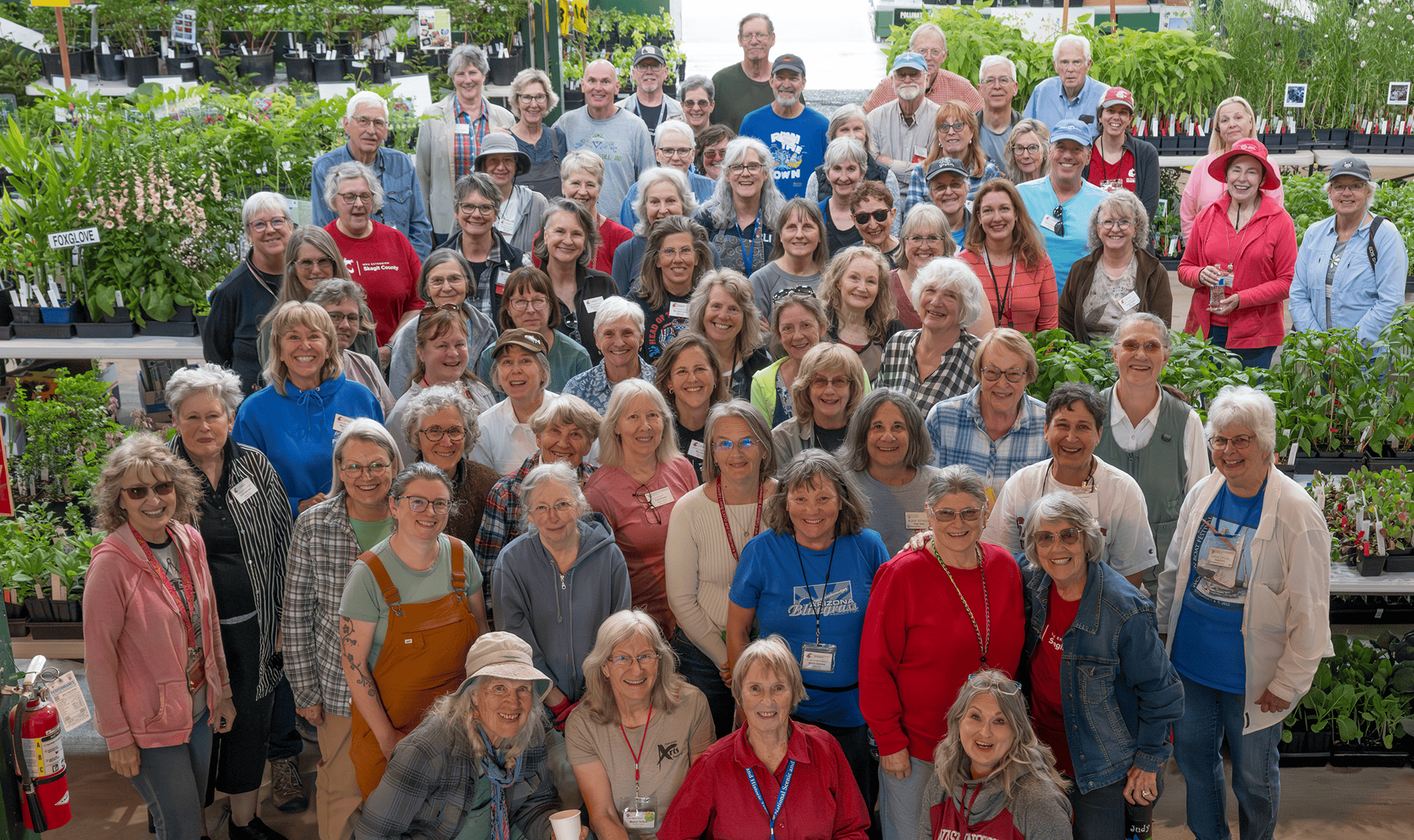
Interested in Becoming a Master Gardener?
Application Deadline: Friday, August 15, 2025
Check out the new program for master gardener learning through WSU’s Washington Green School. You’ll join a community of gardeners dedicated to protecting Washington’s environment and learn skills to garden responsibly in our changing climate. Learn practical techniques, connect with experts, and discover how your actions contribute to a healthier future for all.
For more information, go to Washington Green School.
Apply to the Skagit County WSU Extension Master Gardener Program.
Reducing wind damage and saving energy.
Trees located on the windward side of a property reduce the drying effects on the soil and vegetation in the summer or during a drought. In winter, these windbreaks can reduce snow drifts and even lower heating bills in the depths of a cold, stormy spell.
Providing habitat for a diversity of life.
Trees are used for food, shelter, and reproduction sites for various species. Many animals also nest and rest in their branches, hunt and capture prey from their hidden perches, and provide them with shade and shelter from the weather. Once a tree matures, its fruits become a food source. And when they are dead and dying, these snags are used by birds and insects for nesting hollows and foraging stations. Decaying trees become softer as they age, as fungi, bacteria, and wood-boring insects eat and break down the wood. The softwood tissue offers an ideal place for many young trees to begin their initial growth and development. The deadwood from these nurse logs also serves as ground cover that reduces soil erosion and prevents larger animals like deer from over-browsing plant seedlings.
Shade and noise control.
Tree shade acts like a natural air conditioner that can keep down energy costs as well as making us more comfortable. Trees are planted to muffle urban noise from freeways and airports, and are almost as effective as concrete walls for this purpose. And much more pleasant to look at!
These are but a few examples of the majesty of trees in our environment. If you think that humans could live without them, think again. Now go out and give your favorite tree a big hug!

Know & Grow: Dahlias
Free, no registration required
Tuesday, August 19, 2025
1 pm - 2:30 pm
Sakuma Auditorium at NWREC
16650 State Highway 536, Mount Vernon

Visit the Skagit County Master Gardener Booth at the Fair
Exhibits Building "D"
Thurs. - Sun., Aug. 7 - 10, 2025
- Mystery Boxes where kids of all ages can explore nature by touch
- Plants for firewise gardening
- Learn about building healthy soils for healthy plants

REFERENCES AND RESOURCES:
Bradford, N. (2016) The Many Benefits of Trees. National Environmental Education Foundation (NEEF)
6 Ways Trees Benefit All of Us. (2020) The Nature Conservancy.
How Trees Make a Difference. National Wildlife Federation.
9 Reasons to Plant a Tree. (2018) Arbor Day Foundation.
Nix, S. (Rev. 2021) Reasons Living Trees are Valuable, Treehugger.
ABOUT THE AUTHOR:
Kathy Wolfe has been a Skagit County WSU Extension Master Gardener since 2002. She is co-manager of the vegetable garden at the Discovery Garden on SR 536 west of Mount Vernon.
Questions about home gardening or becoming a master gardener may be directed to Skagit County WSU Extension Office, 11768 Westar Lane, Suite A, Burlington, WA 98233; by phone: 360-428-4270; or via the website
Washington State University Extension helps people develop leadership skills and use research-based knowledge to improve economic status and quality of life. Cooperating agencies: Washington State University, US Department of Agriculture, and Skagit County. Extension programs and policies are available to all without discrimination. To request disability accommodations contact us at least ten days in advance.
Wonderful reminder Kathy! Thank you so much for reminding us all of how valuable nature is to us.