

Dreaming and decision-making for a greenhouse
Questions and options to consider if a greenhouse is right for you
By Kari Ranten, Skagit County WSU Extension Master Gardener

Kari Ranten
The short days of the coming winter have gardeners missing the abundant growth, harvest, and busy days of the summer just past. Many are already dreaming about the potential of the upcoming growing season.
At this time of year, characterized by shortened days and gray skies in the Northwest, the opportunities for spring seem endless: What to grow? What seeds to buy? What were the favorites from seasons past that could be wintered over? Is there something new to try? More vegetables? More flowers? Something tropical?
With all of this potential, it makes sense that many gardeners’ thoughts turn to ways to fill the gardening void of winter. The likely answer may be to add a greenhouse to extend the growing season or make gardening a more year-round enterprise.
“When people make something by hand – with their own hands – it takes on a different level of value. So, it is with the food and flowers that we grow with our own hands. Having a greenhouse enables you to enjoy this therapy on a daily basis in any season,” writes Shane Smith, author of Greenhouse Gardener’s Companion, Growing Food & Flowers in Your Greenhouse or Sunspace (2000). Smith’s book is considered by many to be a must-have for those who desire or use a greenhouse. The Chicago Review Press notes Smith’s book is “The most comprehensive book on greenhouse gardening available today.”
The extension of the joy of gardening throughout the year is certainly a big draw. However, adding a “hobby” greenhouse requires considerable planning, decision-making, and resources. Winter may be just the season to spend time researching the idea of a greenhouse and to learn more about a potential project for the coming year. It takes some time to evaluate the right option for your specific goals, location, and budget, as well as address the myriad of questions that will come up. This column will pose some of the key questions you will want to ponder before moving forward with a greenhouse or other structure, such as a lean-to, cold frame, or tunnels. (Beddes, et al. 2022)
The most fundamental questions to start with are: What do you want to grow? How do you plan to use a greenhouse? Answers to these questions will help you get started as you dig into the details of location, space, materials, size, power, and lighting needs for a growing space.
A greenhouse can be used in a variety of ways. Before making a decision, know that each option presents a decision-making path to get to the ultimate plan for a structure that is right for you.
Here are a few considerations:
Want to start seeds? The first use that naturally comes to mind when thinking about adding a greenhouse is its use as a venue to get a head start on seeding flowers and vegetables, including tomatoes, squash, beans, and others, in early spring. Here, you will need to consider whether you want a heated or unheated space, based on the plants you plan to start.
“Because seeds like warm temperatures to germinate (often in the 65 to 75°F range), you will have to provide heat and light to help get your seeds to germinate. This can be done with LED grow lights and a heat mat, but that also means that you will need electricity in your greenhouse.” (Marshall, 2022).


Extending the season? A greenhouse can also be used as a season extender beyond summer, with fall planting of vegetables such as lettuce, spinach, and other greens, for harvest and enjoyment throughout the winter months. Heat and light requirements will also apply in this case. (Beddes, et al. 2022).
Protecting fragile plants? Suppose you want a protected place for delicate plants to spend the winter out of the cold, including cuttings of favorite perennials such as fuchsias, clematis, or herbs. In that case, a greenhouse can be a handy solution. Additional candidates may include geraniums and other annuals you want to hold over for another season. Some may not require a greenhouse; instead, they may need a garage or basement (Howard, 2025).

Tropical plants require a different environment than growing vegetables. Knowing which types of plants you want to grow helps you make decisions. Photo:© Adobe Stock
Tropical ideas? A greenhouse can be a year-round place for plants that may need a slightly warmer environment than our Zone 8b provides (https://planthardiness.ars.usda.gov/), such as citrus trees and orchids. “For example, it is said that George Washington grew lemon, limes, pineapples, and other tropical fruit in a greenhouse in 1787 at Mount Vernon. Glasshouses, as they were originally called, became the rage in England and later in America. They eventually came to be called greenhouses because the plants inside stayed green all winter long.” (Marshall, 2022)
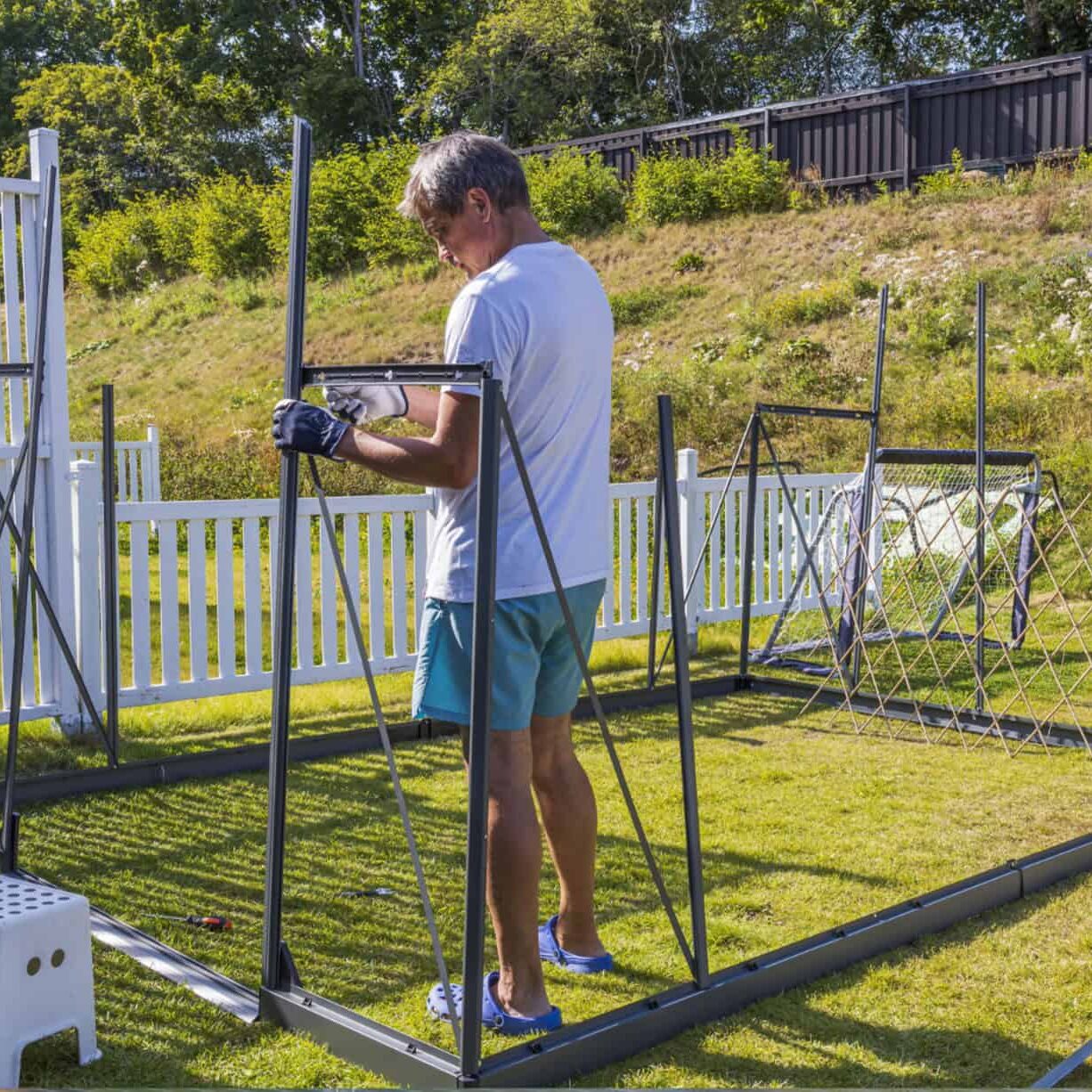
Free-standing or lean-to? Designs and materials? Take advantage of resources on design options and materials to build with, including fiberglass, plastic, polycarbonate, and glass. Floor materials can also vary, including a slab, pavers, or gravel. Many do-it-yourself kits are available on the market, offering a wide range of sizes and amenity options. Design plans are also available online, offering options for building with recycled materials, including windows, doors, shelving, and other reusable building supplies.
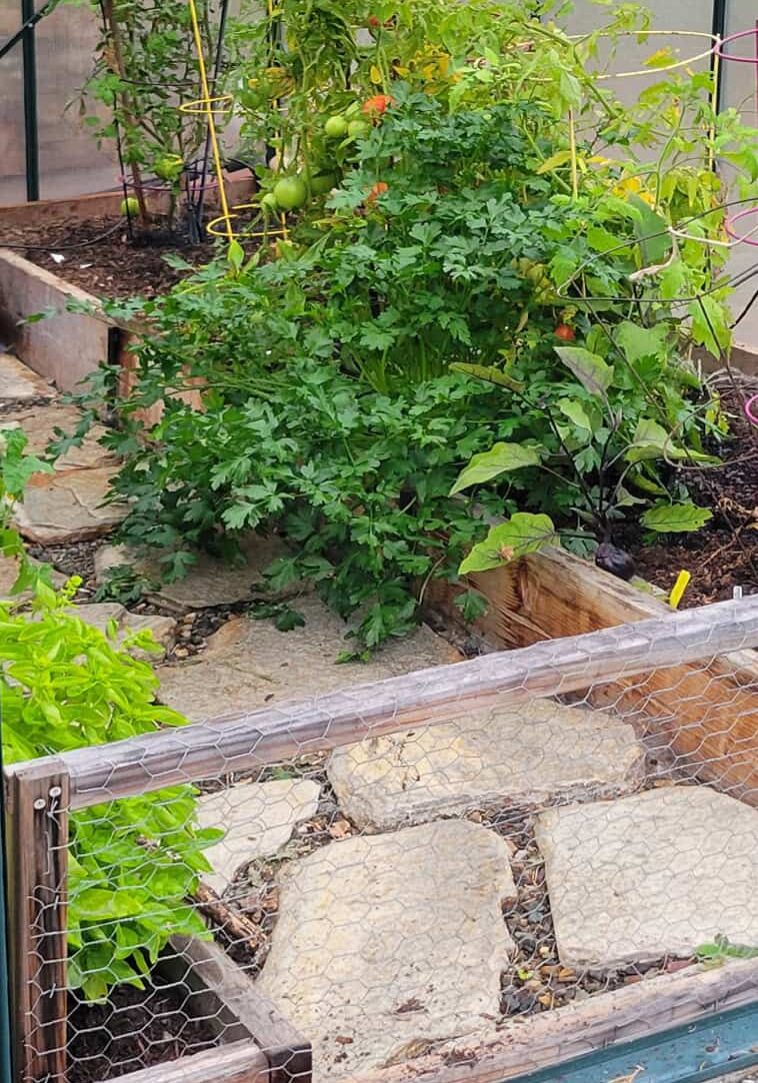
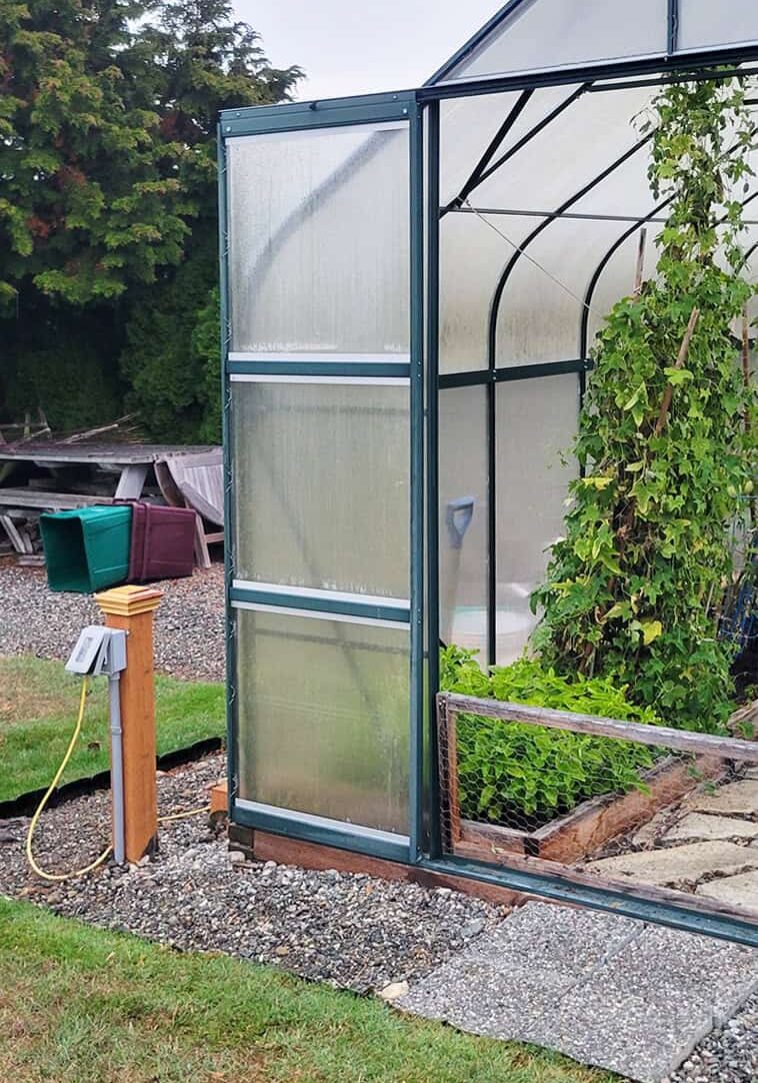
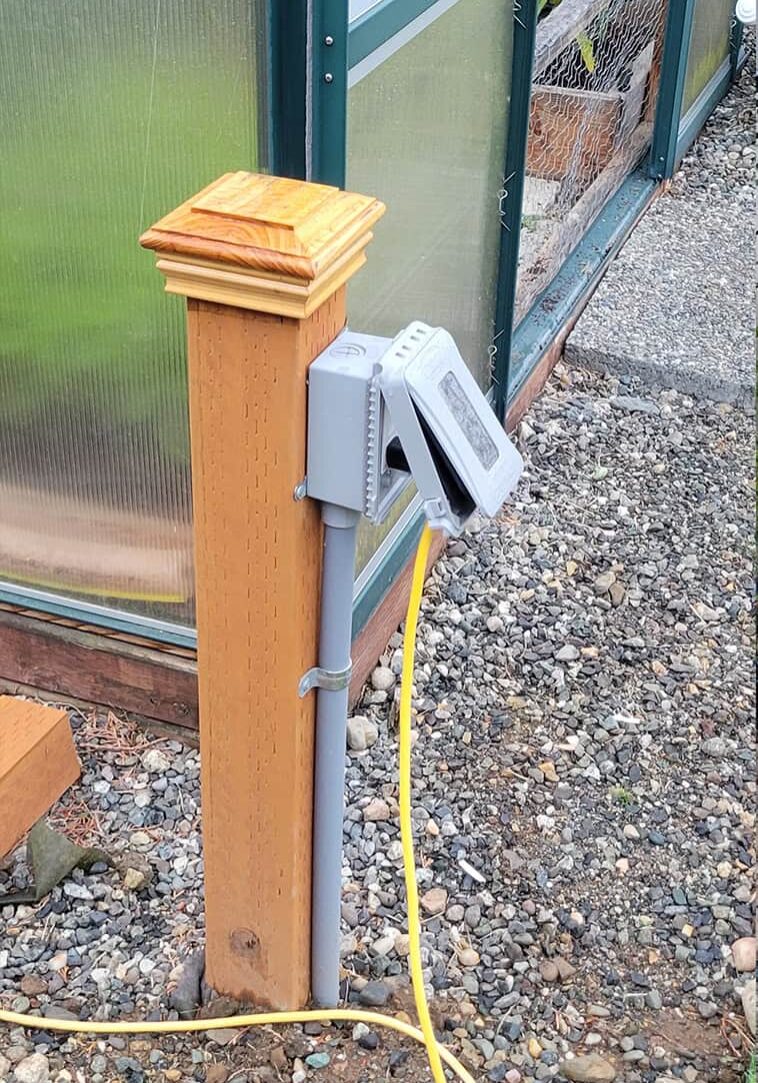
Power? Heat? Lights? Ventilation? Research the climate and weather patterns where you live and match them with the desired use for the space to determine if you need access to power for heating, lighting, fans, or ventilation. An extension cord from the house may be enough. Otherwise, running power to the facility may be the right choice. Options can include space heaters, heat mats, and grow lights, which can be set to timers and scaled as needed. Technology also enables in-home, real-time monitoring linked to your cell phone, allowing you to view 24/7 conditions in the greenhouse, including humidity and temperature. Thermally activated automatic vents can also be installed and adjusted for temperature control. A drip watering system on a timer is also an option, or you can rely on rain barrels and watering cans.
Where will you put the greenhouse? How big should it be? A greenhouse requires a level area (or space that can be leveled) and meets the size and light needs. Many greenhouse owners caution gardeners to be honest about the space they need, based on their goals for use, to avoid an undersized project. Also, consider whether storage for gardening items, as well as plants, is needed.
What is the correct exposure? Ideally, the space will afford a south or southwest exposure to meet the daily sunlight needs of a greenhouse, which acts as a collector of solar heat. (Smith, 2000).
What about shelving or spaces to hang baskets? Plants, including seed starts and succulents, require more shelf space compared to plants in large pots. Pay attention to the materials used in greenhouse construction or the kit to make sure additional shelving or a bar for hanging plants is included or can be easily added. Gardeners recommend allowing for maximum flexibility to move plants, lights, and heat mats around as needed, while avoiding overcrowding.
Have a budget based on your decisions: With all these considerations in mind, they must match up with the project budget. “Before spending time and money, it is best to define your crop production goals, budget, and local climate challenges.” (Beddes, et al. 2022).
It takes work! Remember, once in place, the greenhouse requires ongoing maintenance, cleaning, watching for evidence of pests (like aphids, scale, etc.), disease (fungal and bacterial) and over- or under-watering (like edema or damping off), as well as regular time and attention – even with timers and automation.
For now, enjoy the dreaming and promise of spring.
Resources for more information:
Extending the Garden Season from Utah State University Yard and Garden Extension.
The Hobby Greenhouse by Oklahoma Cooperative Extension Service.
References:
Beddes, T., Caron, M., Hansen, S., and Gunnell, J. (2022) Extending the Garden Season. Utah State University Yard and Garden Extension.
Chicago Review Press. (2025)The Greenhouse Gardener's Companion
Howard, D. (2025). How to Overwinter Plants: Protect Geraniums, Roses, Herbs & Tropicals From Frost. The Old Farmer’s Almanac.
Marshall, R. (2022) A Greenhouse for Everyone. Massachusetts Horticultural Society.
Schnelle, M., Dobbs, S., Needham, D., and Dole J. (2017) The Hobby Greenhouse. Oklahoma State University Extension Fact Sheet HLA-6705.
Smith, S. (2000) Greenhouse Gardener’s Companion: Growing Food & Flowers in Your Greenhouse or Sunspace. Fulcrum Publishing. Golden, CO.
ABOUT THE AUTHOR:
Kari Ranten is a retired journalist and health care communicator who became a certified Skagit County WSU Extension Master Gardener in 2024.
Questions about home gardening or becoming a master gardener may be directed to Skagit County WSU Extension Office, 11768 Westar Lane, Suite A, Burlington, WA 98233; by phone: 360-428-4270; or via the Skagit County WSU Extension website.
Washington State University Extension helps people develop leadership skills and use research-based knowledge to improve economic status and quality of life. Cooperating agencies: Washington State University, US Department of Agriculture, and Skagit County. Extension programs and policies are available to all without discrimination. To request disability accommodations contact us at least ten days in advance.
Thanks Kari. Winter dreams!
I love my greenhouse and think every gardener should have one!
Kari, Nice article with lots of good information.
Am in the market so this article was opportune. Excellent considerations as I go forward. Thank you.
Kari, I’ve ordered Smith’s book, so will be planning my GH this winter, thanks to you!