
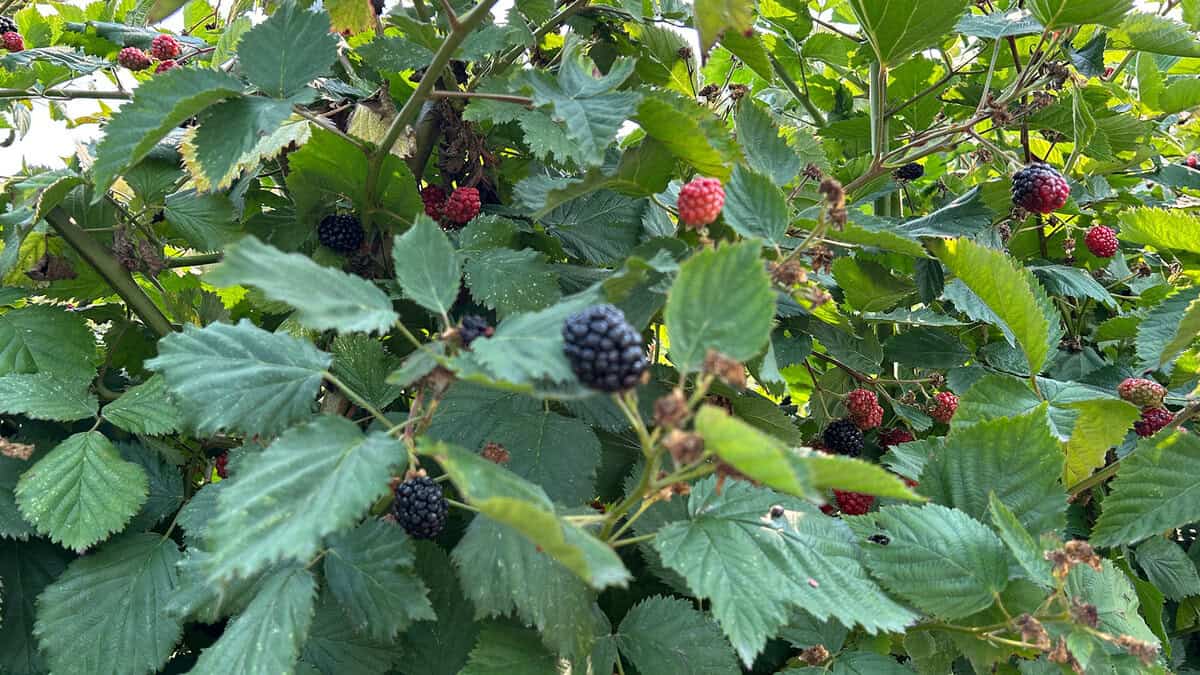
Caneberries Need Fall and Winter Care
.
By Kari Ranten, WSU Extension Skagit County Master Gardener
Caneberries, including raspberries and blackberries, benefit from a fall and winter regimen of pruning and support to prepare the plants for winter dormancy followed by spring growth and summertime fruit.
Simply put, Oregon Agriculture in the Classroom says, “Caneberries are berries that grow on hard, woody stems that are called canes.” When left to their own devices, these hardy, willing growers can become a tangled bramble. However, when home gardeners provide the canes with seasonal discipline and support, caneberries will thrive and produce for 10 years or more.
Raspberries and blackberries have a big commercial footprint in western Washington and Oregon, where the plants thrive in the temperate climate. Washington grows about 95 percent of the nation’s processed red raspberries annually, with the majority becoming frozen products. Oregon produced nearly 50 million pounds of blackberries, raspberries, boysenberries, and marionberries in 2020.
Government agriculture programs and research in Washington, Oregon, and in British Columbia have supported breeding programs to develop new varieties of raspberries and blackberries, plus cross-breeding of the two to develop loganberries, marionberries, and boysenberries. Washington State University (WSU) scientists have released 13 raspberry varieties, including the prolific “Meeker” variety and others including “Cascade Legacy,” “Cascade Premiere,” and “Cascade Gold.” New varieties feature high yields and disease resistance.
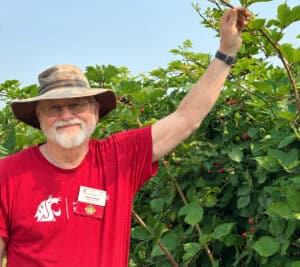
Tom Peebles, coordinator of the Small Fruits Garden. © Skagit County Master Gardeners
The WSU Extension Skagit County Master Gardener Discovery Garden in Mount Vernon has a modest garden dedicated to small fruits including caneberries, serving as a demonstration site for home gardeners. Master Gardener Tom Peebles oversees maintenance of plants in the Small Fruits Garden, including blackberries, raspberries, and boysenberries. Overall, Peebles said caneberries are not highly demanding and will reward gardeners because they “love to grow.” The Discovery Garden site features “Triple Crown” thornless blackberries, “Heritage,” “Tulameen,” and “Cascade Delight” raspberries (a variety developed by WSU). Before buying plants, Peebles recommends paying attention to the specific care and pruning needs of different caneberry varieties. “These are not high maintenance, and it is very doable for home gardeners,” he said.
The Discovery Garden, with more than 30 garden “rooms,” is located at 16602 State Route 536 (Memorial Highway) in Mount Vernon. The garden is open daily to the public from dawn until dusk.
.
As so often is the case, when a crop is successful for commercial growers in a region, that’s a harbinger for good results for home gardeners too. Such is the case for caneberries. Home growers simply need to mark their calendars for seasonal tasks to keep the plants in check while also fostering practices to produce an abundance of luscious, sweet fruit that can be enjoyed freshly picked or added to recipes both sweet and savory.
Before offering specifics for fall and winter maintenance, it’s important to have a few basics about caneberries and important terminology.
 The PNW Handbook defines the difference between a cultivar and a variety:
A cultivated variety is commonly called a cultivar. A variation of a species which originated in cultivation and persists under cultivation. A wild variation may also be found that only persists under cultivation. Perennial plant cultivars are normally perpetuated by asexual propagation; that is, cuttings, grafting, layering, or tissue culture, among other methods.
Variety (botanical) A fairly consistent natural variation of the species, which will more or less breed true.
When planning to add caneberries to the garden, buy dormant bare-root plants or container nursery stock certified and virus-free from a reputable nursery between mid-January and March in western Washington.
For planting, caneberries flourish in full sun and well-drained sandy loam soil 18 to 24 inches deep. To avoid Fusarium wilt, do not plant in soil recently used to grow strawberries, potatoes, tomatoes, peppers, or eggplant. Also, plant at least 300 feet away from wild caneberries to avoid pest and disease problems.
The best time to plant bare-root canes is November through March. You may plant one-year-old transplants in spring, after the danger of frost, or in early fall, when the soil is still warm. Space plants 1 to 2 feet apart in rows 8 feet apart.
 Mark your calendar for these free
Know & Grow Workshops
_____________________________________
Prepare Your Garden for Fall and Winter
Tuesday, October 20, 2026
1:00 pm - 2:30 pm
Creating an Award-Winning Display Garden for the NW Flower and Garden Festival
Tuesday, November 10, 2026
1:00 pm - 2:30 pm
Sakuma Auditorium
16650 SR 536, Mount Vernon, WA 98273
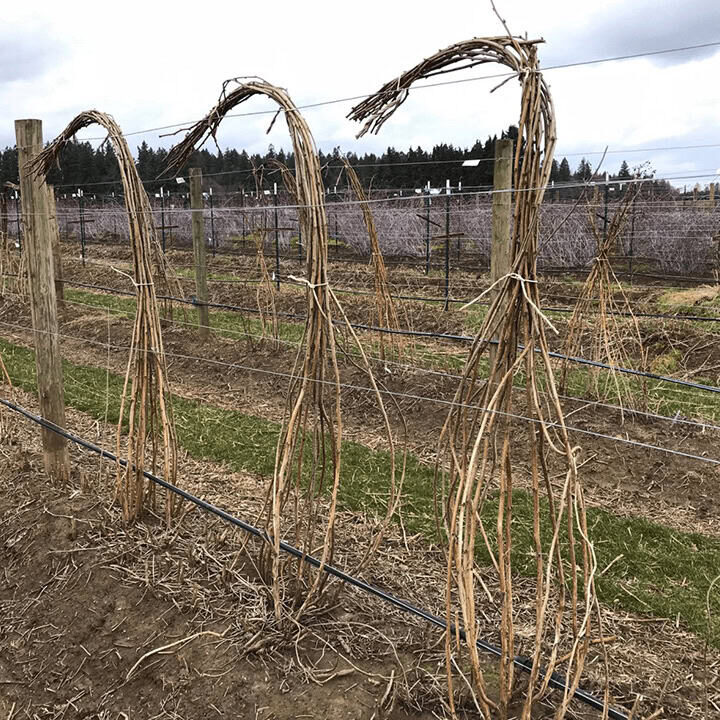
It’s wise to provide some support for these tough vines with trellising or hedgerows to organize and optimize plant growth, provide air circulation, and support plants under a heavy fruit load. Trailing varieties don’t need support but should be tied to a wire to help organize the vines.
In addition to the fall and winter pruning addressed in this article, overall care should include routine fertilization, weeding, mulching, pest management, and irrigation.
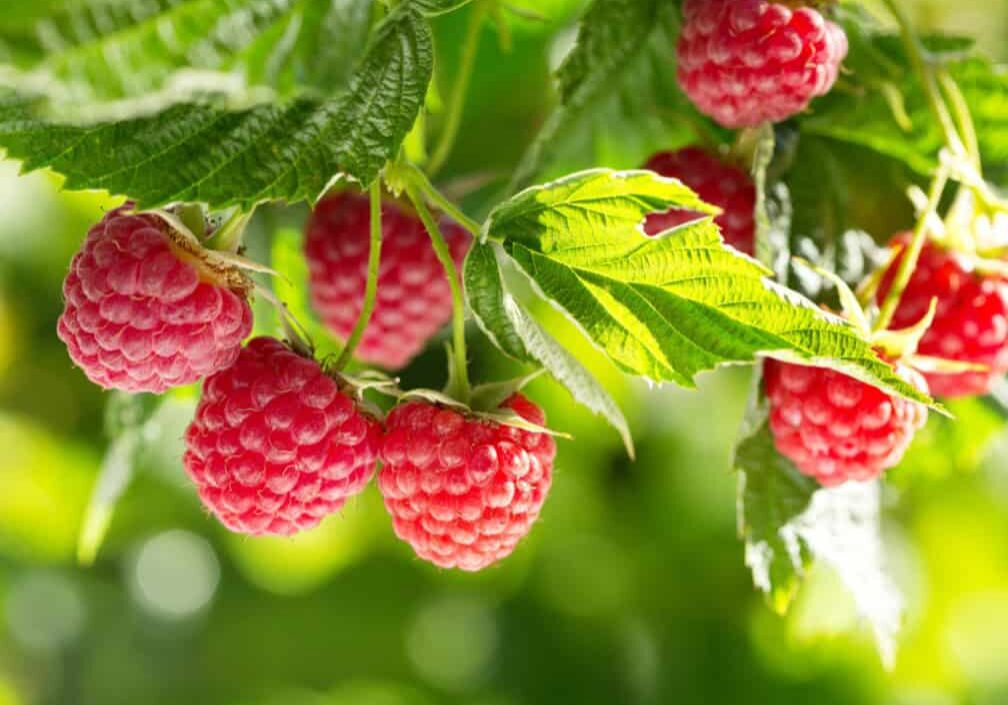
Red Raspberry (Rubus idaeus) is a perennial crop in the rose family. Raspberries can be summer-bearing or everbearing. Gardeners may choose from a wide range of cultivars, based on their preference for harvest timing and quantity. Varieties include summer- and fall-bearing (also known as everbearing). Black raspberries (Rubus occidentalis) ripen in late summer.
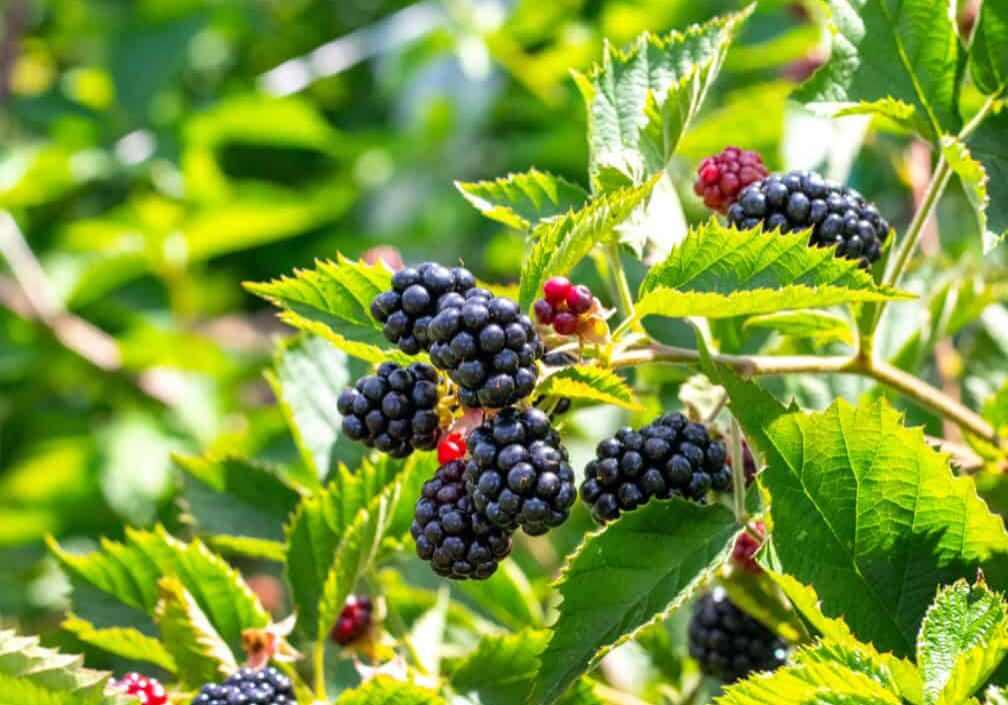
Blackberry (Rubus spp.) roots are perennial; however, most canes are biennial, meaning they develop canes in the first year, followed by blooming and fruit on the canes in the next season. Blackberry varieties include thorny and non-thorny; erect, semi-erect, and trailing; and early or late.
Caneberries have two phases of growth:
Primocanes: This is the first-year, leafy growth that develops and overwinters with fruit and flower buds. These vegetative shoots begin producing a crop for the following season. Some varieties, known as fall-bearing, will produce a crop on primocanes.
Floricanes: The flowering and fruiting canes are then known as floricanes as they finish producing fruit. After harvest, floricanes die and must be removed to prepare for the emergence of the next set of primocanes.
Washington State University Extension provides an excellent free resource publication titled “Growing Small Fruits in the Home Garden,” publication #EM103E.
Fall and Winter Maintenance:
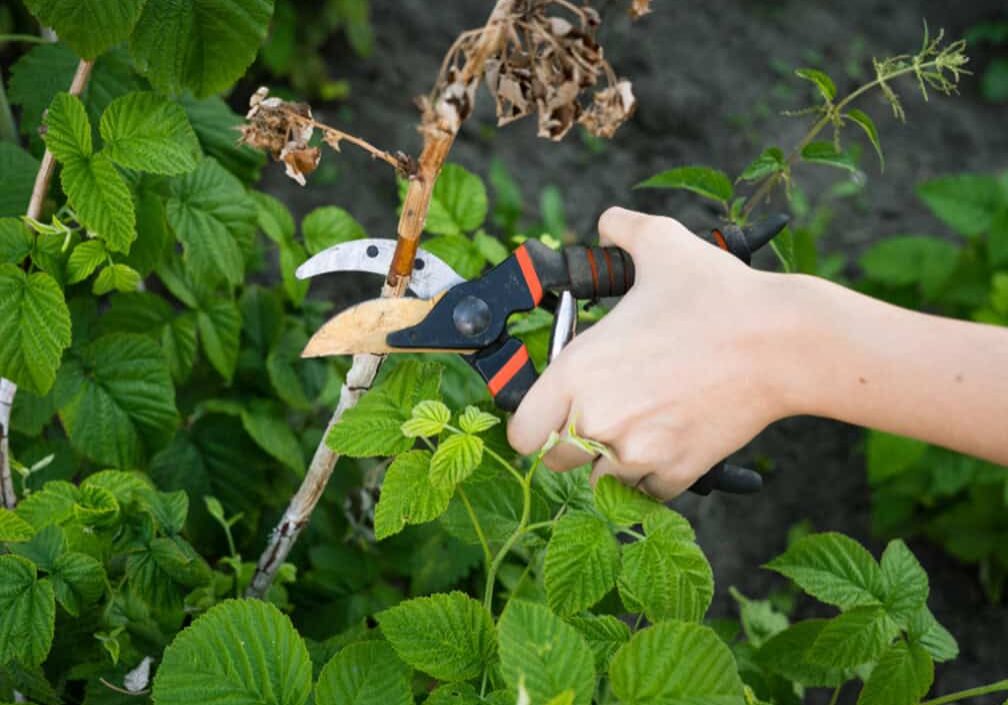
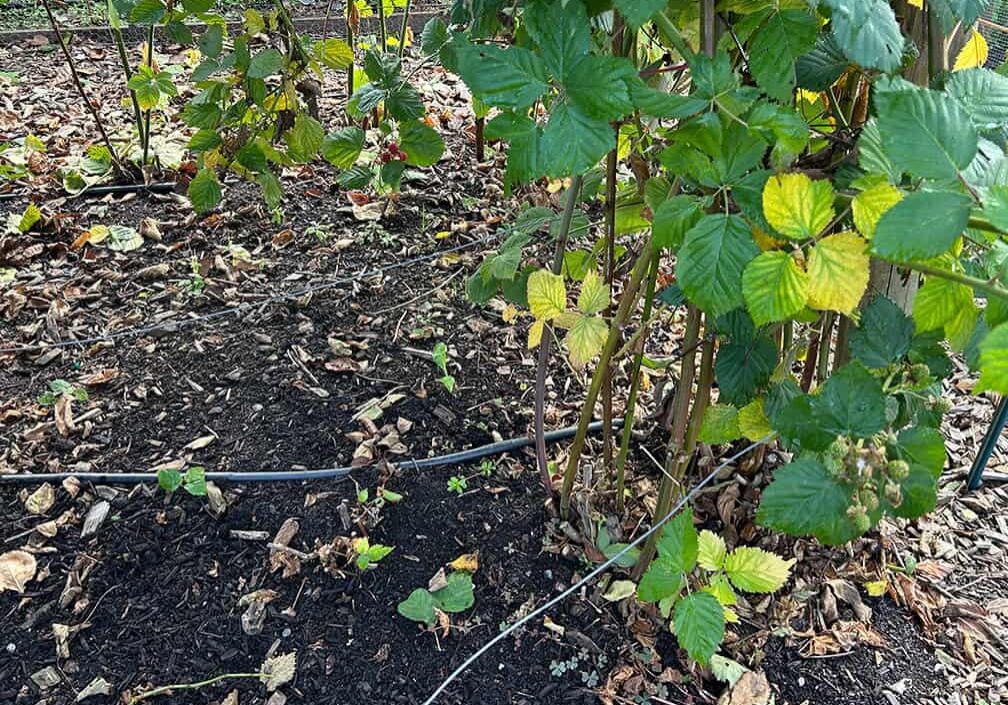
Autumn is the best time to remove dead floricanes along with those that are weak, broken, or looking ragged. To keep caneberry plantings contained, this is the time to dig or remove canes growing beyond the trellis or hedgerow.
This sets the plant up to produce new growth (primocanes) as spring comes on. Fall is the time to cut the original, fruit-bearing canes to the ground, to make way for the next set of new canes. Select the strongest five or 10 new canes. Again, for a robust fruit crop and healthy plants, pruning schedules and recommendations vary by plant type, requiring a little homework from the home gardener.
In general, summer-bearing raspberries produce about five canes the first year, following the primocane-to-floricanes phases. Everbearing varieties tend to bear fruit on the top third of the cane the first fall, followed by the lower two-thirds in the second summer of growth. Canes can be cut back after each phase of production, or gardeners may choose to cut everbearing canes to the ground in the fall after the harvest wraps up, which will result in no spring crop but will provide an extended harvest in late summer and fall.
Blackberries, as noted earlier, have perennial roots and biennial canes, making it important to properly care for, train, and prune the first- and second-year canes. Blackberries do not spread as much and can be managed as individual plants, maintaining 4 to 6 canes per crown. For all types of blackberries, prune out dead floricanes at the ground level in October or after.
For trailing or semi-erect varieties, let the canes grow without pruning the first season, then provide a trellis to support the plants in the second season. Once fruiting takes place in the second year in midsummer, cut those canes to the ground. Then, train the up-and-coming new canes to the trellis. Trim back the number of canes for both trailing and semi-erect plants. For erect varieties, tie to a wire and cut first-year canes to 2 to 2.5 feet to encourage side-branching. Trim those side branches back to 12 to 15 inches in the dormant season. In the second year, after canes bear fruit, cut the canes to the ground and repeat the process.
Caneberries perform well in temperate climates; however, climate change has affected the commercial crop. WSU researchers in Puyallup noted reduced raspberry production as summer temperatures increase in western Washington. According to WSU, “the 2021 heat dome in the Pacific Northwest revealed how increasing temperatures and more unpredictable weather events can negatively impact even the most suitable climates for small fruit production. Commercial raspberry growers reported an estimated 30 percent yield loss, while blackberry growers faced an additional 40 percent loss.” More information is available at WSU’s “Beat the Heat: Mitigating Heat Damage in Caneberries and Blueberries” website.
These challenges reinforce the importance of tending to caneberries' basic needs for moisture, pruning to prevent crowding, and pest control. With some tender loving care, these hardy, woody stems can produce a soft, delicious harvest.
References and Resources
Bolda MP, Joseph SV, Daugovish O, Gaskell M, Koike ST, Bettiga LJ, Gubler WD. Revised continuously. UC IPM Pest Management Guidelines: Caneberries. UC ANR Publication 3437.
Brun, C., DeVetter, L and Benedict, C. (2015) Growing Small Fruits in the Home Garden. Washington State University Extension publication EM103E. https://wpcdn.web.wsu.edu/wp-ecommerce/uploads/sites/2/product-3700-sku-EM103E.pdf
Davis, A. (2025). Late-winter Care Keeps Raspberries and Blackberries Productive. Oregon State University Extension Service.
Finn, C., Strik, B., Moore, P. (2014). Raspberry Cultivars for the Pacific Northwest. Pacific Northwest Extension (OSU, Idaho and WSU) Publication PNW655.
Oregon Agriculture in the Classroom Foundation. (2026) Caneberries.
Warmund, M. (2022). Pruning Raspberries, Blackberries and Gooseberries. University of Missouri Extension. Publication G6000.
Washington State University. (2025) Mitigating Heat Damage in Caneberries and Blueberries.
Washington State University. (2026) Small Fruit Breeding & GeneticsL Raspberries.
Washington State University. (2026) Small Fruit Horticulture Research & Extension Program
Western Garden Book of Edibles. (2010) Sunset. Menlo Park, CA.

Kari Ranten
ABOUT THE AUTHOR:
Kari Ranten is a retired journalist and health care communicator who became a certified Skagit County WSU Extension Master Gardener in 2024.
Questions about home gardening or becoming a master gardener may be directed to Skagit County WSU Extension Office, 11768 Westar Lane, Suite A, Burlington, WA 98233; by phone: 360-428-4270; or via the WSU Extension Skagit County Master Gardener website.
Washington State University Extension helps people develop leadership skills and use research-based knowledge to improve economic status and quality of life. Cooperating agencies: Washington State University, US Department of Agriculture, and Skagit County. Extension programs and policies are available to all without discrimination. To request disability accommodations contact us at least ten days in advance.