
Tea Community Science Project
Western Washington Master Gardeners participate in a Community Science Project to help assess the potential for growing tea as a crop in the Pacific Northwest.
By Srijana Shrestha, Oregon State University Extension Portland metro Master Gardener Program Leader and Community Horticulturist and Laura Kuhn, WSU Extension Skagit County Master Gardener
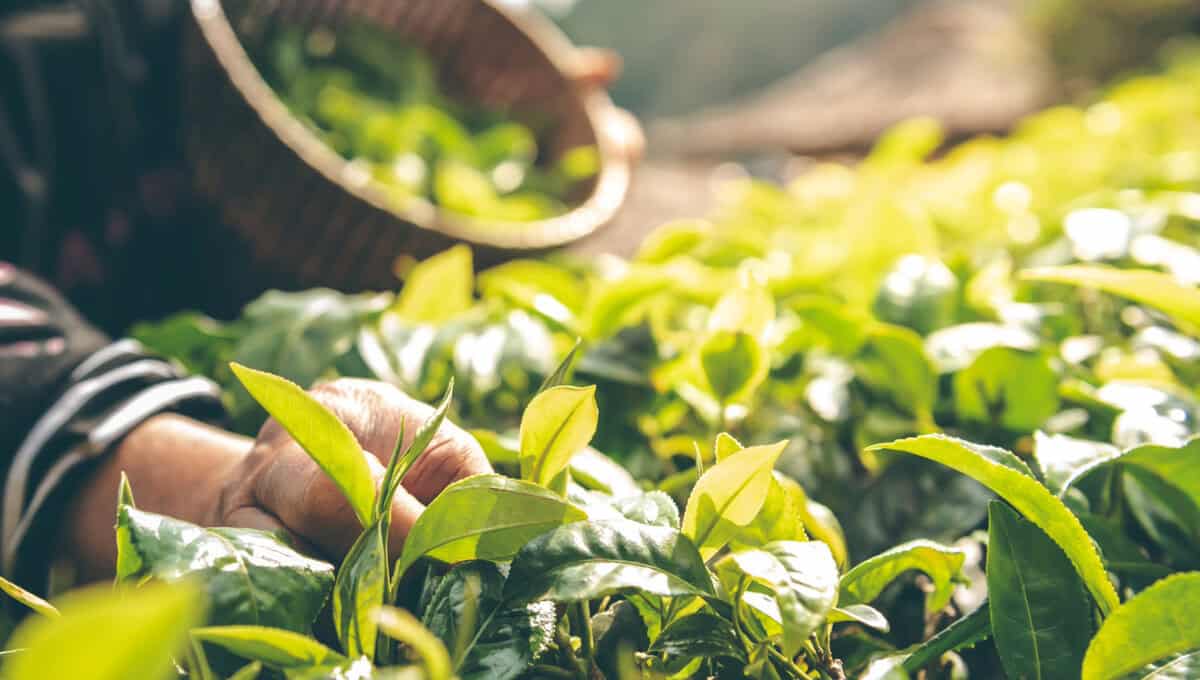
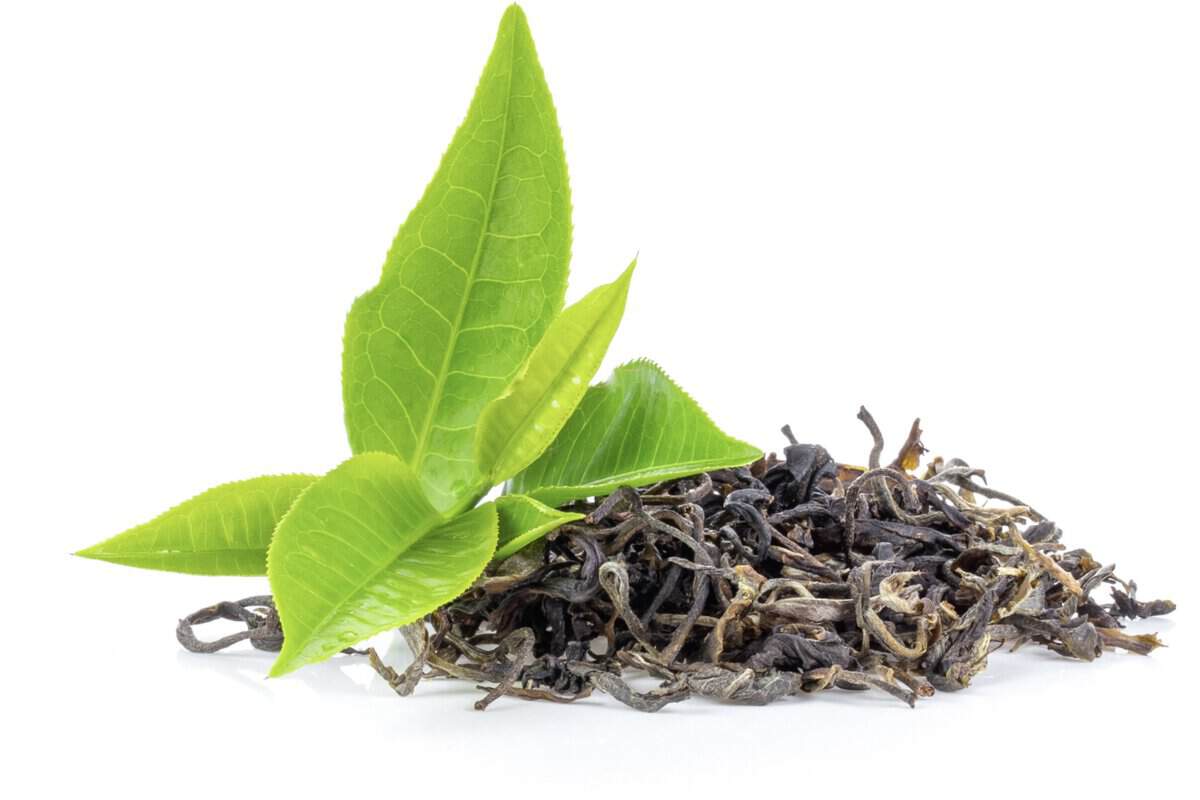
In 2025, WSU Extension Master Gardeners in the Western Washington area were asked to participate in a community science project to assess how well tea plants (Camellia sinensis) grow. This article is an overview of the project, along with the initial results and take-home messages. As a master gardener and grower of an ever-expanding herbal tea garden, I was thrilled to participate in the project. Camellia sinensis leaves can be harvested and processed in various ways. These leaves are used for a variety of tea types including black, green and white. The differentiation is only in how the leaves are oxidized (exposed to air) in the tea making process.
Each participant received three plants to grow at home and submit results over a year (August 2025 through June 2026). This is a summary of the project and the results compiled by Srijana Shrestha, who led the project as part of her PhD research project with Dr. Carol Miles, Professor, Department of Horticulture, Washington State University. Washington State University operates four horticultural research centers, one of which is located in Mount Vernon and hosts the Skagit County Master Gardener Discovery Garden.
- Laura Kuhn, WSU Extension Skagit County Master Gardener and Tea Project participant
Project Overview
Tea (Camellia sinensis) is one of the most widely consumed beverages in the world. Yet, relatively little is known about how well tea plants perform in the Pacific Northwest. There is no information on establishing and growing them under common garden conditions. Given growing interest in diversified, climate-resilient local food systems and tea's emerging status as a specialty crop in the Pacific Northwest, researchers at Washington State University (WSU) launched a Community Science Project. They identified master gardeners as the best fit for collaborations. Extension Master Gardener Programs offer a unique platform for evaluating a new crop such as tea in home and community gardens. Land-grant universities train master gardener volunteers to provide research-based horticultural education, and they support local food and gardening initiatives.
The Washington Tea Community Science Project engaged 49 participants in Western Washington to grow tea plants and collect data over one year. Participants were distributed across eight counties: Clallam (n = 6), Island (n = 1), Jefferson (n = 3), Kitsap (n = 7), San Juan (n = 1), Skagit (n = 8), Snohomish (n = 19), and Whatcom (n = 4). By combining research protocols with community member participation, the project generated information from many growing environments that would not be possible to capture at a single research site.
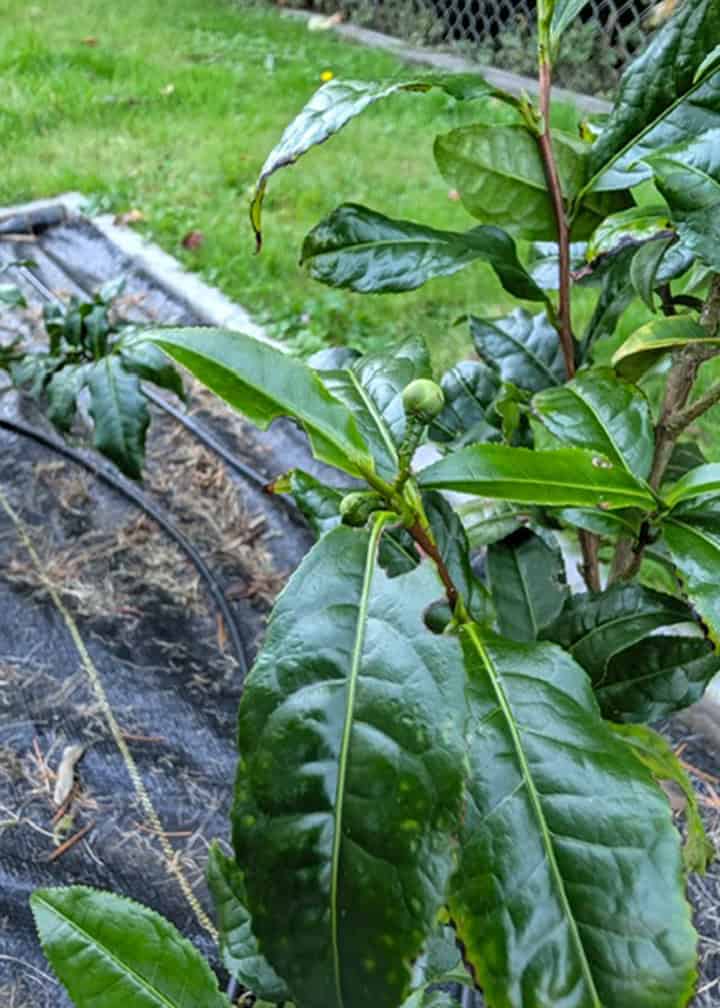
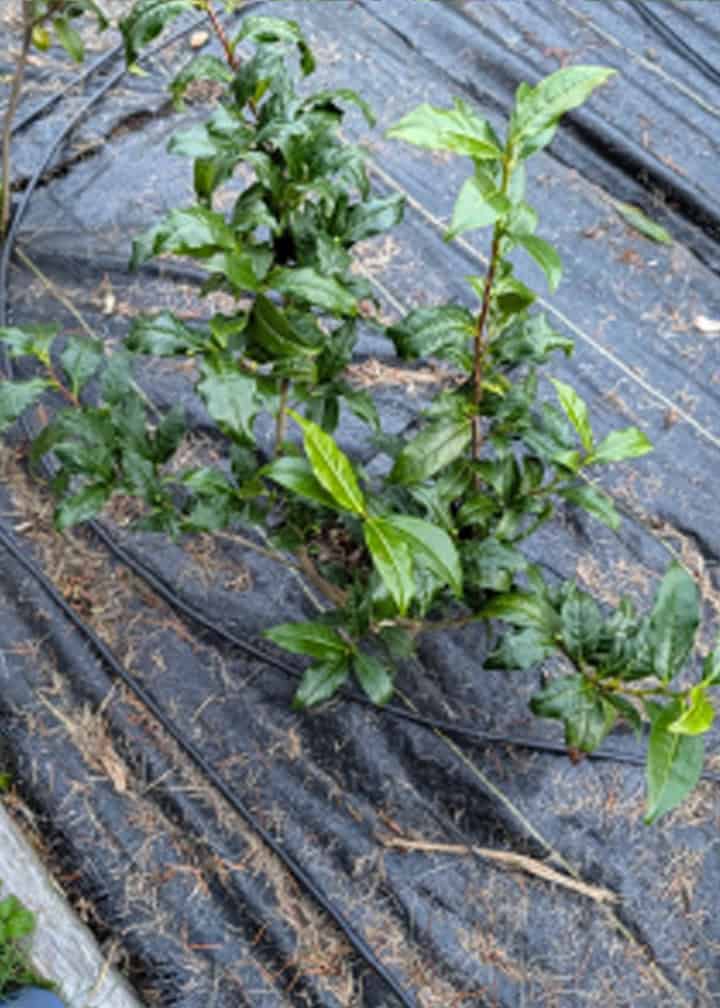
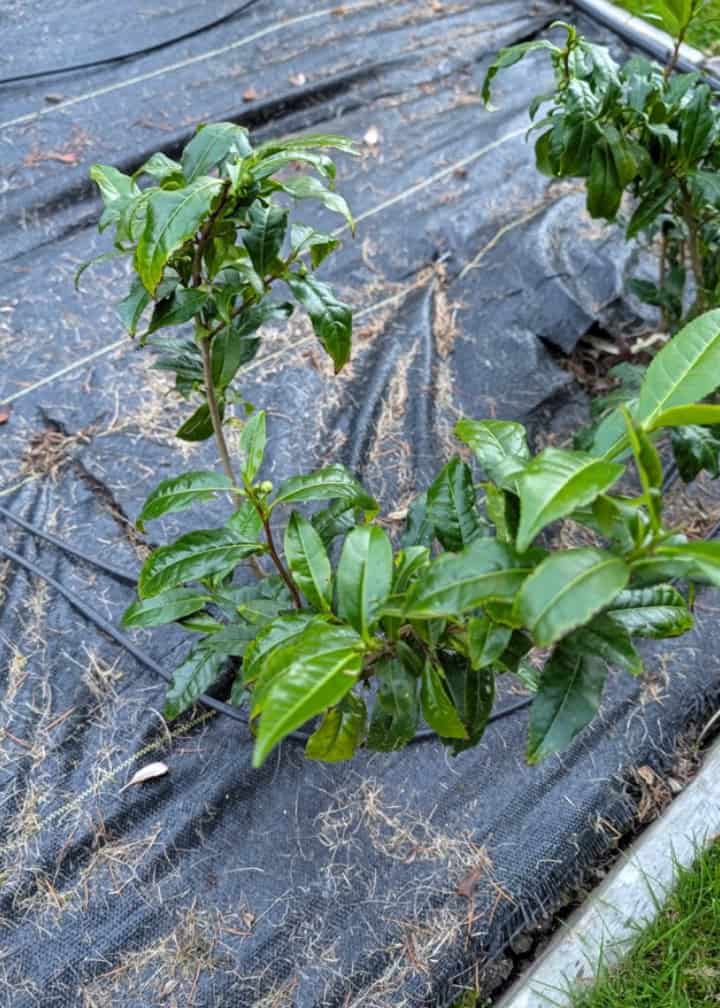
Three plants provided to project participants included one from the top, middle and bottom of a host Camellia sinensis plant.
Photo © Laura Kuhn
The tea plants in this study were propagated from cuttings at WSU Northwestern Washington Research and Extension Center (NWREC) in Mount Vernon. Each plant was labeled to indicate the shoot section from which the cutting was taken “top” for the upper shoot section, “mid” for the middle shoot section, or “bottom” for the basal section. Each participant received one plant from each cutting position (three tea plants per participant).
This project aimed to assess overall tea plant establishment across diverse sites in the region and determine whether establishment differed by cutting location. Participants were asked to collect data and report observations on: 1) planting date and site; 2) plant management activities such as fertilizer application, irrigation, mulching, and winter protection; 3) overall plant health rating on a 5-point scale: 1 = very poor; 2 = poor; 3 = average; 4 = good; and 5 = very good; 4) winter damage rating on a 5-point scale: 0 = no damage/symptoms; 1= minor damage/symptoms (<10%), 2 = moderate damage/symptoms (10-30%), 3 = significant damage/symptoms (30-60%), 4 = severe damage/symptoms (>60%); 5) symptoms of winter damage: leaf discoloration, leaf spotting, leaf burn or scorching, wilted or drooping leaves, blackened stems and leaves, cracked bark or stems, bud drop or bud damage, slow spring growth or leaf drop, root damage; 6) plant height to closest whole inch; and 7) insect pests or disease symptoms and damage on plants. Participants were encouraged to include photos of the tea planting site, the status of tea plants, and any damage, disease, and pest occurrence. Data were collected every 2 months, from Aug 2025 through Jun 2026 via Qualtrics at each reporting period.
At the beginning of the project, an informational webinar was held virtually. The webinar introduced the project goals, research context, and participant expectations. It provided an overview of tea in the global and national context, tea biology, and basics of tea cultivation and processing. The webinar included a question-and-answer session to address participants’ questions and clarify procedures before initial data collection. A recording of the webinar was made available to participants who could not attend live.
A newsletter was distributed regularly. This served as a primary communication tool for sharing project updates, data collection reminders, seasonal management considerations, and preliminary observations emerging across sites. A focus group discussion was conducted at the midpoint of the project to explore participants’ experiences with engagement and communication.
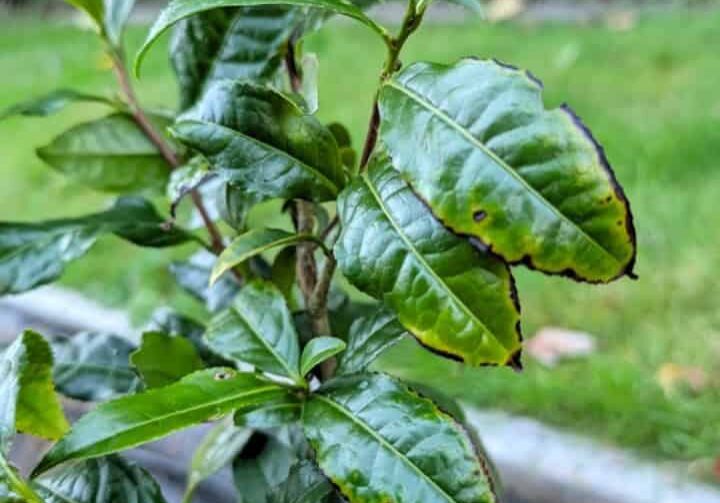
Overall, the tea plants showed encouraging establishment and resilience under Western Washington conditions, with no major differences by cutting location, although performance varied among locations. Plants generally entered the study in relatively good condition, and plant growth generally slowed during the colder months, as expected. Plants experienced greater stress during winter and early spring, and participants reported symptoms including yellowing or browning leaves, leaf spotting, leaf burn or scorching, leaf drop, wilting, blackened leaves or stems, slow spring growth, and occasional bud or stem injury. Spring and early summer brought renewed growth for most plants, and by the June reporting period, participants were observing new leaves and shoots. Plant health also reflected this seasonal pattern.
The Results:
These results indicate the first winter was challenging for the young tea plants; however, visible winter injury did not necessarily mean a plant was lost. Most plants that showed winter damage subsequently produced new leaves and shoots, demonstrating their ability to recover from winter stress. These results suggest that winter protection and appropriate site selection may be particularly important for tea plant establishment in Western Washington.
One encouraging finding was that serious pest and disease problems were not widespread during the project. Participants occasionally reported animal browsing, particularly from deer and rabbits. Some participants also observed possible insect or mite problems, including occasional reports of scale insects and mites.
While participants also reported plant symptoms such as leaf yellowing, spotting, mottling, browning, and occasional dieback, these symptoms should not automatically be interpreted as disease. Similar symptoms can result from cold temperatures, winter injury, moisture stress, nutrient issues, or other environmental conditions. Overall, pest and disease concerns tended to be localized rather than widespread, and they did not emerge as a major limitation to tea establishment during this phase of the project.
The Main Take-home Messages
The most encouraging result is that tea plants survived and continued growing across a wide range of Western Washington home-garden environments. At the same time, the project highlighted several important lessons:
- The first winter can be a significant challenge for newly established tea plants.
- Plants showing winter injury will likely recover and resume growth in spring and summer.
- Winter protection and site selection may help improve establishment.
- Pest and disease problems were minimal and were generally limited and localized.
- Top, middle, and bottom cutting positions generally showed similar overall performance, which maximizes the number of plants that can be propagated from tea cuttings.
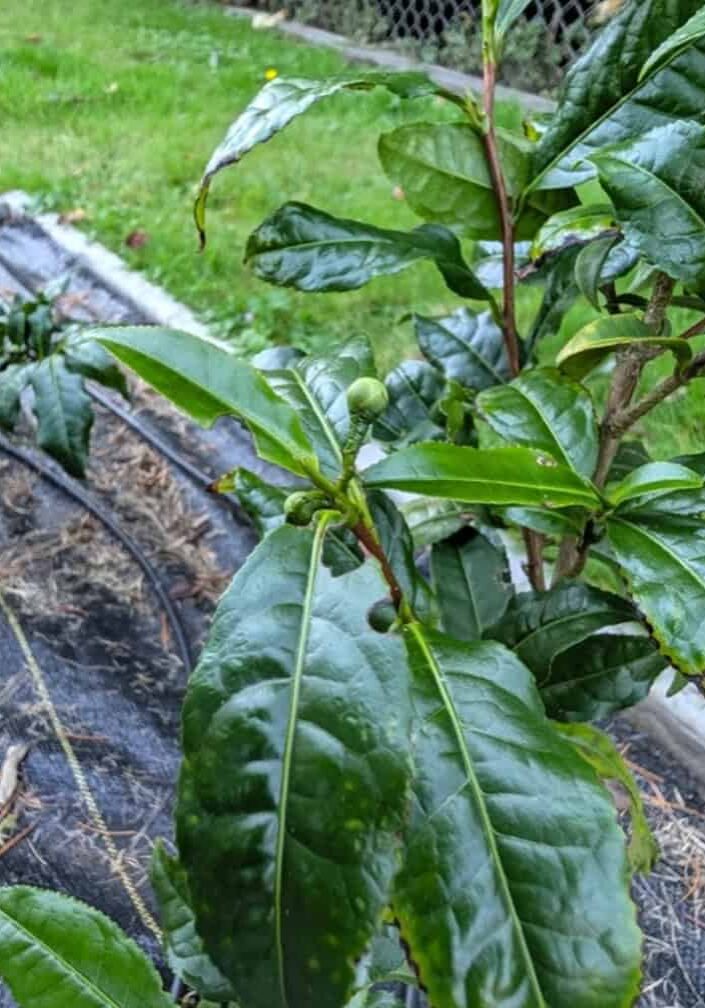
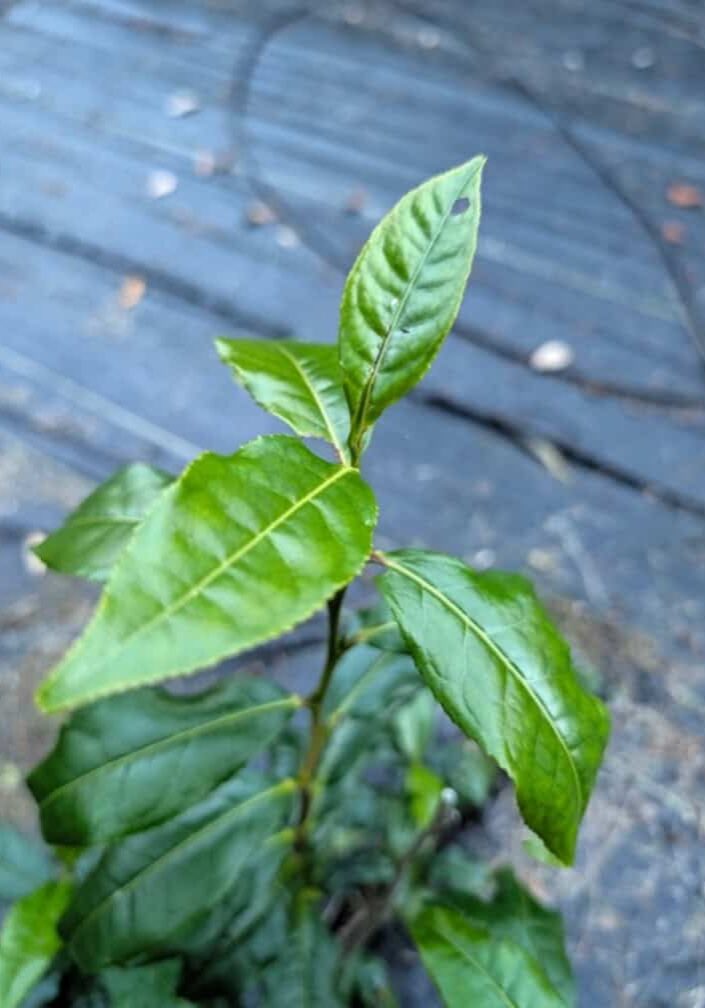
Camellia sinensis plant in garden in Mount Vernon Washington showing new flower buds and new leaves. Note the glossy leaves. Photos © Laura Kuhn
Tea is a long-lived perennial plant, and this project represents only the early establishment stage of what can ultimately become a crop lasting many decades. Longer-term research is needed to measure plant growth over time, determine whether there are cumulative winter effects, and ultimately assess tea leaf yield and quality under Western Washington conditions. The data collected by master gardeners in Western Washington provide a valuable foundation for this work. These results will help guide future research questions and contribute to practical recommendations for gardeners and growers interested in producing tea in the Pacific Northwest. Future research could evaluate which tea cultivars are best adapted to Washington, how winter protection strategies influence survival, and how plant performance differs among the state's diverse climatic regions.
In conclusion, the plants performed well and were easy to care for. Existing tea-growing resources, along with future publications and findings from this work, will remain available through the WSU webpage about the Tea Project.
- Laura Kuhn, WSU Extension Skagit County Master Gardener and Tea Project participant
References and Resources
1. Shrestha, S., Shelton, M., Mattupall, C., and Miles, C. Growing Tea in the Pacific Northwest: Planting and Establishment. Washington State University, Northwestern Washington Research and Extension Center, Mount Vernon; Oregon State University Extension.
ABOUT THE AUTHORS:
Srijana Shrestha, Oregon State University Extension Portland metro Master Gardener Program Leader and Community Horticulturist, led this project as part of her PhD research project with Carol Miles, Professor, Department of Horticulture, Washington State University.
Laura Kuhn is a WSU Extension Skagit County Master Gardener (Class of 2023) Laura is new to the Skagit Valley but has more than 30 years of experience growing in coastal, inland valley, and desert climates. She had fun trying to grow herbs while traveling full-time in an RV.
Questions about home gardening or becoming a master gardener may be directed to Skagit County WSU Extension Office, 11768 Westar Lane, Suite A, Burlington, WA 98233; by phone: 360-428-4270; or via the WSU Extension Skagit County Master Gardener website.
Washington State University Extension helps people develop leadership skills and use research-based knowledge to improve economic status and quality of life. Cooperating agencies: Washington State University, US Department of Agriculture, and Skagit County. Extension programs and policies are available to all without discrimination. To request disability accommodations contact us at least ten days in advance.
Very interesing. This would conceivably give the Skagit Valley another potential crop. Thanks!