Post: July 17, 2026
Small and Fuzzy but Pests Nonetheless
Proper identification of these small, fuzzy pests is essential as management techniques differ for each species.
By Alison Hitchcock, WSU Extension Skagit County Master Gardener
Vertebrate pests, while not as prevalent or pervasive as disease or invertebrate problems, can often make life miserable for gardeners. Pests damage gardens by feeding on plants, eating and disturbing roots, and burrowing under lawns. Problems can be managed indirectly by exclusion, sanitation, and habitat modification or actively through trapping or pesticides. Proper identification of the pest is essential as management techniques differ for each species. In August, the second article of this two-part series will address medium-sized pests.
Moles
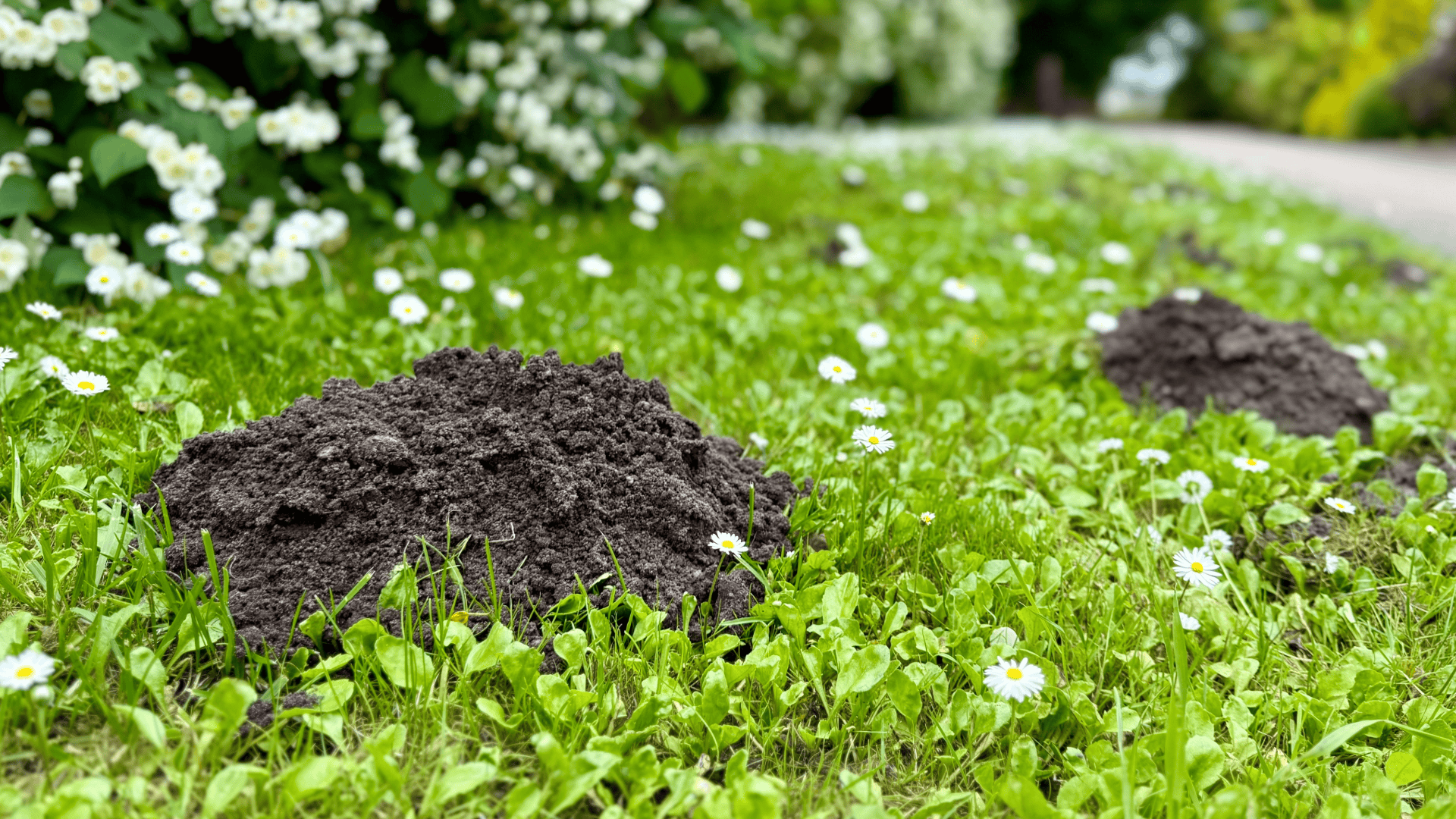
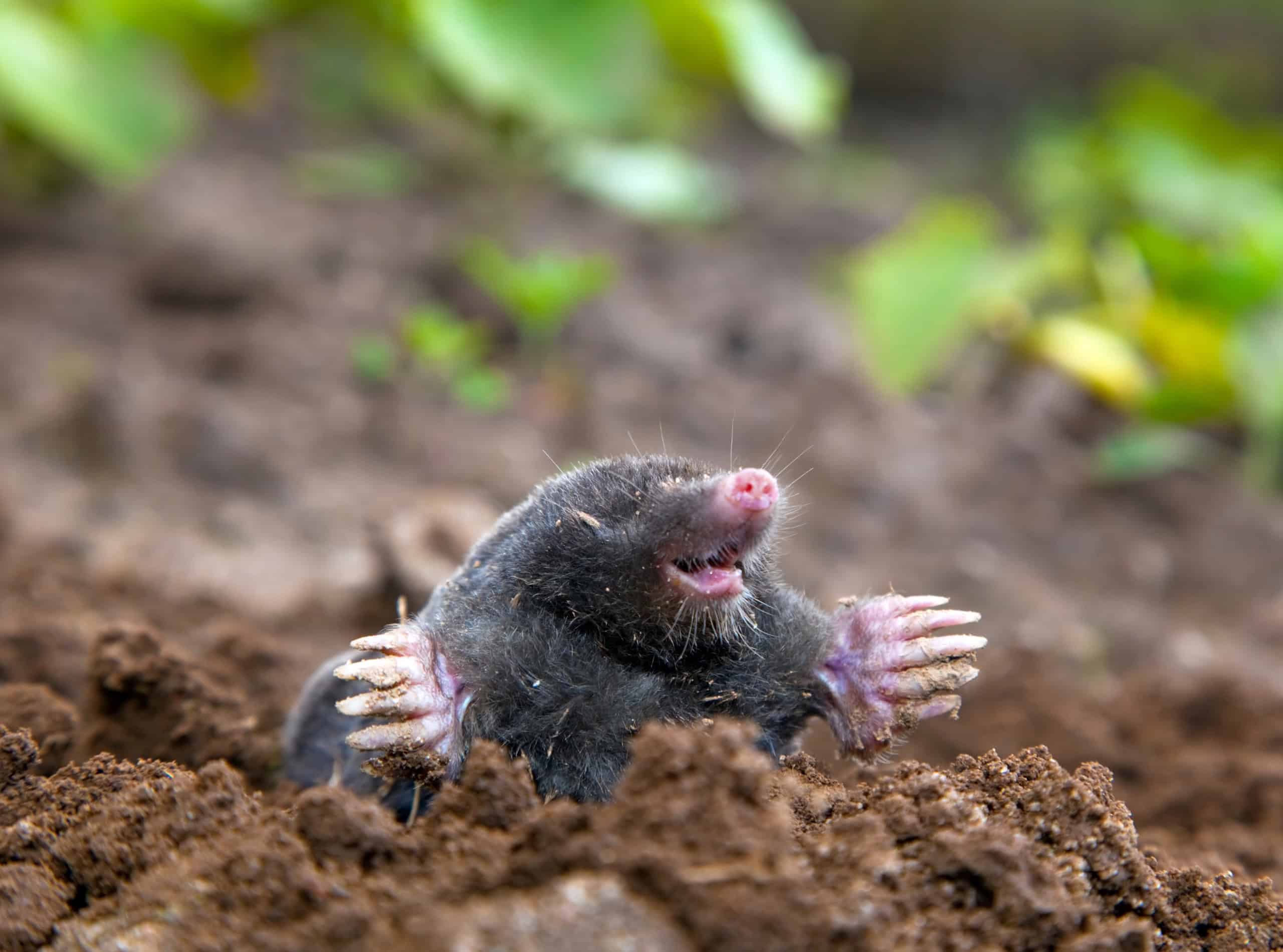
Moles are solitary, territorial mammals, spending most of their lifetime underground. Populations average 2-3 adults per acre. Moles are well-adapted to a subterranean existence with large forefeet bent sideways for digging, reversible fur that permits backward movement, and small hips for turning. Eye and ear openings are protected by fur. Though often blamed for the destruction of garden plants and bulbs, moles are strict carnivores that feed on insects, grubs, and earthworms. However, it is the burrowing habits of moles that damage lawns and disrupt plant roots.
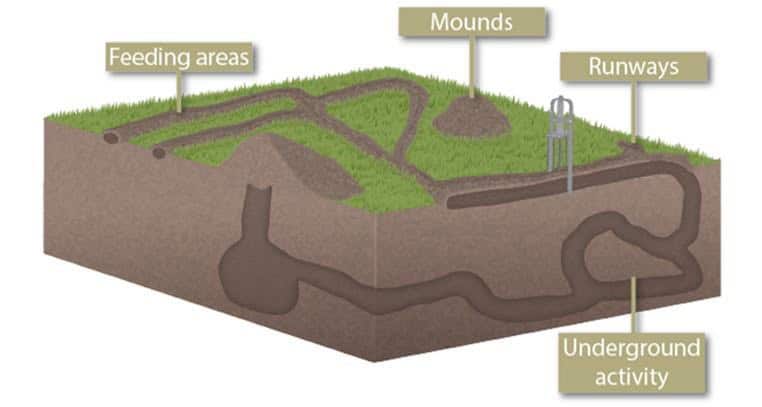
Moles construct large and complex tunnel systems with separate areas for living and hunting. Shallow, or feeding tunnels, appear as long, 1-3-inch-wide ridges of raised ground just below the soil surface. These tunnels feel spongy and soft when walked on and are often located along house foundations, sewer lines, or lawn borders. Deep runways are generally 3-12+ inches underground. These are regularly used passageways for travel between nest and feeding tunnels. Molehills occur where the animal is establishing new burrows or repairing existing ones.
Moles may work one section of their tunnel system for a few days and then move to a portion of the system in your neighbor’s yard. They are most active after periods of rain or watering, when the soil texture is ideal for digging.
Trapping is the most successful and practical method of control and is best done in early spring before they give birth. A variety of traps are available (body-gripping traps, however, are illegal in Washington). Set traps in active surface tunnels. If nothing is snared in two days, try a different run. Smacking a shovel on the ground above an actively burrowing mole will quickly kill it. Flooding can work if systems are not too extensive. Since moles feed on insects and worms, they do not readily take poisoned baits.
Unfortunately, extermination is impractical. New moles will eventually re-enter your garden if suitable conditions exist.
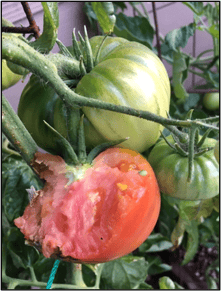
Tomato damage from rat. © Denny Organ
Rats
Two species of rats plague our area. Norway (brown/sewer) rats are large, stocky rodents with tails shorter than their bodies. Their burrows are found along building foundations, beneath woodpiles, and in moist areas around gardens and fields. Inside buildings, they usually remain at lower levels. Roof rats (black) are agile climbers, usually nesting and living above ground in trees and shrubs. In buildings, they are commonly found at higher levels in walls and attics. Roof rats have tails longer than their bodies and have sleeker shapes.
Rats will eat vegetables, seeds, and fruits but need animal protein and fat in their diet. Compost piles with only vegetable matter will not sustain a colony, though the addition of table scraps, including meats, grains, or oils, will attract rats to the pile.
Control includes rodent-proofing buildings, sanitation, trapping, or poisoning. All quarter-sized openings (1/2″) should be sealed with rat-proof materials such as wire mesh or sheet metal. Sanitation measures include tight-fitting garbage lids and no outside pet food. Although there are many products for poisoning rats, trapping can be very effective and eliminate harm or death of non-targeted animals. When trapping, place multiple snares close to activity. Position traps against and perpendicular to walls to catch rats traveling in both directions. Bait-peanut butter is a reliable one-and set traps; use gloves as human scent may repel rats. Most importantly, let the rats take the bait several times from unset traps before setting the traps.
 Mark Your Calendar for These Free Know & Grow Workshops
Ways You Can Help Your Backyard Birds
Tuesday, August 18, 2026
1:00 pm – 2:30 pm
Spectacular Fall Color – How You Can Have it in Your Garden
Tuesday, September 15, 2026
1:00 pm – 2:30 pm
Prepare Your Garden for Fall and Winter
Tuesday, October 20, 2026
1:00 pm – 2:30 pm
Creating an Award-Winning Display Garden for the NW Flower and Garden Festival
Tuesday, November 10, 2026
1:00 pm – 2:30 pm
Sakuma Auditorium
16650 SR 536, Mount Vernon, WA 98273
Mice
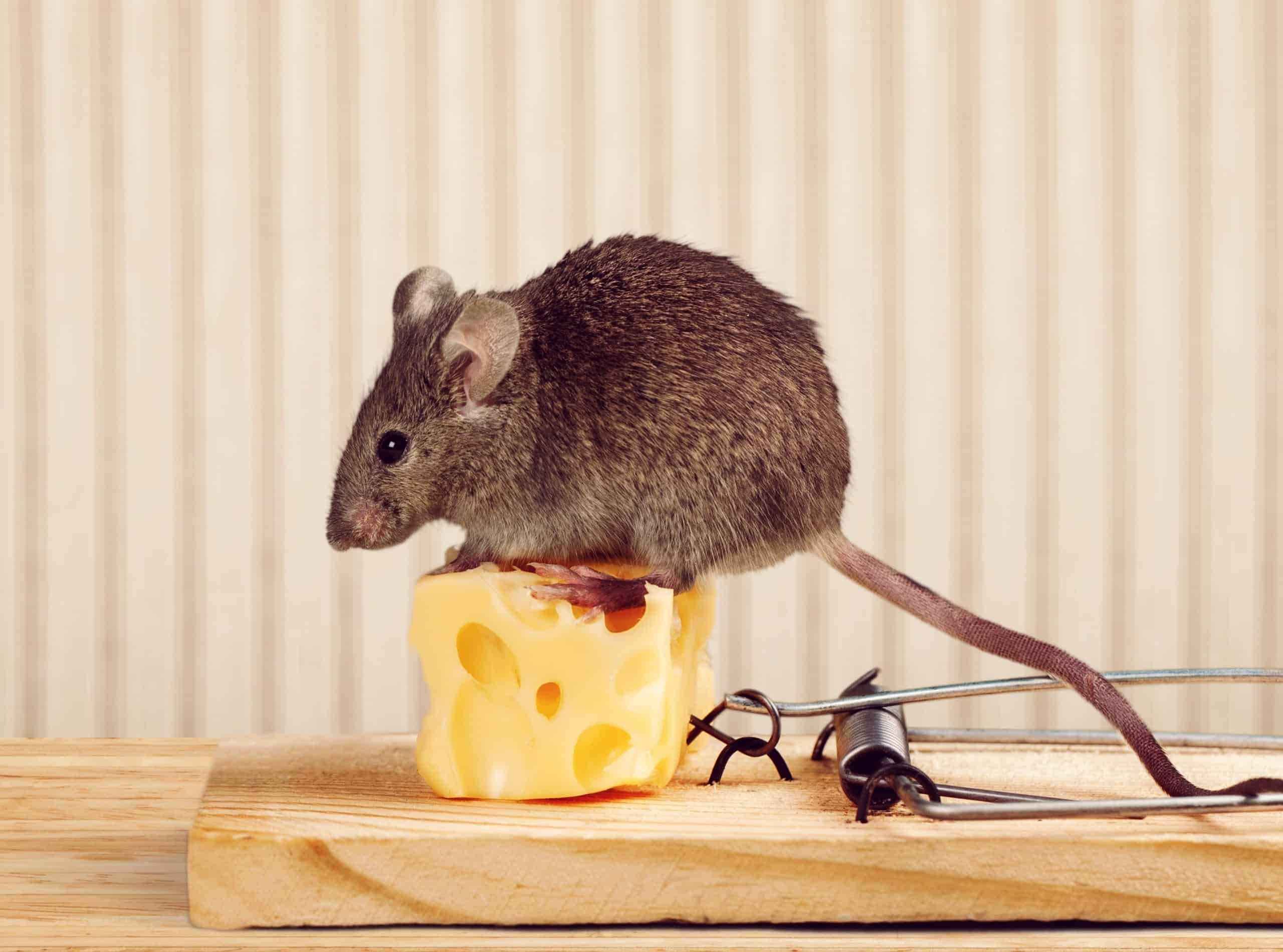
Two common mouse species are the house/field mouse and deer mouse. The former are often found in residences, but the latter prefer to stay outdoors or in outbuildings. Deer mice differ from house mice by being slightly larger, having a white underbelly, and a furry, rather than scaly, tail. House mice spread some diseases, but deer mice carry hantaviruses.
Mice eat cereal grains and seeds but may eat bulbs or corms and small fruits. Mice rarely burrow but can gain entrance to homes through dime-sized holes (1/4″). They will chew on just about anything that may be useful in nest building.
Mice are easily trapped. Place snap traps in areas where rodent activity (droppings, nests, chewed materials) is occurring. If opting to use poison, use secured block baits; deer mice tend to cache food, leaving no bait for other rodents.
Voles
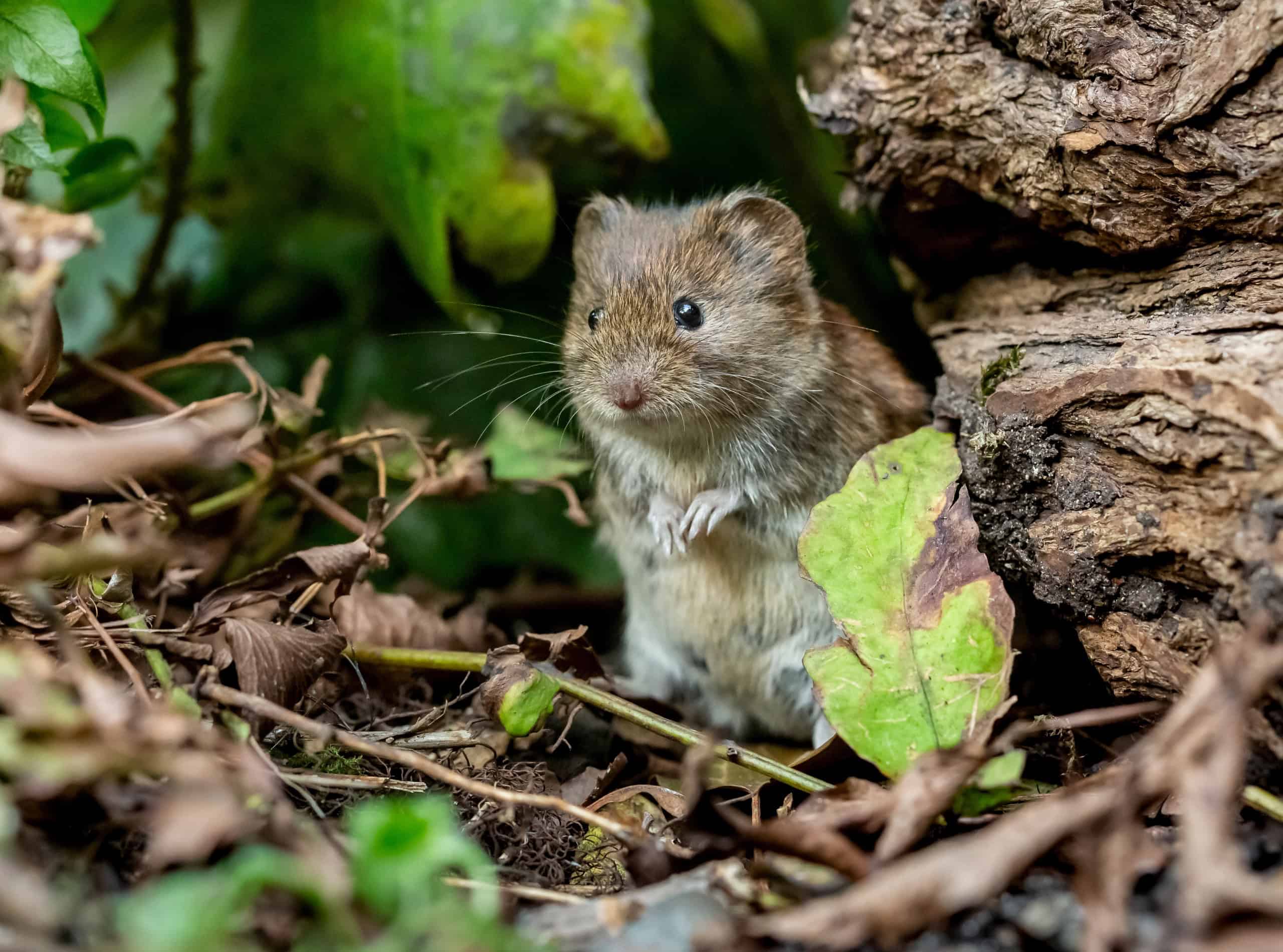
Unlike mice, voles have small ears, short legs and tails, and blunt noses. Voles are strict vegetarians, chewing on soft, green vegetation, grass, bulbs and succulent root systems. They often uproot plants and can girdle young trees and shrubs by removing bark at the base. They construct short, shallow burrows and surface runways through lawns and sometimes inhabit abandoned mole tunnels.
Voles rarely enter buildings. They frequent grassy ground cover and weedy areas, so anything that reduces vegetative cover such as mowing or tillage will help control them. To protect young trees from girdling, keep vegetation 4′ away from trunks and protect with ¼” hardware cloth. Voles can be captured with mousetraps set in tunnels and runways. Stomping and filling of mole tunnels will help to eliminate their use as underground passages for voles.
Shrews
Although commonly mistaken for voles or mice, shrews have pointed noses and five, rather than four, toes on front legs. Similar to moles, shrews live primarily on insects such as caterpillars and centipedes but also eat other garden pests: snails, slugs, and small mice. They do not create surface tunnels but often feed on runways or tunnels made by other mammals. Shrews are generally beneficial to gardens and should not be eliminated unless they become a nuisance.
While total extermination of these fuzzy pests is difficult, combining different approaches can help reduce garden damage. Practical management strategies for each pest, such as trapping, exclusion, and sanitation, stresses the need for first accurately identifying the vertebrate causing the damage.
References:
Maser, C. Mammals of the Pacific Northwest: From the Coast to the High Cascades. Corvalis: Oregon State University Press, 1998
Living with Wildlife: Moles,Washington Department of Fish and Wildlife, accessed 14 June 2021.
Pehling, D. Principles of Vertebrate Pest Management, Washington State University, accessed 14 June 2021.
Moles: Damage Management, Iowa State University Extension and Outreach, accessed 14 June 2021.
Rodents, Washington State Department of Health, accessed 14 June 2021

Alison Hitchcock
ABOUT THE AUTHOR:
Alison Hitchcock has been a Skagit County WSU Extension Master Gardener since 2001. Prior to retirement, Alison worked for the Department of Natural Resources as the Northwest Regional Silviculturist.
Questions about home gardening or becoming a master gardener may be directed to Skagit County WSU Extension Office, 11768 Westar Lane, Suite A, Burlington, WA 98233; by phone: 360-428-4270; or via the Skagit County WSU Extension website.
Washington State University Extension helps people develop leadership skills and use research-based knowledge to improve economic status and quality of life. Cooperating agencies: Washington State University, US Department of Agriculture, and Skagit County. Extension programs and policies are available to all without discrimination. To request disability accommodations contact us at least ten days in advance.