Post: March 20, 2026
A successful, nutritious potato crop requires the right start
Certified potato seed will get the home gardener on the right track

Kari Ranten
By Kari Ranten, Skagit County WSU Extension Master Gardener
Potatoes are a staple on many dinner tables, which may prompt home gardeners to try their hand at growing these nutritious, plentiful vegetables. With a few tips in hand, these tubers are straightforward to plant, tend, harvest, store, and enjoy – some say “easy,” which is the perfect combination for the home vegetable gardener.
The vital step in gaining a successful potato harvest takes place before you start.
Every resource consulted in the preparation of this article, including an interview with Chakradhar Mattupalli, assistant professor of plant pathology at Washington State University’s Northwestern Washington Research and Extension Center (NWREC), points to one key action: Start with certified, disease-free potato seed.
“The main recommendation to any grower is to plant certified and clean seed to avoid as many diseases as possible,” said Mattupalli, who leads the Berry and Potato Pathology program at NWREC.
Mattupalli and fellow researchers at NWREC play a vital role in working with commercial growers to limit the impact of disease and pests on potato crops, plus work with developing new varieties that grow well in the temperate Pacific Northwest. In Skagit County, 11,000 acres were planted to potatoes in 2024, with most of the harvest sold in the fresh market. With that volume of commercial production, home gardeners can be assured that potatoes typically grow well in Skagit and the surrounding counties.
It’s also good to know that this vegetable, a member of the nightshade family, has nutritional benefits. Potatoes are a complex carbohydrate offering nutrients important to healthy eating such as minerals (potassium), fiber, and vitamins (antioxidant vitamin C, folic acid, and iron). More antioxidants are present in darker colored potatoes.1

Researchers at WSU Mount Vernon Northwestern Washington Research & Extension Center (NWREC) play a vital role in working with potato growers in northwestern Washington. Chakradhar Mattupalli, assistant professor of plant pathology, leads the Berry and Potato Pathology program, conducting research and extension activities addressing the biology and management of diseases of highbush blueberry and potato crops. He provided guidance and resources in the preparation of this article. For more information about Mattupalli’s research, go to Berry and Potato Pathology | Washington State University.
NWREC is one of four WSU Research Centers operated by the College of Agricultural, Human and Natural Resource Sciences, housing nine research programs, extension outreach, and research affiliates. The research center works to solve plant-related problems and develop cost-effective and environmentally-sound plant production practices based directly on results from experimental field, greenhouse, and laboratory research trials.
Start with certified potato seed
Back to the beginning: Selecting certified potato seed from a reputable grower or seed distributor is the key. Home gardeners should not plant potatoes purchased at a grocery store, because the tubers are treated with sprout inhibitors. Neither should they use potatoes from the previous year’s harvest, to avoid transfer of potential pests and pathogens that will significantly reduce yield and quality.2
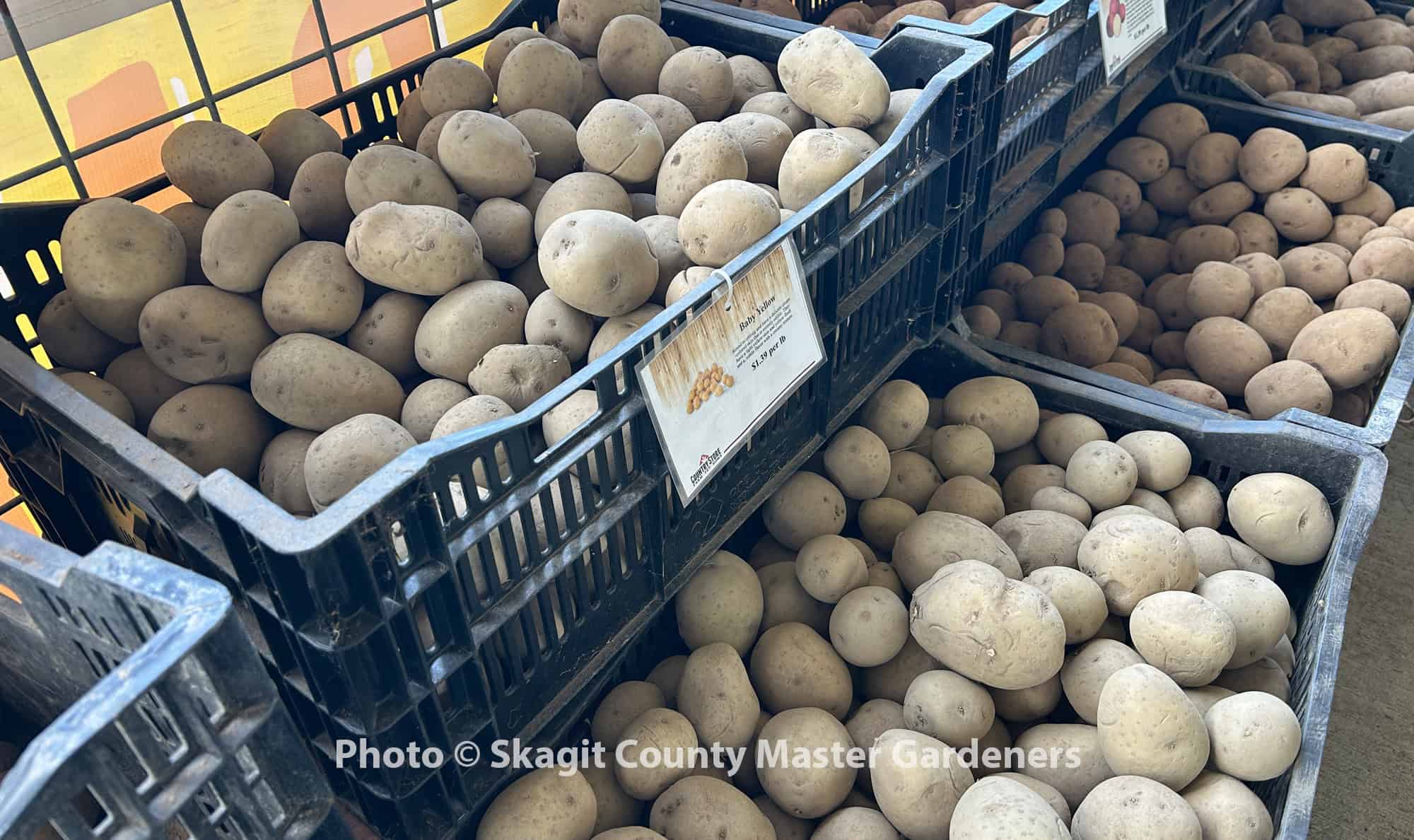
Certified seed potatoes are available from reputable retailers online, and in late February or early March, will begin to make their way to nursery and farm supply stores in Skagit County.
Home gardeners should think about the variety of potatoes to grow based on the desired use, the length of harvest season, and storability. The Pacific Northwest is known as a premier potato-producing region, where scientists in Washington, Oregon, and Idaho have developed 40 new varieties. Key varieties grown in the region include russets, those many think of as “baking” potatoes, with names like ‘Ranger’ and ‘Rainier’. Specialty or heirloom varieties also grow well in the region, including the ‘Makah Ozette’, a noteworthy historic fingerling variety. Others come with similarly interesting names including ‘Purple Majesty’ and ‘Russian Banana’. This list of potato varieties from the Northwest (Tri-State) Potato Variety Development Program and details on tuber qualities, yield, and disease resistance. Gardeners can choose varieties that span from early (65 days to harvest) to late season (more than 90 days to harvest).
© Adobe Stock
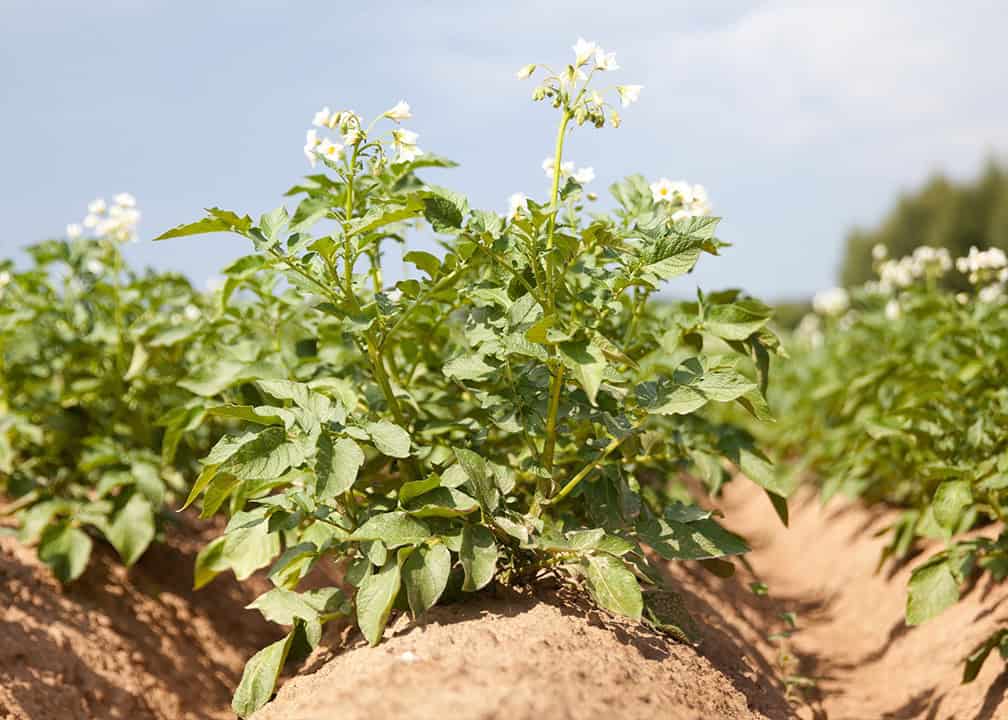
Once a gardener has certified seed in hand, selecting a location to plant, watching soil temperatures and pH, and preparing the seed are the next steps to take before planting:
Location and rotation: Potatoes require full sun, meaning at least six hours of sun each day, and ideally eight to 10 hours per day, during the growing season. To prevent disease, use crop rotation techniques and choose a plot in the garden that has not been used to grow tomatoes, potatoes, peppers, eggplants, or tomatillos in the past three to four years. You may also use a raised bed.3
Soil pH and temperature: Check the pH of the selected garden location. Potatoes grow well in slightly acidic soil with a pH of 6.0, high in organic matter. Tubers grown in more alkaline soil are more prone to developing common scab. Planting can take place four to six weeks before the last frost date, and when the soil temperature hits at least 50° F.2 Soil should be well-drained, as tubers will rot if exposed to extended cold and wet conditions.
Preparing and curing the seed: Potato seed should be firm and without sprouts. Small seed potatoes (those smaller than a chicken egg) can be planted whole, while larger seed should be cut (using a clean knife) into 1.5-inch cubes with one to three buds or “eyes” on each piece. Once cut, seed potato pieces should be cured for a few days at 50 to 65° F, before planting. Cornell University’s Growing Guide for Potatoes recommends curing seed potatoes by putting the cut potatoes into a large, paper grocery bag and folding the top closed. Leave the bag at room temperature for two or three days, then shake the bag to make sure the pieces are not stuck together. Let them sit for two or three more days before planting.4
Next steps involve soil preparation, planting, “hilling,” and watering:
Soil preparation: Once the soil temperature has reached at least 50° F, modest tilling, six to eight inches into the soil, is recommended along with amending the soil with compost or aged manure, (not fresh, which may introduce soilborne pathogens). Add fertilizer as recommended from soil-test results.3
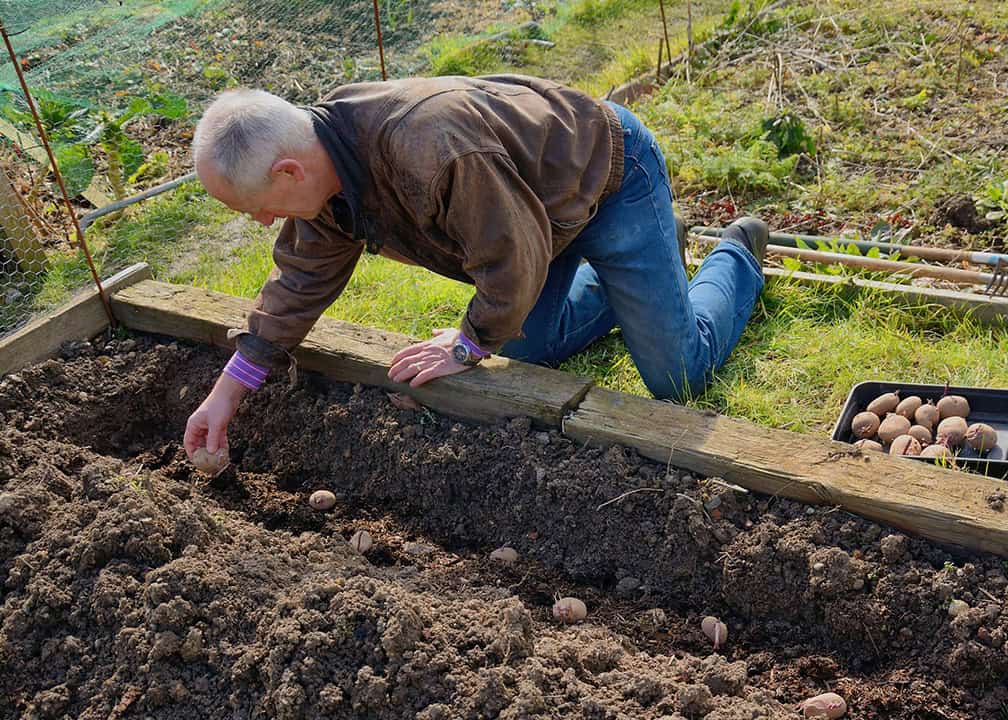
Planting: Create shallow, four-inch trenches and place seed spaced every 10 to 12 inches in the bottom of the furrow. Cover the seed with four inches of soil. Rows should be two to three feet apart. Gardeners should see sprouts emerge in three to four weeks.3
Hilling: A technique called “hilling” is commonly used when growing potatoes and requires covering the potatoes with additional soil as they grow. When plants reach six inches in height, gently mound soil from between the rows to cover the tubers. This will need to be repeated every two weeks as the growing potatoes are again exposed to sunlight.3
Keeping the tubers covered with soil will help prevent the potatoes from turning green due to chlorophyll responding to sunlight. While chlorophyll is harmless, the green color can indicate the presence of solanine, a toxic compound that can cause bitter taste or illness.5
The importance of water: To avoid seed rot, do not water potatoes before the plants sprout. Once plants are up, they will need about two inches of water per week to keep the top 18 inches of soil moistened. Watering is recommended in the evening.3 Reduce watering in mid-August and wait until the plants die back before harvesting.5
Pests and Diseases:
Potatoes can be prone to a variety of pests, diseases, and physiological disorders. Some, such as common scab or hollow heart, may not be known until harvest, as they affect the exterior or interior of the underground tubers respectively. Other issues, such as late blight, may affect the leaves and tubers. WSU’s Hortsense resource will help home gardeners learn more about the pests and diseases that may impact potato crops in the region. WSU’s comprehensive site features more than 1,000 fact sheets with photos to guide home gardeners, manage problems in hundreds of plants using integrated pest management (IPM), including cultural controls and Washington state registered pesticides.
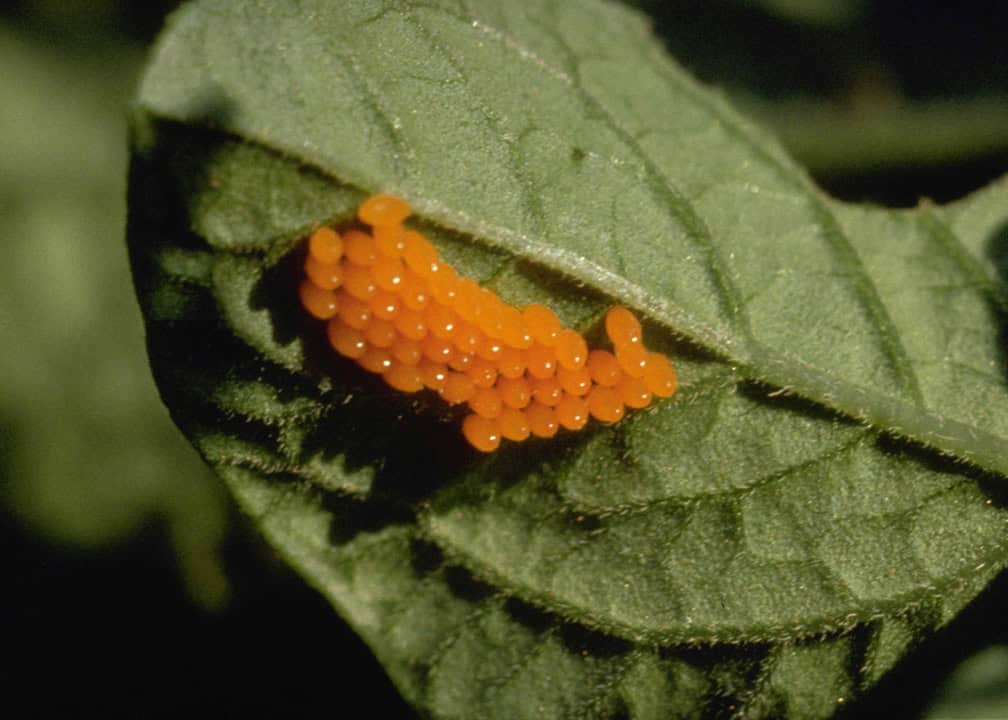
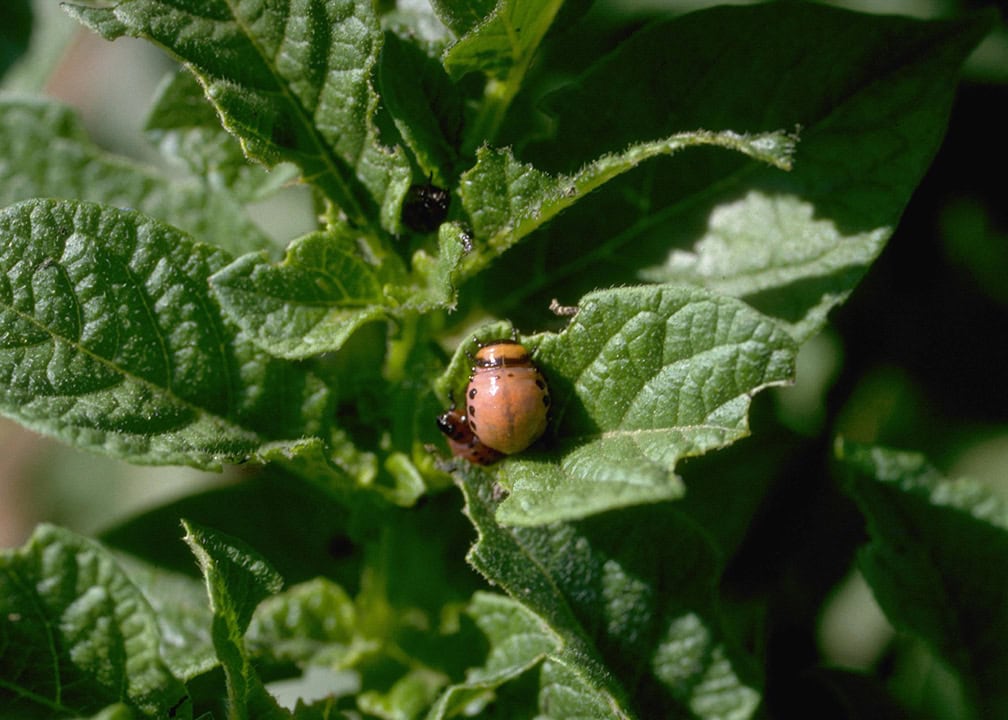
Pests to watch for include Colorado potato beetles, aphids, flea beetles, and wireworms. Diseases can include early and late blight, common scab, black scurf, and Verticillium wilt. Potatoes also can suffer from viruses such as potato mop top virus and potato virus Y (PVY).
For detailed, comprehensive, science-based information about potato varieties, pests and diseases, read:
- Hortsense: Potato Varieties
- Hortsense: Potato Pests
- WSU Plant Pathology: Potato Diseases
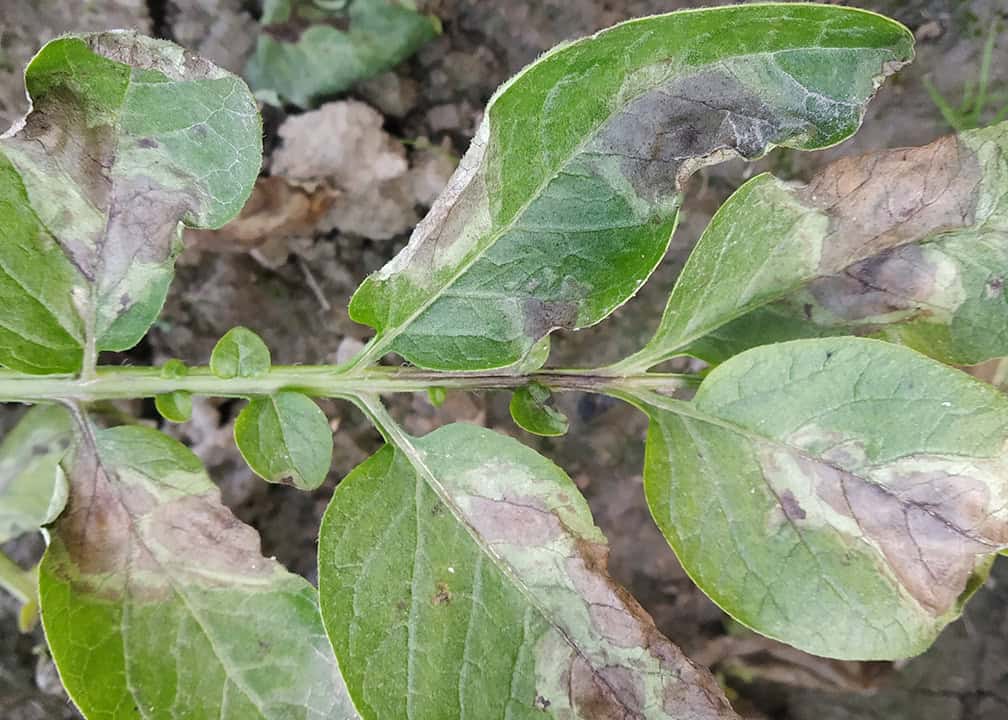
© Thirunarayanan Perumal | Invasive.org.
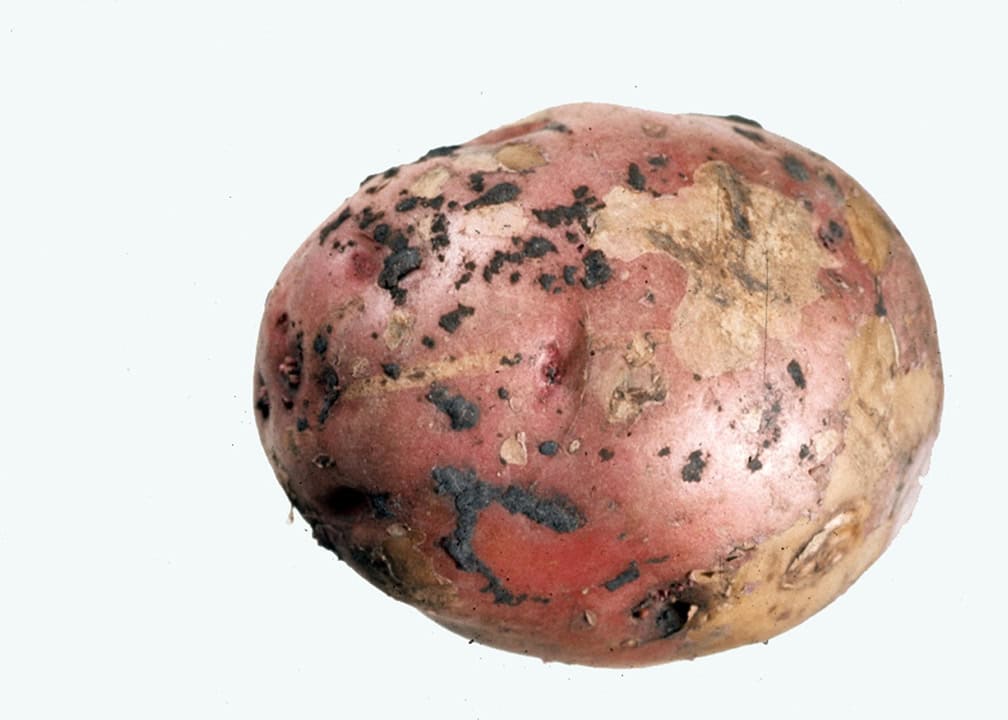

Store potatoes in perforated plastic bags or in well-ventilated containers in a dark, well-ventilated location with high humidity. Good storage areas include a refrigerator set to 40-46° F, an insulated garage, or a cool, dark basement. © Adobe Stock
Harvest and storage:
It can be a surprise when it’s time to harvest potatoes as the season’s action takes place underground. Gardeners are hoping for unblemished, disease-free, uniform tubers that will contribute to menus for months to come.
Mature tubers may be harvested about two weeks after the foliage has dried, generally 70 to 120 days after planting. Stop watering after the plants have died back. Dig carefully with a garden fork to avoid injuring the potatoes.
Clean the potatoes after harvest, either by brushing or lightly rinsing away soil. Sort the tubers and dispose of those that are shriveled, blemished, or diseased. During cleaning and storage, potatoes should be kept away from light as “greening” can happen during these phases as well.
Storability is a quality based on variety and skin thickness. To store potatoes, place them in a warm, well-ventilated area to allow the skin to set. Keep potatoes under cover or in the dark and allow them to cure for 10 days before storage.3 Gradually lower the temperature to 40-46° F, placing potatoes in perforated plastic bags or well-ventilated containers in a dark location with good ventilation and high humidity.2 Good storage areas include a refrigerator set to 40-46° F, an insulated garage, or a cool, dark basement.5
Thinking about sweet potatoes? Sweet potatoes fare well when grown in warmer southern U.S. states. However, NWREC scientists are working on trials to develop sweet potato varieties for commercial growers in Skagit County. The first commercially grown harvest from Hedlin’s Family Farm was sold at the Skagit Valley Food Co-op in Mount Vernon in November 2025. For more info, read Sweet Potatoes find their way to Washington
FOOTNOTES AND REFERENCES:
- Posner, A. (2022) “Potato health benefits and why you should eat more spuds.” University of California Davis Health.
- Ophardt, M. (2015) “Vegetables: Growing Potatoes in Home Gardens.” Washington State University Extension Fact Sheet # FS165E.
- Schuh, M. and Tong, C. (2022) “Growing Potatoes in home gardens.” University of Minnesota Extension.
- Cornell University. (2006) “Growing Guide: Potatoes.”
- Pokorny, K. (2023) “Best practices for harvesting and storing homegrown potatoes.” Oregon State University Extension Service.
- Pokorny, K. (2024) “How to grow sweet potatoes successfully in Oregon’s climate.“ Oregon State University Extension Service.
University of Maryland Extension. (2023) “Growing Potatoes in a Home Garden.”
ABOUT THE AUTHOR: Kari Ranten is a retired journalist and health care communicator who became a certified Skagit County WSU Extension Master Gardener in 2024.
Questions about home gardening or becoming a master gardener may be directed to Skagit County WSU Extension Office, 11768 Westar Lane, Suite A, Burlington, WA 98233; by phone: 360-428-4270; or via the Skagit County WSU Extension website.
Washington State University Extension helps people develop leadership skills and use research-based knowledge to improve economic status and quality of life. Cooperating agencies: Washington State University, US Department of Agriculture, and Skagit County. Extension programs and policies are available to all without discrimination. To request disability accommodations contact us at least ten days in advance.