Post: April 17, 2026
The Amazing World of Geophytes
Bulbs, corms, rhizomes, and tubers: Plant ahead for joy in the future

Kari Ranten
By Kari Ranten, Skagit County WSU Extension Master Gardeners
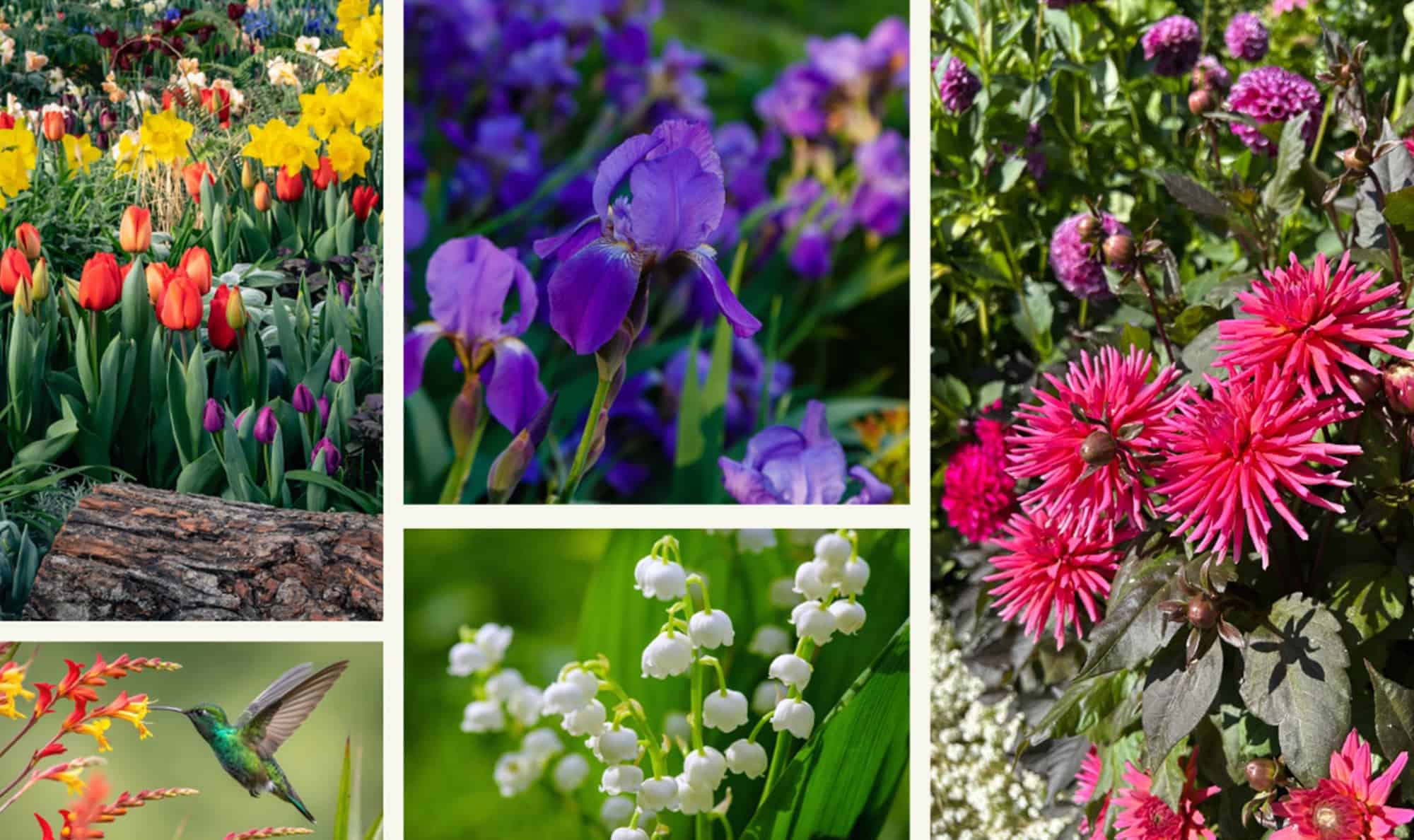
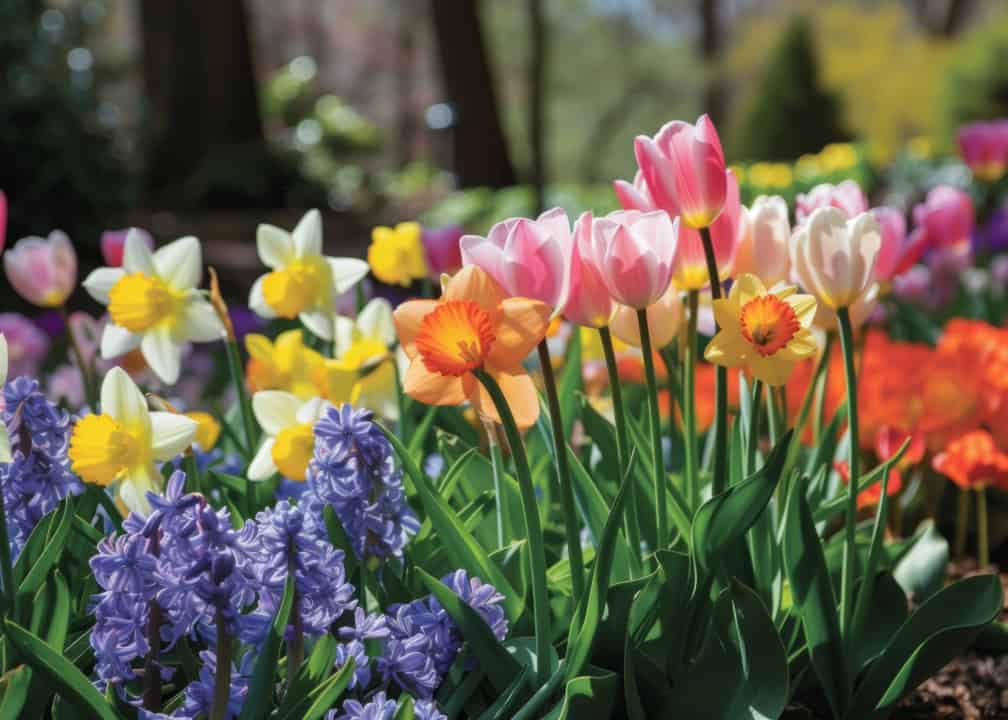
We’re in the middle of April, and the Skagit Valley Tulip Festival is in full swing. It’s the time of year when visitors from across the globe descend on our valley to witness the marvel of acres and acres of color. Vibrant swaths of yellow, red, purple, and orange decorate the valley floor in commercial fields and exquisite display gardens.
Many home gardeners in our region also enjoy the pop of early color afforded by daffodils and tulips, and know it’s worth planting bulbs in the fall to get the reward of a spring color.
While these spring-blooming bulb plants are common to our region, home gardeners may not be as familiar with other options that start underground, such as corms, rhizomes, or tubers.
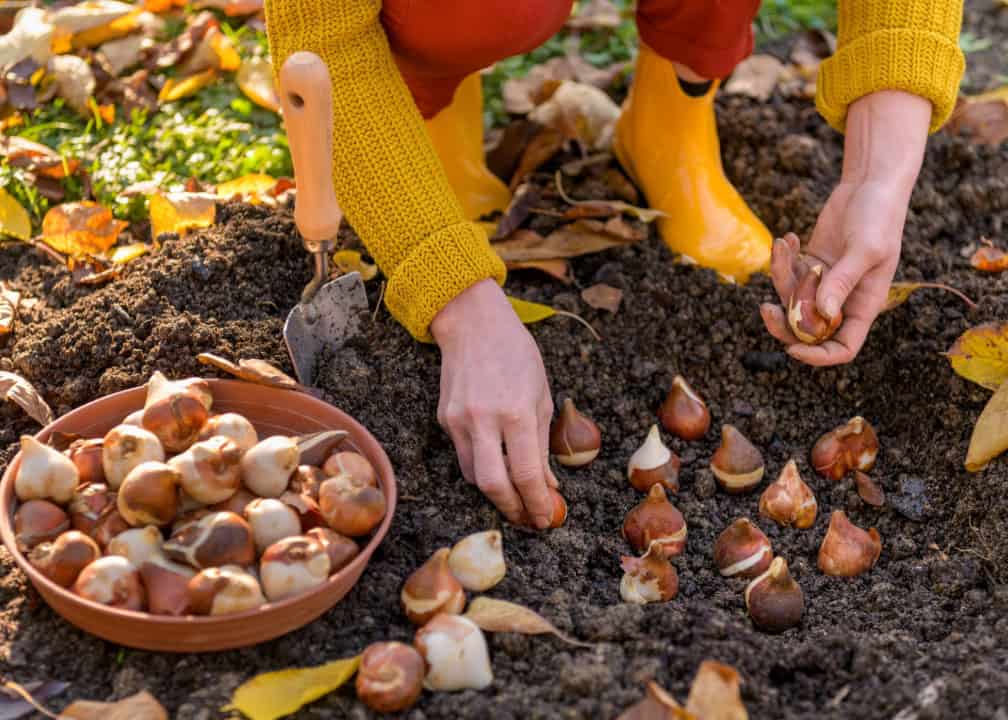
These are all geophytes, or “earth plants,” perennial plants with underground storage “containers” or systems. These underground storage containers are active and, when conditions are right, they grow, bloom, and reproduce after a period of dormancy. In general usage, all are referred to as “bulbs.”
Placing them all under the general category of bulbs, researchers note these plants have the common ability to store the plant’s complete life cycle in an underground storage structure. They all have a period of growth and flowering, followed by a period of dormancy.
The classification of these plants is based on their differing storage structures. True bulbs include tunicate bulbs (tulips) and imbricate bulbs (lilies). Corms (crocus, gladiolus), and tubers (dahlias) are referred to as bulbs, but have a different type of underground storage structure. Gardeners should pay attention to the bulb’s structure, the planting and emergence timetable, and planting recommendations to ensure blooming success.
Northwest Washington has been home to commercial bulb growers for decades, with more than 1,000 acres of tulips and daffodils grown annually in the Skagit Valley, yielding some 20 million bulbs and 75 million cut flowers.
While tulips are native to Central Asia, they were brought to the Netherlands by botanist Carolus Clusius in the late 1500s. Dutch immigrants to the Skagit Valley saw the potential of a maritime climate similar to Holland’s and began growing tulips and daffodils for commercial purposes in the 1940s and 1950s.
There are, however, many native bulbs in the region. The Puget Sound Chapter of the Washington Native Plant Society lists varieties of allium, lily, camas, iris, and hyacinth as native bulb plants. (See References and Resources.)
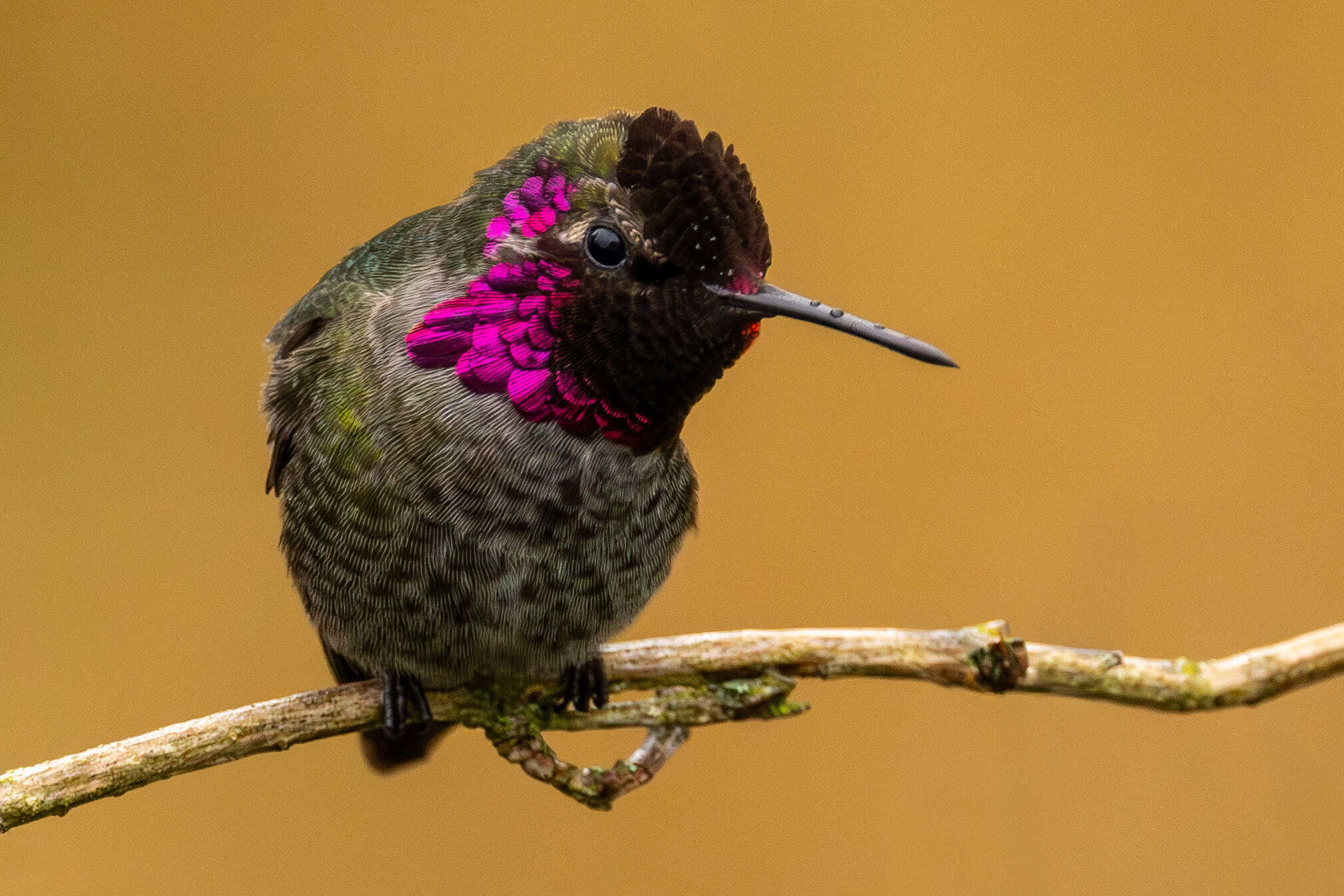
For the Love of Hummingbirds: The Ecology of Anna and Other Hummingbirds
April Know & Grow
Free. No registration required.
With Greg Green, senior instructor at Western Washington University
Tuesday, April 21, 2026 ~ 1 p.m.
Sakuma Auditorium
16650 SR 536, Mount Vernon, WA 98273
Want to learn more about hummingbirds and the ecology surrounding them? WWU Instructor and wildlife biologist Greg Green has been studying hummingbirds for more than a decade. His presentation will include the story of the Anna’s hummingbird march north over the past 75 years. Come hear about this fascinating relationship between plants and animals.
Photo © Greg Green
True Bulbs:
Planted in fall as soil temperature drops to 60° F, September to December, daffodils and tulips lead the way for spring-blooming bulbs. Crocus, hyacinth (Hyacinthus orientalis), grape hyacinth (Muscari armeniacum), snowdrop (Galanthus nivalis), and ornamental onion (Allium) also fit into this category.
The structure features a basal plate, or the bottom of the bulb where the roots grow; flesh that shows storage “rings;” skin that covers the outside; and the “shoot,” where the developing flower and leaves begin.
Plant spring bulbs two to three times as deep as the bulb is tall. For most larger bulbs, such as tulips and daffodils, they are planted about eight inches deep, while small ones, such as crocus, are planted three to four inches deep.
Forgot to plant your bulbs? While not ideal, it’s still OK to get them in the ground in January or even February if the soil isn’t frozen.
Spring-blooming bulbs are winter hardy. After the plants bloom and die back, they typically need no attention before repeating the perennial cycle in the home landscape. Bonus about daffodils: They are deer and rabbit-resistant.
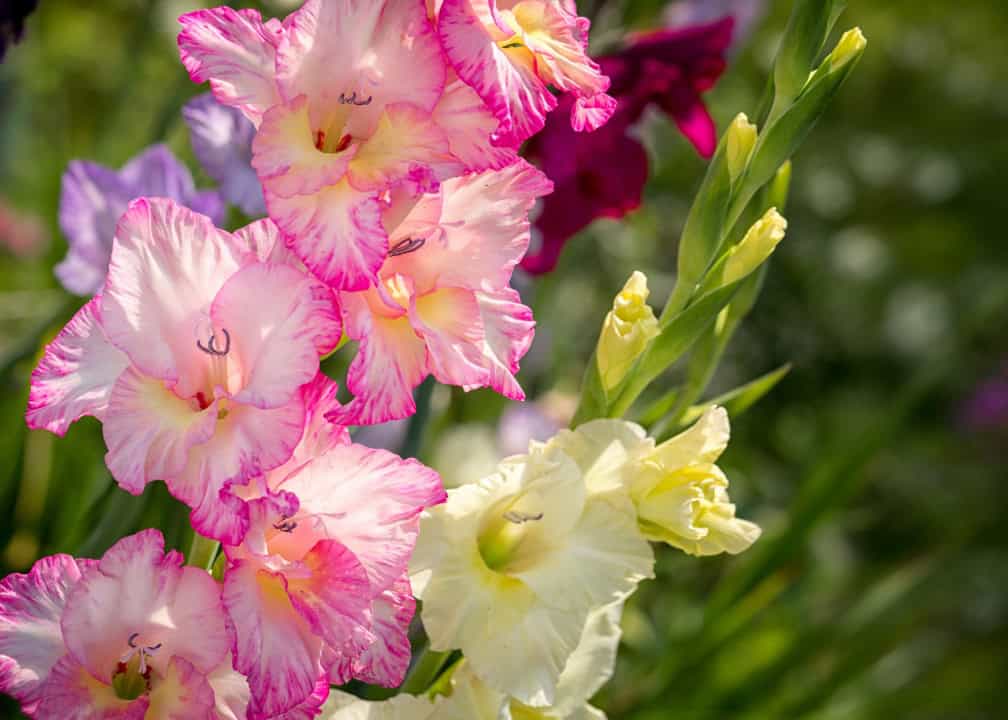
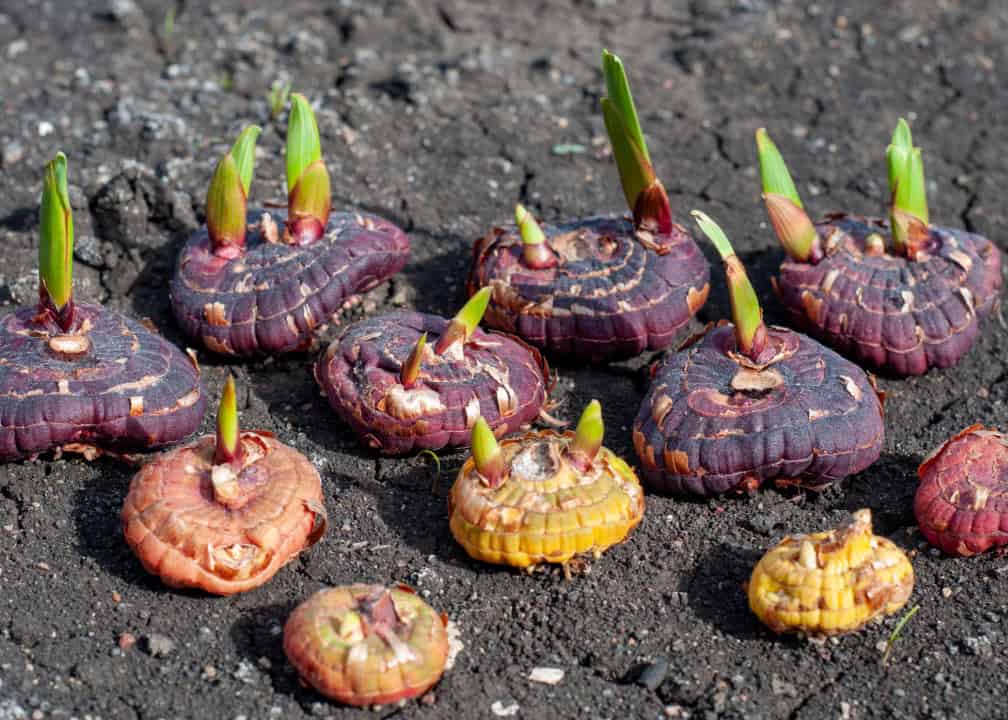
Summer-blooming gladiolus grow from corms which have a swollen base and should be arranged in the soil with buds protruding up. They are planted in the mid-spring after danger of frost has passed. Photos © Adobe Stock
Corms:
Plants that grow from corms include gladiolus, crocus, and freesia. The structure is solid and features a swollen stem base. Somewhat similar to bulbs, they lack the layers of flesh and covering. Spring-blooming crocus are corms, but fall-blooming crocus are not true crocus but a bulb in the lily family.
Gladiolus corms can be dug in the fall, separated, and stored for replanting, though many gardeners in our area can leave them in the ground with minimal or no loss.
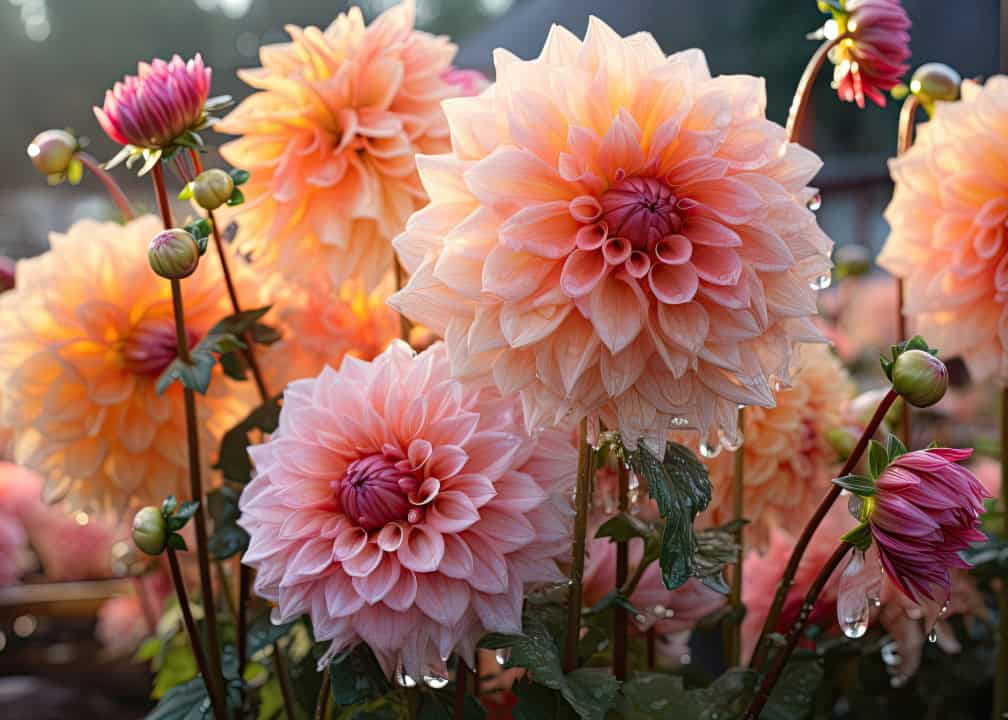
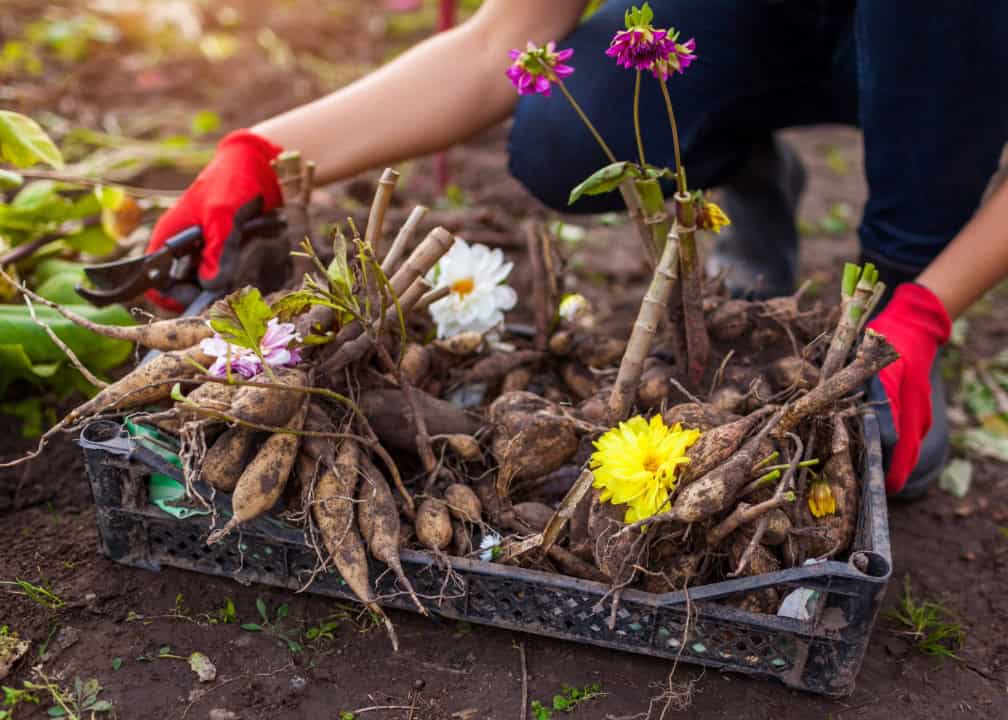
Dahlias grow from tuberous roots which have buds or eyes near the crown. Photos © Adobe Stock
Rhizomes
Plants developing from rhizomes, such as lily-of-the-valley (Convallaria), canna lily, and iris, grow horizontally under the soil’s surface, which can result in the plant spreading.
Though not strictly botanically classified as rhizomes, the fleshy roots of daylilies and peonies appear very similar and are sometimes referred to as rhizomes and/or tubers. The roots of these plants can store nutrients. Peony root clumps should be divided in the fall, while daylilies can be divided in the spring or fall.
Depending on your USDA zone, summer bloomers may not be winter-hardy. Each bulb type has specific spring planting requirements for timing and depth, based on the last frost-free date in your zone.
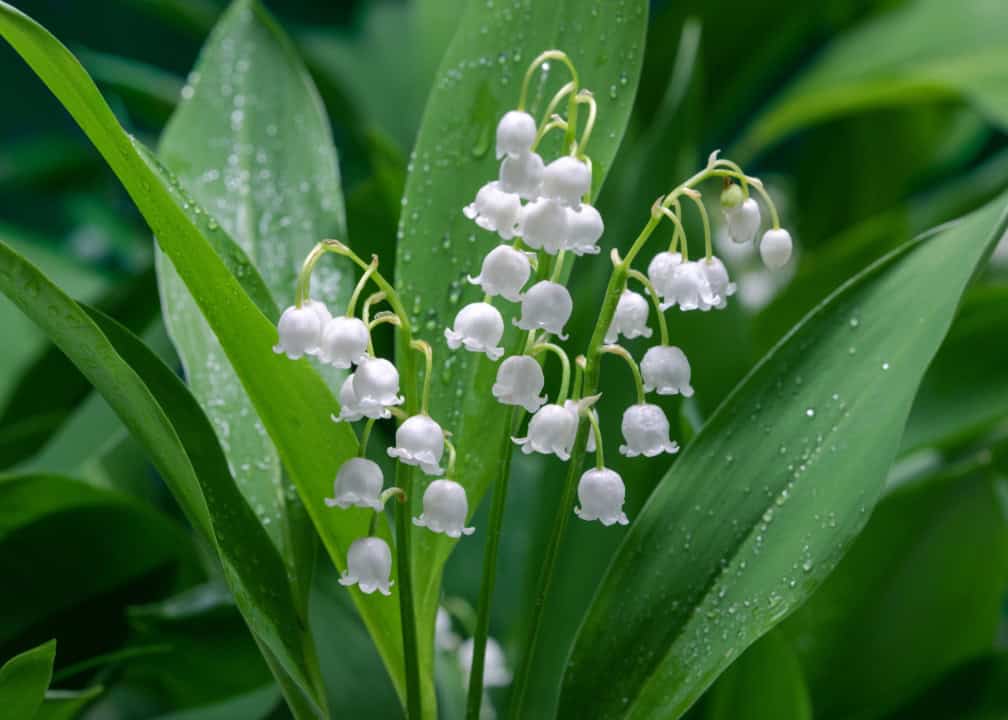
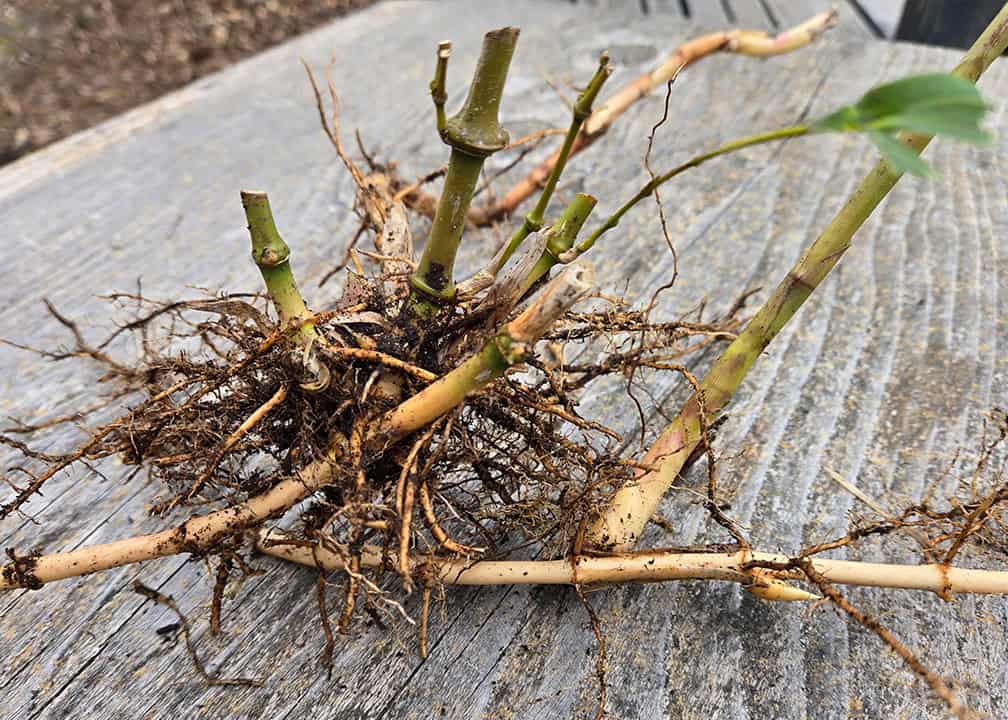
Lily-of-the-Valley and bamboo both grow from another type of geophyte called rhizomes. These rhizomes can spread easily underground and can be managed with annual maintenance. Read our blog article growing bamboo Photos © Adobe Stock and Kay Torrance.
Tubers and Tuberous Roots
Caladium, Oxalis, Gloriosa, ranunculus, and anemone are all grown from tubers.
Structurally, a big difference between tubers and true bulbs or corms is the absence of a basal plate where roots develop or a tunic covering. They have “eyes” where the new plant will grow.
Dahlias fall into a slightly different category called tuberous roots. The plant’s energy is stored in an actual root, and it forms growth from buds at the top of the root or the base of the stem. Dahlias can be dug up in the fall and saved for planting the following spring, normally mid-May in northwest Washington. Other tuberous roots include all types of potatoes and daylilies.
This group of perennial plants, called geophytes-has the unique ability to store energy in their underground “storage containers” and burst forth with beautiful flowers throughout spring, summer, and fall. Identifying them as bulbs, corms, tubers, or rhizomes, helps a gardener understand what is required for successful growth.
References and Resources
Bulbs, Corms, Rhizomes and Tubers. (2026) Penn State Extension.
Pokorny, K. (2025) Plant spring-blooming bulbs in fall for years of low-maintenance color. Oregon State University Extension.
Streich, A., Janssen, D., and Cue, K. (August 2007) Spring Flower Bulbs. University of Nebraska-Lincoln Extension, Institute of Agriculture and Natural Resources.
What is a Geophyte? (2024) Coastal Gardener. University of California Agriculture and Natural Resources.
Bulbs. (2026) Backyard Farmer. University of Nebraska-Lincoln Extension, Institute of Agriculture and Natural Resources.
Easy to grow native bulbs you should grow now. Washington Native Plant Society. Native Bulb Information
ABOUT THE AUTHOR: Kari Ranten is a retired journalist and health care communicator who became a certified Skagit County WSU Extension Master Gardener in 2024.
Questions about home gardening or becoming a master gardener may be directed to Skagit County WSU Extension Office, 11768 Westar Lane, Suite A, Burlington, WA 98233; by phone: 360-428-4270; or via the Skagit County WSU Extension website.
Washington State University Extension helps people develop leadership skills and use research-based knowledge to improve economic status and quality of life. Cooperating agencies: Washington State University, US Department of Agriculture, and Skagit County. Extension programs and policies are available to all without discrimination. To request disability accommodations contact us at least ten days in advance.