flowers with lavendar petals
© Adobe Stock

Post: July 3, 2026

Subscribe to the Blog >

Favorite Native Plants for the Small Garden

Native perennials and shrubs that are easy to grow, offer beautiful blooms, seeds, and/or fruit, and provide benefits to bees, butterflies, and birds.

What is a native plant? The Washington Native Plant Society defines natives as “species that have evolved naturally within our specific region, soils, and climate without human intervention, and are part of the indigenous flora that occurred here prior to European settlement.” Native plants co-exist with native birds, bees, spiders, and insects. These life forms are interconnected and beneficial to the environment. But through years of cultivating introduced plants, species from other continents that do well in our climate but offer little to native animals, we have disrupted and altered our ecosystem. Planting native plants can be a small contribution to bringing life back to our gardens.

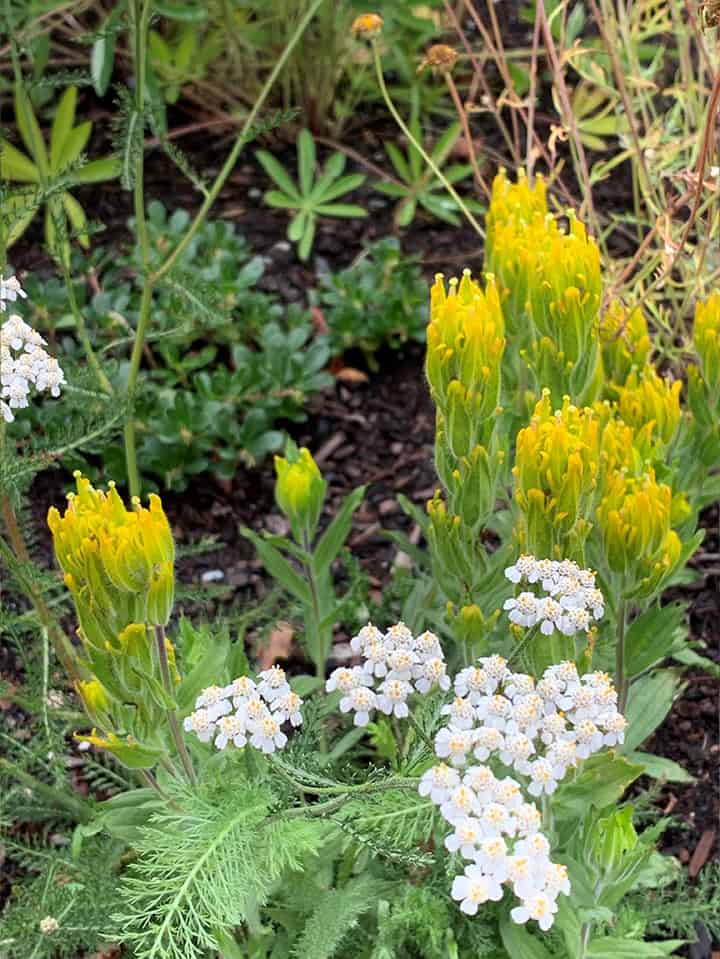
Giant Red Indian Paintbrush (Castilleja miniata) and Golden Indian Paintbrush (Castilleja levisecta)

Found in the mountains and coastal bluffs of Western Washington, red paintbrush is a favorite of our native bees and two native hummingbirds: Anna’s (Calypte anna) and Rufous (Selasphorus rufus). A low water perennial with long-lasting flowers, paintbrushes are hemiparasitic and do best with a host plant. Pair red paintbrush with native yarrow or lupines for best results.

Hemiparasitic (he-mē-ˌper-ə-ˈsi-tik)

Britanica defines hemiparasitic plants as plants that “have green foliage and are photosynthetic but supplement their nutritional needs by siphoning the products of photosynthesis from their hosts.”

Golden paintbrush, considered a threatened species in Western Washington, grows best with host plants from the prairie, such as Roemer’s fescue and Oregon sunshine sunflower, but can also survive independently if well-watered. Golden paintbrush supports bees, hummingbirds, and the endangered Taylor’s checkerspot (Euphydryas editha taylori) butterfly.
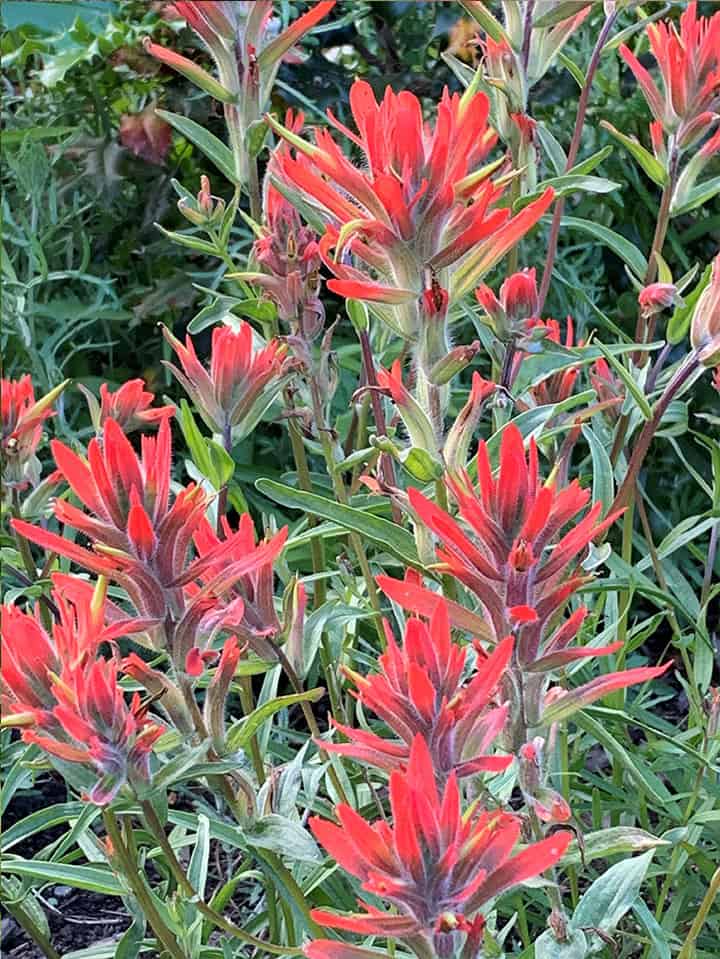
watermelon colored blooms on spikes
Red Paintbrush © Photo: Joan D. Stamm
yellow and white blooms in garden
Golden Paintbrush © Photo: Joan D. Stamm
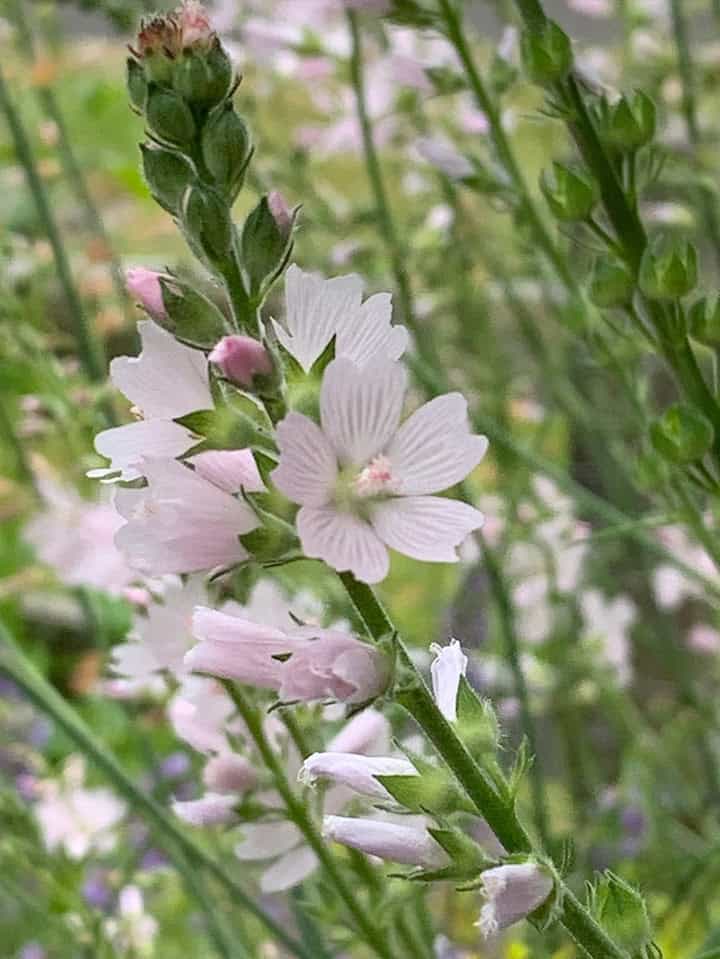
light pink 5 petaled flowers in meadow
Meadow Checkermallow © Photo: Joan D. Stamm
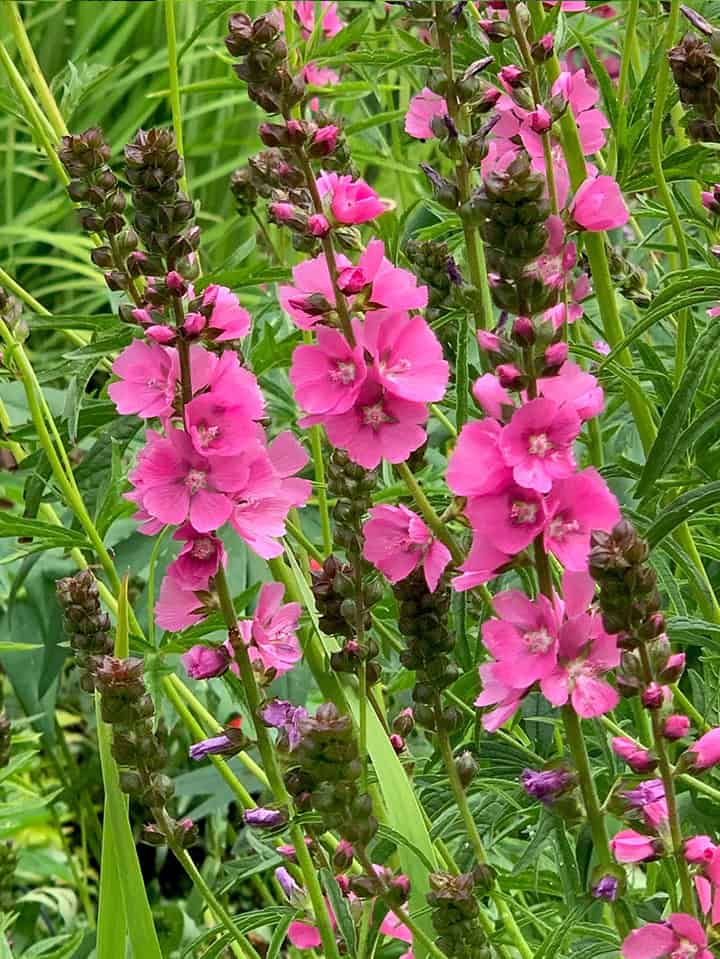
bright pink blooms on stalks in garden
Henderson’s Checkermallow © Photo: Joan D. Stamm

flower icon for WSU Master GardenerMark Your Calendar for These Free Know & Grow Workshops

Ways You Can Help Your Backyard Birds
Tuesday, August 18, 2026
1:00 pm – 2:30 pm
Spectacular Fall Color – How You Can Have it in Your Garden
Tuesday, September 15, 2026
1:00 pm – 2:30 pm
Prepare Your Garden for Fall and Winter
Tuesday, October 20, 2026
1:00 pm – 2:30 pm
Creating an Award-Winning Display Garden for the NW Flower and Garden Festival
Tuesday, November 10, 2026
1:00 pm – 2:30 pm
Sakuma Auditorium
16650 SR 536, Mount Vernon, WA 98273

Henderson’s Checkermallow (Sidalcea hendersonii) and Meadow Checkermallow (Sidalcea campestris)

A tall, stately plant with bright pink rosettes on long stalks somewhat resembling miniature hollyhocks, Henderson’s checkermallow grows along the Washington coast and easily re-seeds. (If you don’t want new starts, cut seed heads after blooming, or leave them for the birds and give away plant starts in spring.) This plant is considered endangered in Oregon, uncommon in Washington, and a species of concern in British Columbia. If you have a moderately moist corner of your garden in full sun to partial shade, Henderson’s checkermallow will provide nectar for bees, butterflies, and hummingbirds. It is also a host plant for several butterfly species, including the common checkered skipper, gray hairstreak, and American painted lady. 

Meadow checkermallow, a native to Oregon’s Willamette Valley but also found in southern Washington, is a host plant for west coast lady, and several other butterfly larvae. Many bees, wasps, and flies also find this plant attractive. Its tall stems and delicate pale pink flowers will add a bit of charm to your perennial garden.

Showy Fleabane (Erigeron speciosus):

Lavender daisy-like blooms that continue all summer make this easy-to-grow perennial a must-have in the garden. A member of the aster family, showy fleabane likes sun and thrives with moderate moisture in well-drained soil. Found in the mountains from Oregon to British Columbia, this cold-hardy plant is a host plant for the lynx flower moth, and its blooms are popular with bees, butterflies, and hoverflies. 

Shooting Star (Primula pauciflora):

True to their namesake, these magenta-pink flowers, which appear like stars shooting out from leafless stems, delight the gardener and bees in early spring. Even though a short-lived bloomer, this spectacular little perennial is worth a place in the partially sunny, well-drained corner of your garden. Our native “buzz pollinators,” those bumblebees that vibrate to release the flower’s protein-rich pollen, will find a happy home in Shooting-star.
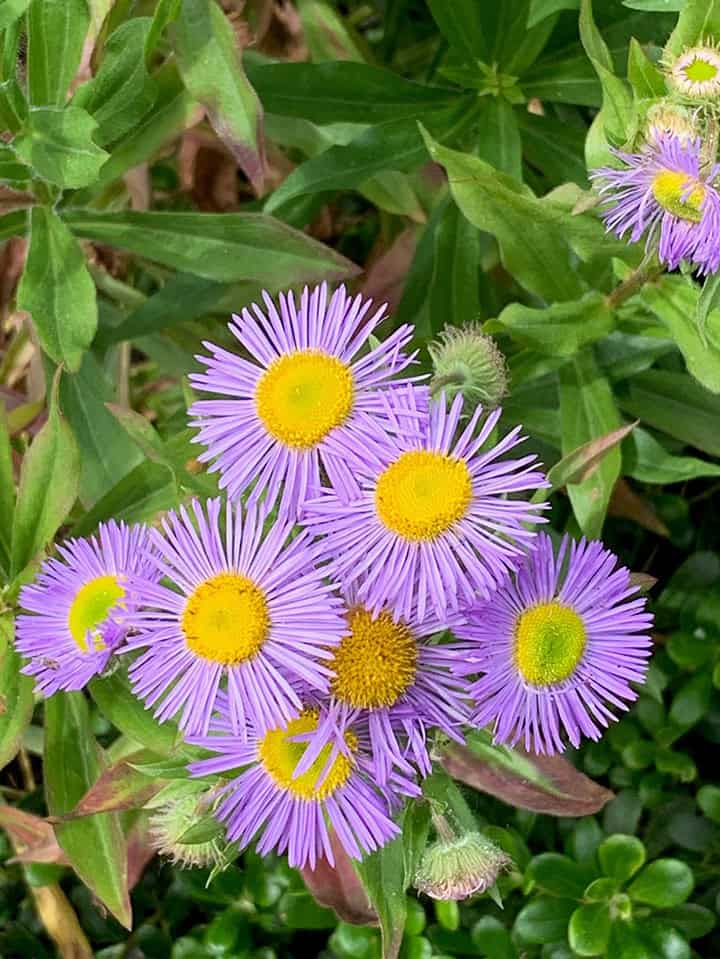
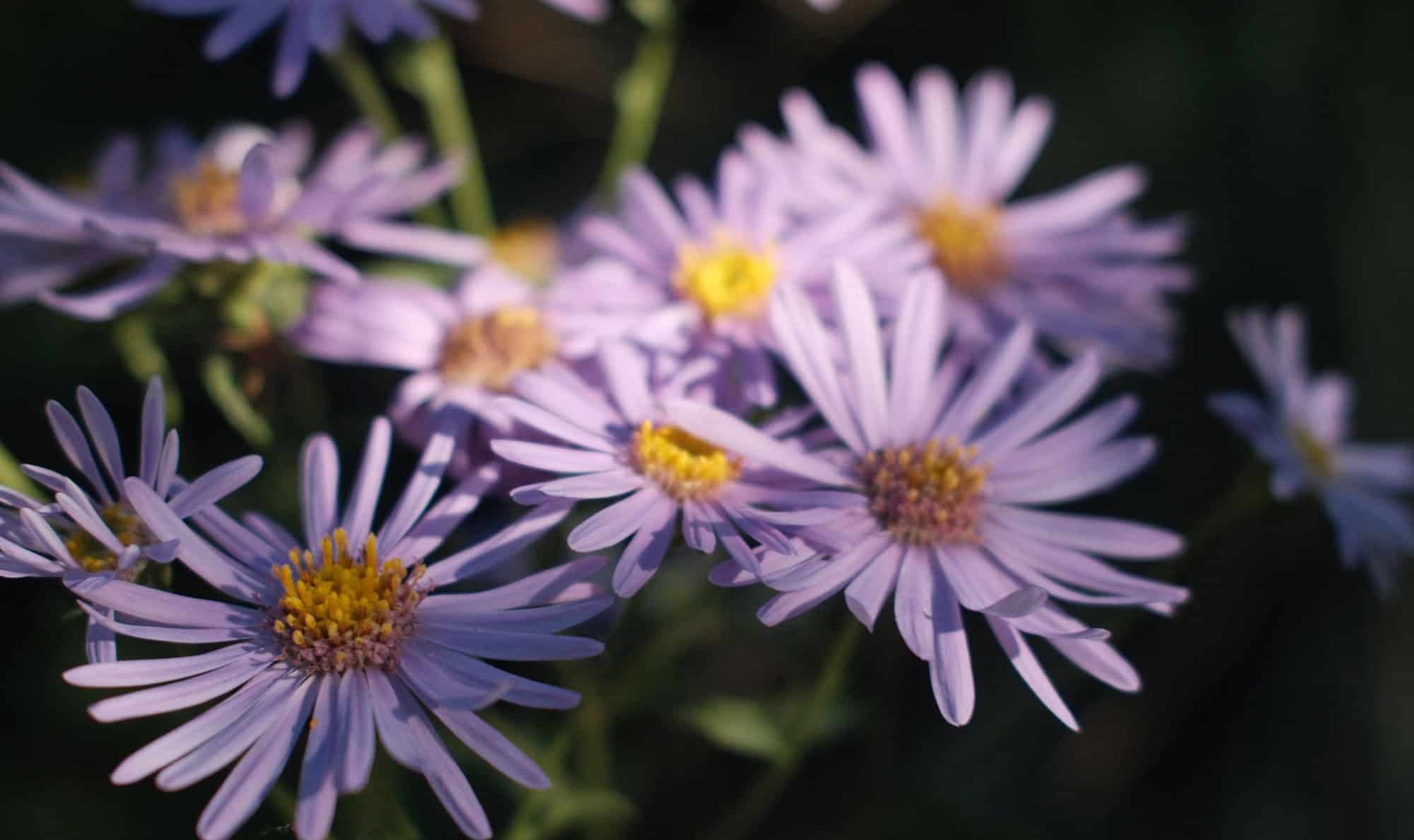
lavender colored petals with bright yellow centers
Fleabane © Photo: Joan D. Stamm
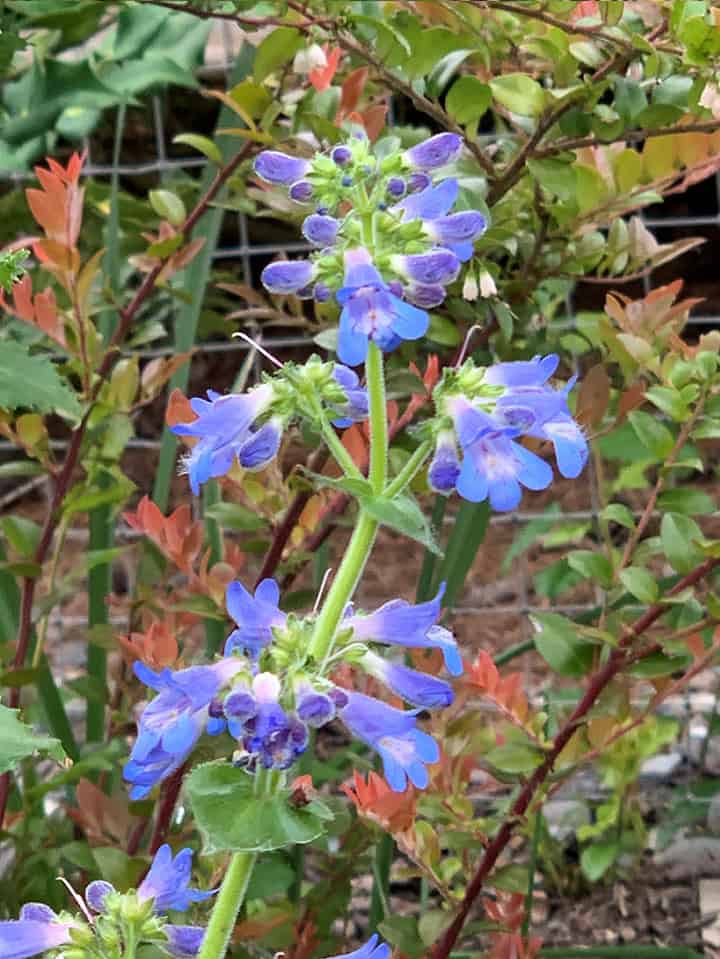
blue flowers on stem of plant
Broad-leaved Penstemon © Photo: Joan D. Stamm
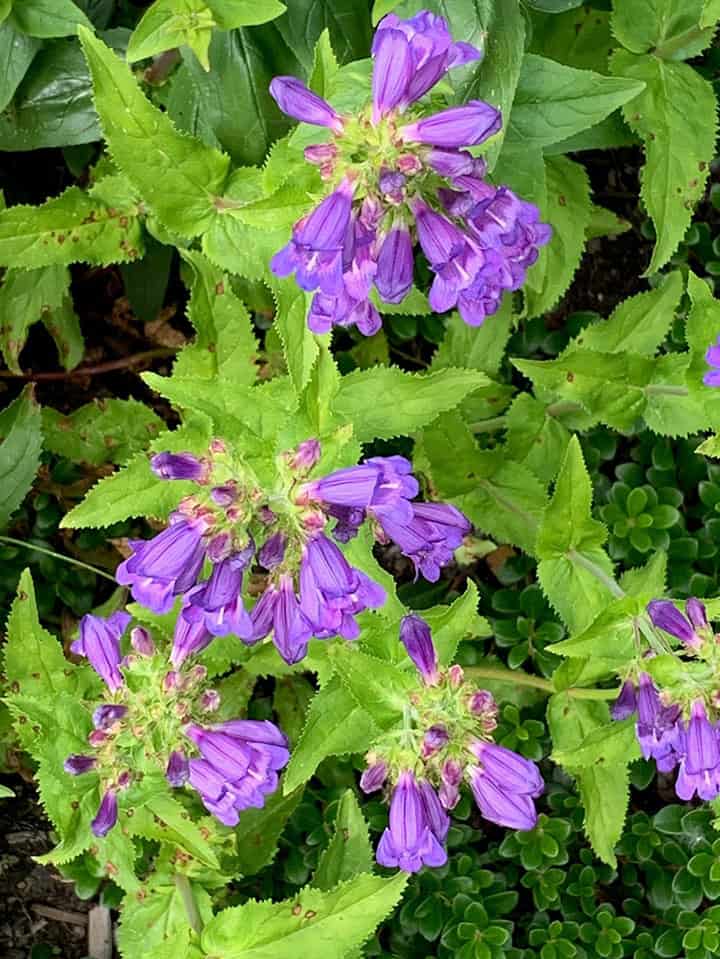
purple trumpet-like blooms on green leaves
Cascade Penstemon © Photo Joan D. Stamm

Broad-leaved Penstemon (Penstemon ovatus) and Cascade Penstemon (Penstemon serrulatus)

There are over 30 species of penstemon native to Washington state, but the two named here-broad-leaved and Cascade penstemon, both deciduous-are favorites in any garden.

Broad-leaved penstemon exhibits nearly blue flowers on tall stems. Native sweat bees, other bees, and hummingbirds will be attracted to the tubular flowers. Plant this penstemon in partial shade and well-drained soil.

Cascade penstemon grows well in moist, sunny conditions. It’s a prolific bloomer with violet tubular flowers. 

All penstemons (also known as beardtongues) attract a variety of wildlife: hover flies, ants, beetles, bees, moths, hummingbirds, and others. You can’t go wrong with a penstemon.

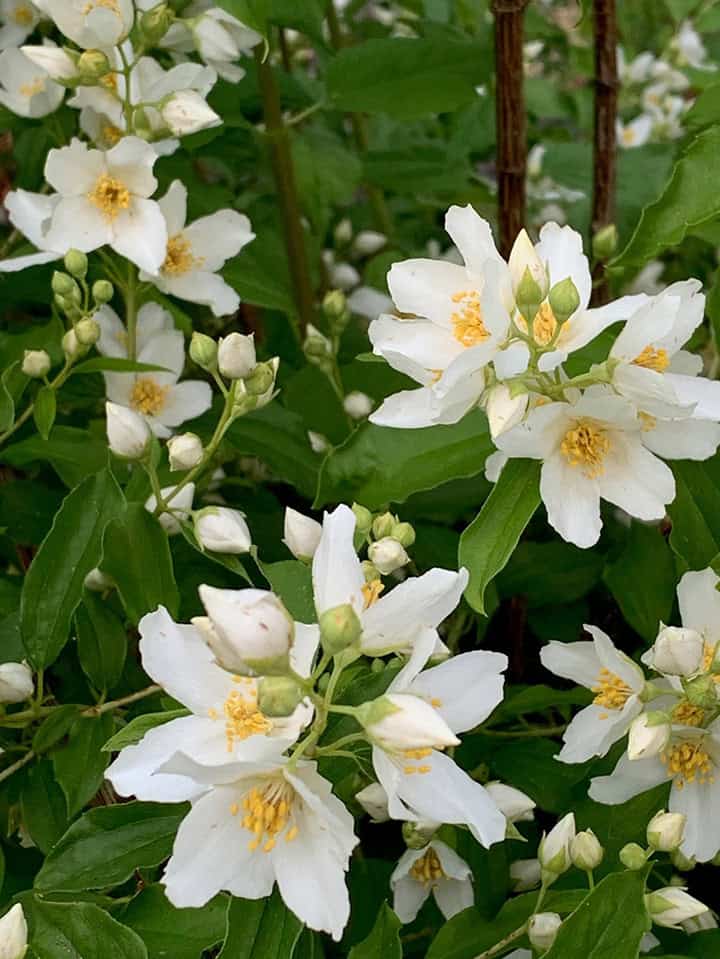
Mock Orange (Philadelphus lewisii):

Found on the west and east sides of the Cascades, in sun to partial shade, this many-stemmed deciduous shrub grows to 9 feet tall. With its clusters of sweetly fragrant white flowers, this plant caught the attention of Scottish botanist David Douglas, who introduced it into the UK in 1825 as a North American ornamental. Swallowtail and common wood nymph butterflies, as well as bees, will visit mock orange. The seeds are eaten by juncos, chickadees, and flickers.

Serviceberry (Amelanchier alnifolia):

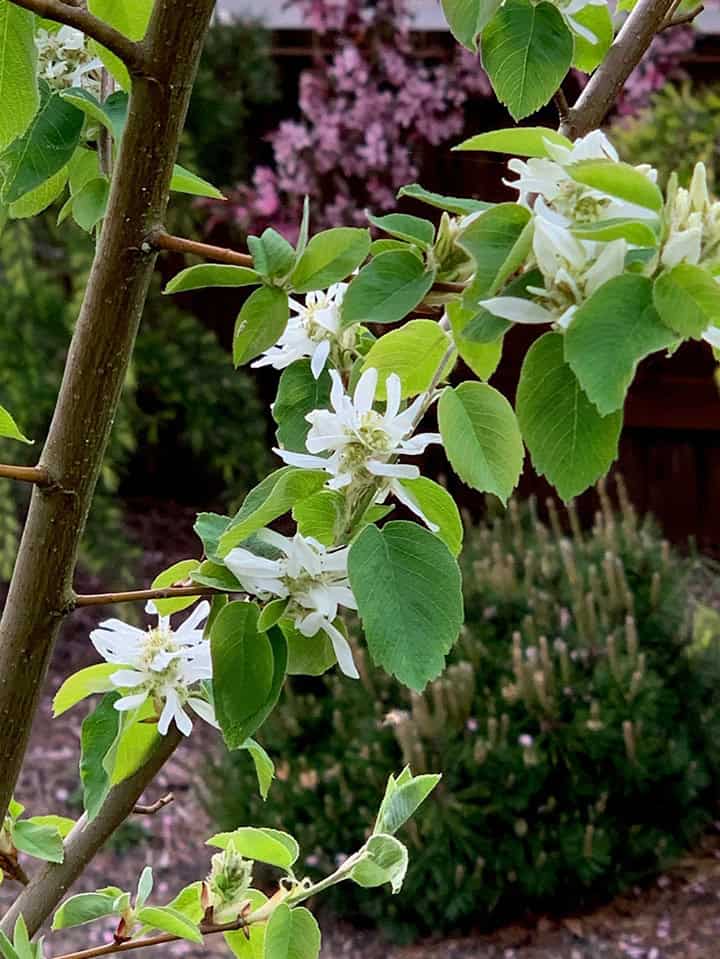
This deciduous shrub with its white blooms in early spring provides pollen and nectar for many native bees and hummingbirds. In autumn, waxwings, woodpeckers, chickadees, and tanagers, as well as several mammals, will gobble up its purple berries. If you want some for yourself, you’ll have to be quick. The pale swallowtail, brown elfin, Lorquin’s admiral, and California hairstreak butterflies use this plant to deposit their larvae-a vital food source for young fledglings. Serviceberry, a NW native keystone plant known for its many benefits, symbolizes reciprocity. If you have room for several of these tall shrubs in your garden, they will provide a wealth of benefits to many of our wild and native creatures. 

Other native favorites that are easy to grow, readily available in our local nurseries, and provide many benefits to our native wildlife include:

  • Evergreen Oregon grape (Mahonia aquifolium and M. nervosa) which attracts painted lady butterflies and provides food for bees and many birds.
  • The deciduous red-flowering currant (Ribes sanguineum) with its pendulous clusters of red-to-pink flowers is loved by hummingbirds.
  • The pink flowers of the evergreen huckleberry (Vaccinium ovatum) provide nectar for bees, butterflies and hummingbirds; its purple berries are loved by towhees, robins, waxwings, ban-tailed pigeons and many others.
  • Kinnikinnick (Arctostaphylos uva-ursi) is an indispensable evergreen groundcover for the sunny dry spots that provides nectar for bees and hummingbirds, berries for ground-feeding birds and hosts brown and hoary elfin butterfly larvae.
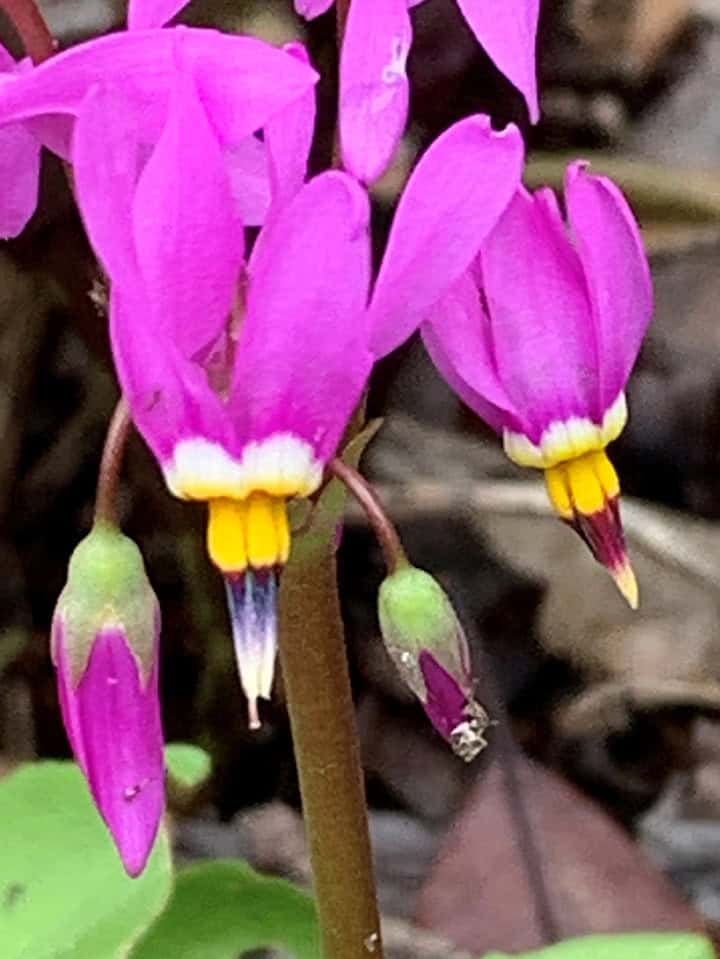
bright fuchsia petals on delicate flower
Shooting Star © Photo: Joan D. Stamm
white blossoms on branch with green leaves
Serviceberry © Photo: Joan D. Stamm
white blooms with yellow centers on branch
Mock Orange © Photo: Joan D. Stamm

Where to Find Native Plants

The annual WSU Extension Skagit County Master Gardener’s Plant Fair on the Saturday before Mother’s Day carries a wide selection of native plants.

Twice a year, the Salal Chapter of the Washington Native Plant Society sells native plants with easy online shopping. All of their plants are suitable for gardens west of the Cascades.

Plantas Nativa in Bellingham, a predominantly NW native specialty nursery, also has online shopping or in-person shopping on Tuesdays, Fridays, and Saturdays.

Local sources such as Christianson’s Nursery and Azusa Garden Centre are carrying more native plants every year due to customer demand.

There are so many beautiful and beneficial native plants in Washington state that it’s difficult to limit the selection, but knowing that all of them provide either nectar, pollen, berries, and/or habitat for birds, insects, and caterpillars, you can’t go wrong in choosing a few or many for your landscape.

Book References:

  • Kruckeberg, A.R. and Chalker-Scott, L. (2019) Gardening with Native Plants of the Pacific Northwest (3rd). Seattle: University of Washington Press.
  • Stark, E. M. (2014) Real Gardens Grow Natives: Design, Plant & Enjoy a Healthy Northwest Garden. Skipstone.
  • Wall Kimmerer, R. (2024) Serviceberry: Abundance and Reciprocity in the Natural World. Scribner.

Web References:

Joan D. Stamm

ABOUT THE AUTHOR:

Joan Stamm, is a certified Skagit County WSU Extension Master Gardener and the author of several books, including The Language of Flowers in the Time of COVID: Finding Solace in Zen, Nature and Ikebana.


Questions about home gardening or becoming a master gardener may be directed to Skagit County WSU Extension Office, 11768 Westar Lane, Suite A, Burlington, WA 98233; by phone: 360-428-4270; or via the Skagit County WSU Extension website.

Washington State University Extension helps people develop leadership skills and use research-based knowledge to improve economic status and quality of life. Cooperating agencies: Washington State University, US Department of Agriculture, and Skagit County. Extension programs and policies are available to all without discrimination. To request disability accommodations contact us at least ten days in advance.
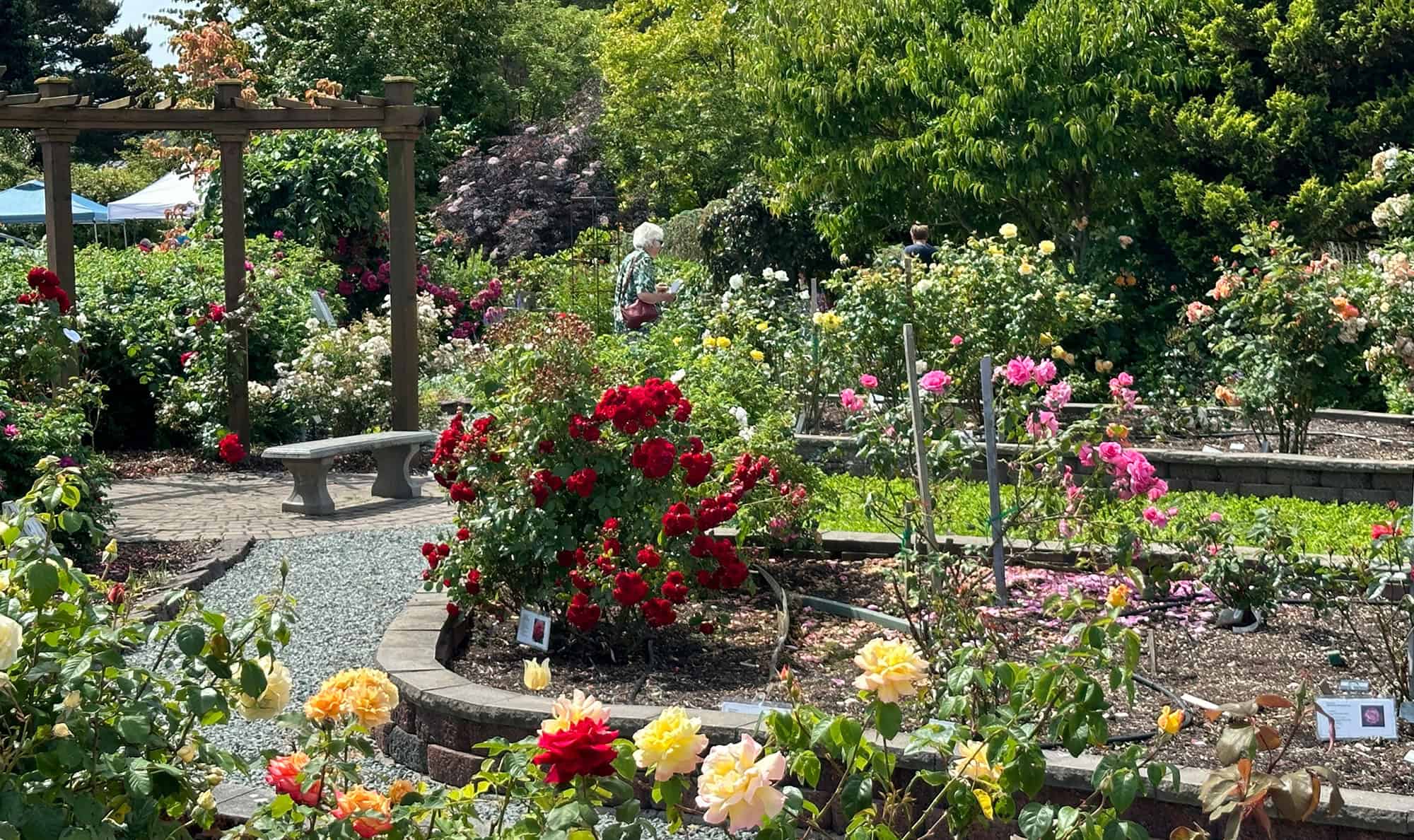

roses blooming in Discovery Garden

Garden Open House and Ask a Master Gardener Day:

Eight acres, three gardens, infinite inspiration

Open House to Showcase Master Gardeners, Native Plant Society, and NW Fruit

May 1, 2025

Subscribe to the Blog >


By Kari Ranten, Skagit County WSU Extension Master Gardener

Kari Ranten

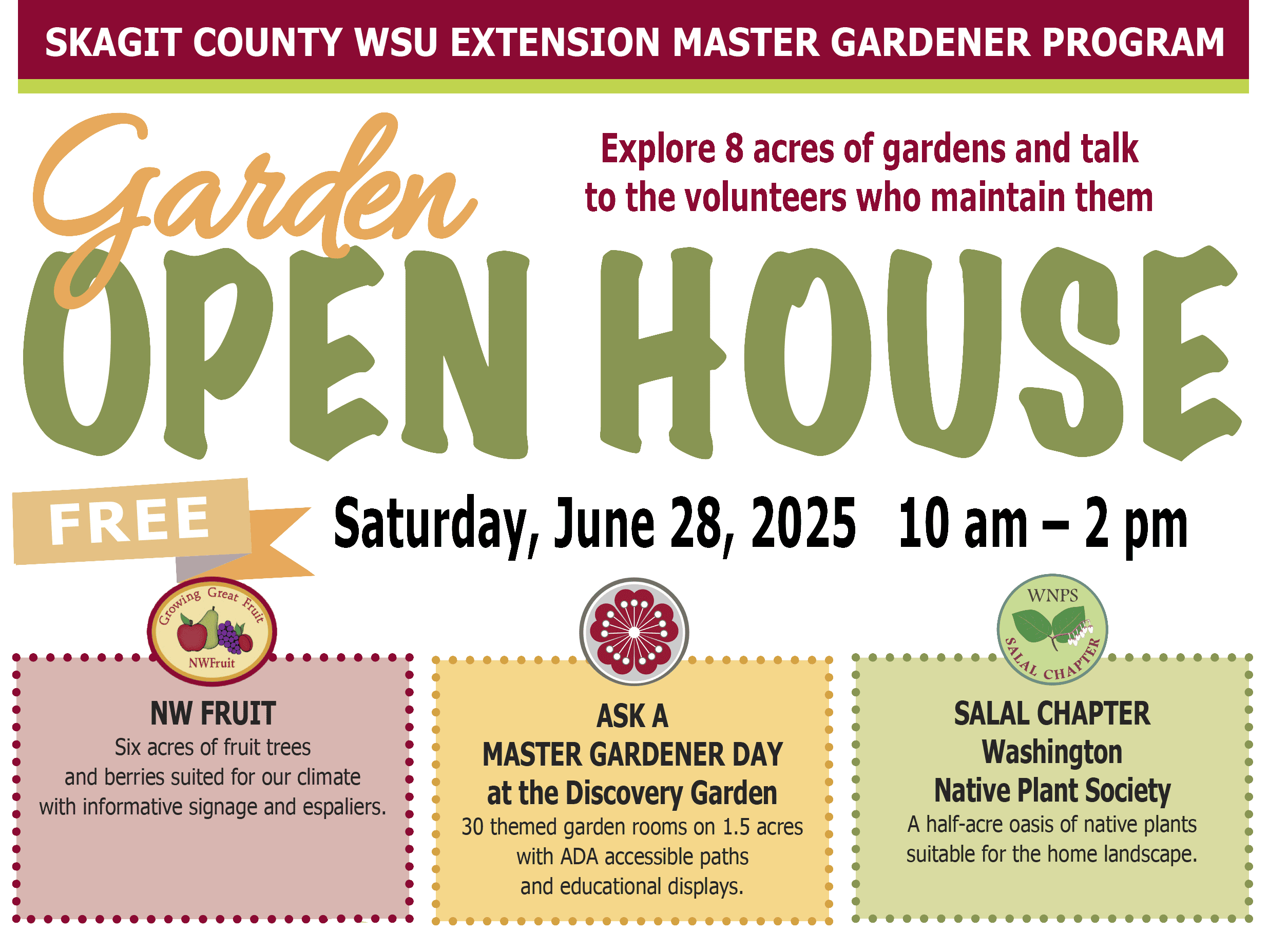
Want to know about gardening – from roses to vegetables? Want to learn more about including native plants in your landscape? Ever wonder how to grow, graft, and prune fruit trees? Learn about all of this and more at the annual Garden Open House on Saturday, June 28, 2025, in Mount Vernon.

Eight acres of gardens showcase amazing trees and native plants at the event slated for 10 a.m. to 2 p.m. at 16602 State Route 536 (Memorial Highway), just west of the Washington State University Northwestern Washington Research and Extension Center.

The event, sponsored by the Skagit County WSU Extension Master Gardener Program, takes place at gardens maintained by volunteers representing the Master Gardener Program, NW Fruit, and the Salal Chapter of the Washington Native Plant Society. In addition, several partner organizations will present interactive displays and information on clean water, noxious weeds, maintaining healthy landscapes, and promoting pollinators, birds, and other wildlife.

This annual event offers home gardeners in Northwest Washington the opportunity to experience a wide range of gardening skills, view hundreds of plants and trees, and learn ways to respect the environment. Master gardeners and many partners enjoy this opportunity to share the gardens and educate our neighbors. And it’s a great, free summer event for the whole family.

graphic showing three gardens in open house

Join Us for a Three Garden Open House

Saturday, June 28, 2025
10 am – 2 pm
Discovery Garden
16602 State Route 536 (Memorial Hwy.)
Mount Vernon, WA 98273
Fun Activities for Kids  ~  Plant Sale
Water Conservation Experts  ~  Noxious Weed Information
30+ Garden Rooms  ~  Plant Clinic and Gardening Help
Native Plants  ~  Pollinators
Talk to Fruit Tree Experts

The open house is a great venue to talk about the mission of the Master Gardener Program and to provide evidence-based scientific information for the home gardener. It is also a wonderful event and very rewarding to meet and exchange ideas with local gardeners.

The open house will feature three gardens:

The Discovery Garden

people at open house in discovery garden
The open house is a great venue to talk about the Master Gardener Program and to meet and exchange ideas with local gardeners. Credit: © Skagit County Master Gardeners

The Salal Garden

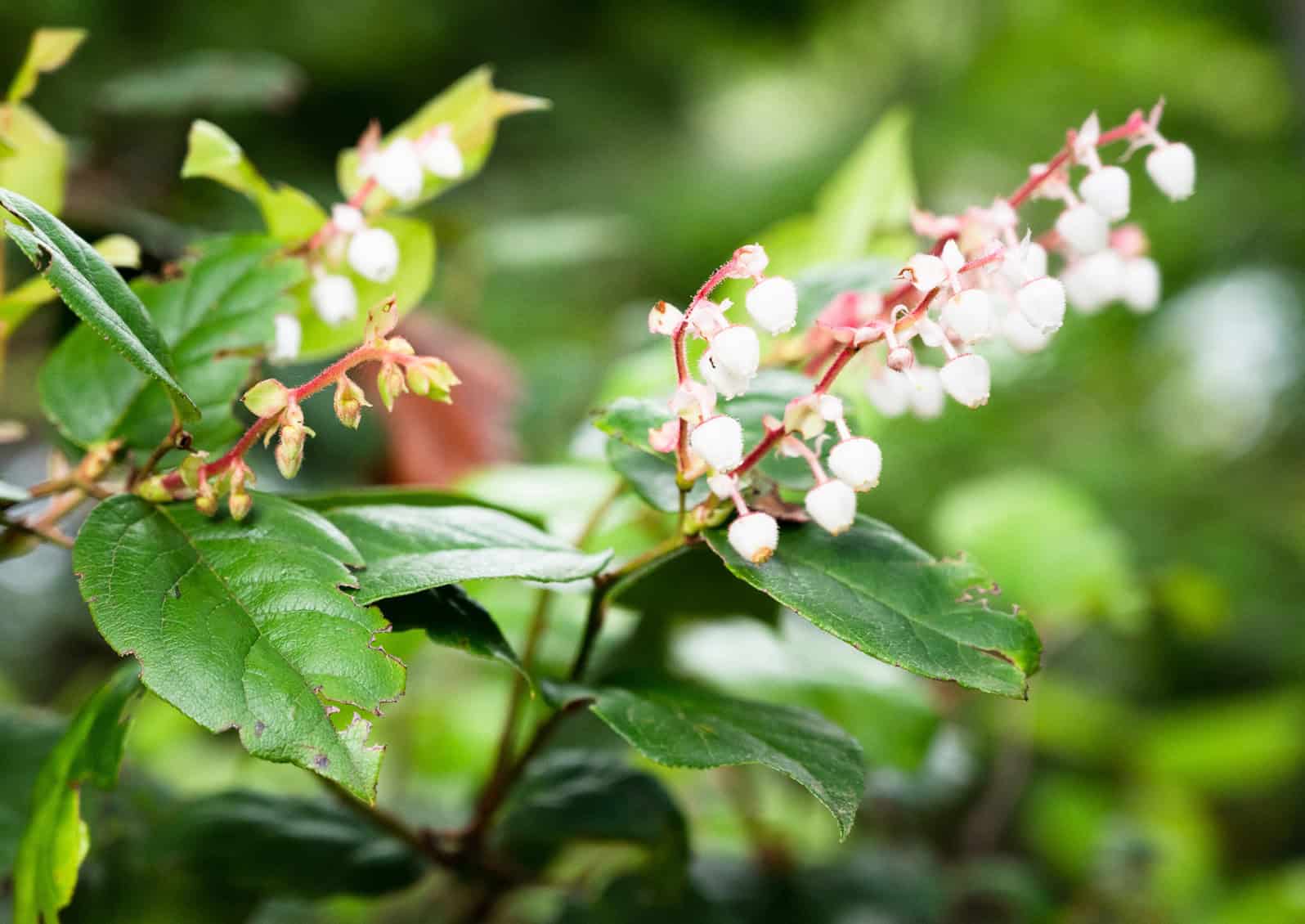
white flowers on blooming salal
A shaded trail through the half-acre Salal Garden leads visitors into a natural setting featuring dogwood, salal, cascara, vine maple, ferns, trillium and more. Credit: © Salal Chapter Northwest Chapter of Washington Native Plant Society.

The NW Fruit Garden

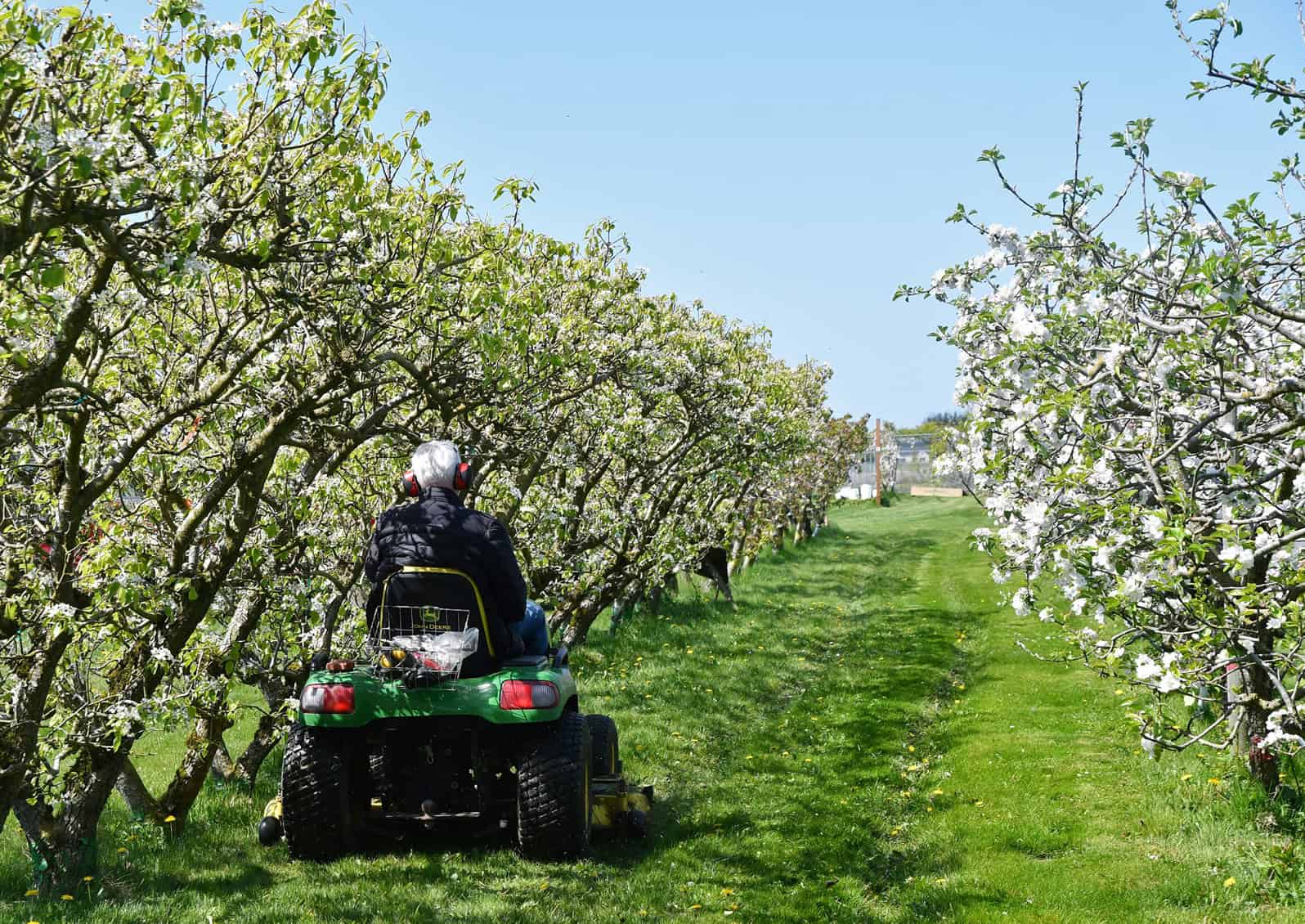
mowing near blooming fruit trees
The NW Fruit Garden encompasses six acres of fruit trees, berry bushes and other fruit-bearing plants, along with nut trees. Altogether, the garden features 606 plants – from peach and persimmon to apples and Asian pears. Credit: Used with permission © Scott Terrell

Discovery Garden:
This is truly a hidden gem in Skagit County that merits discovery! Nearly half of the guests at the 2024 open house said it was their very first visit – including those who live locally! June is a great time to experience the garden where visitors will find beautiful blooming colors, including many perennials and dozens of rose varieties, all selected to thrive in the Pacific Northwest.

This amazing 1.5-acre oasis is maintained by the volunteers of the Skagit County WSU Extension Master Gardener Program. The Discovery Garden features 30 garden “rooms” ranging from herbs and heathers to roses and vegetables. The garden paths are ADA-accessible paths and include the Enabling Garden to illustrate ways to adapt the joy of gardening for those with mobility issues. Master gardeners will be on site to answer questions, demonstrate best practices, and inspire home gardeners.

People walking in beautiful garden
The Discovery Garden is 1.5-acre oasis is maintained by the volunteers of the Skagit County WSU Extension Master Gardener Program and demonstrates best practices and inspire home gardeners. Credit: © Skagit County Master Gardeners
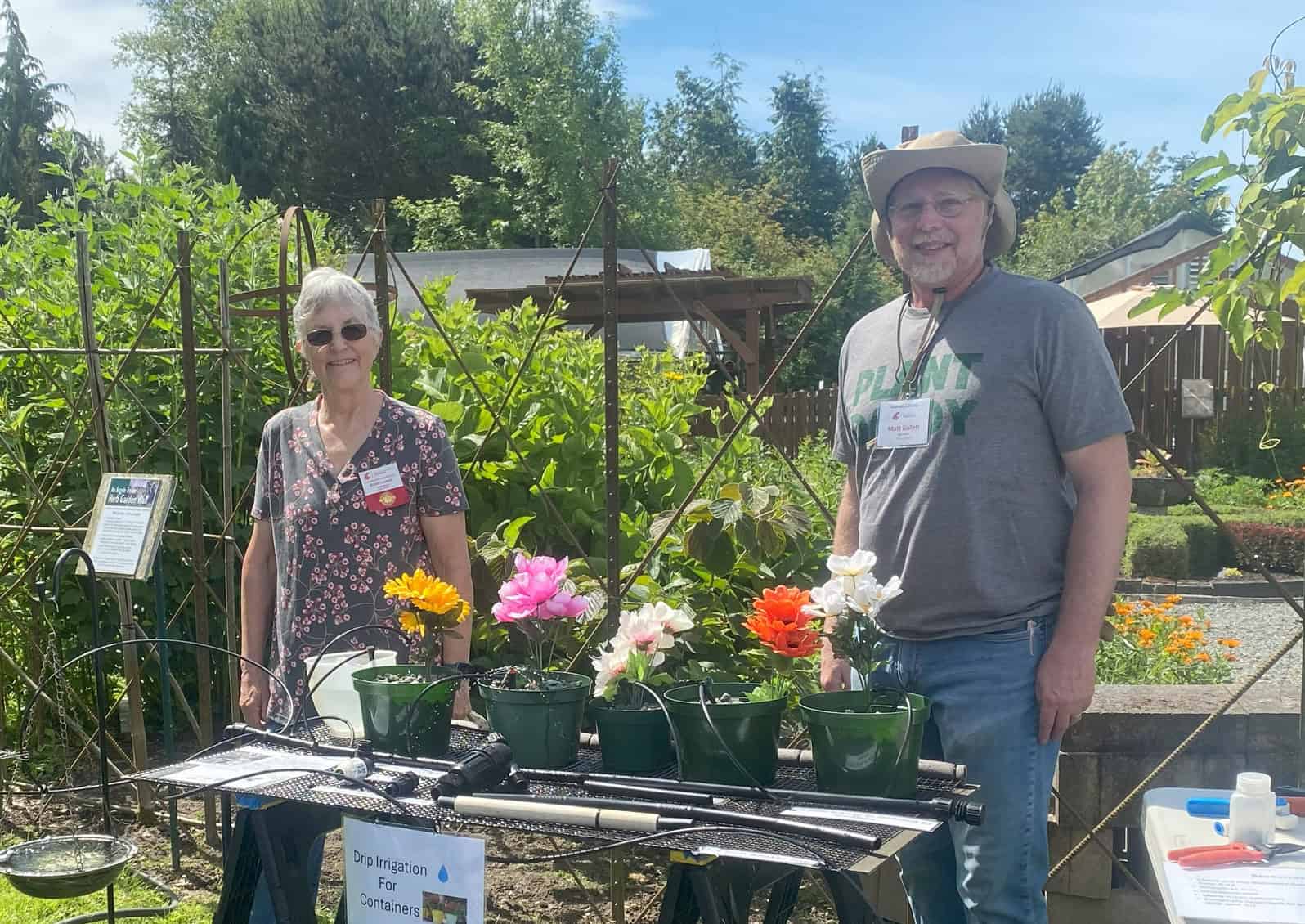
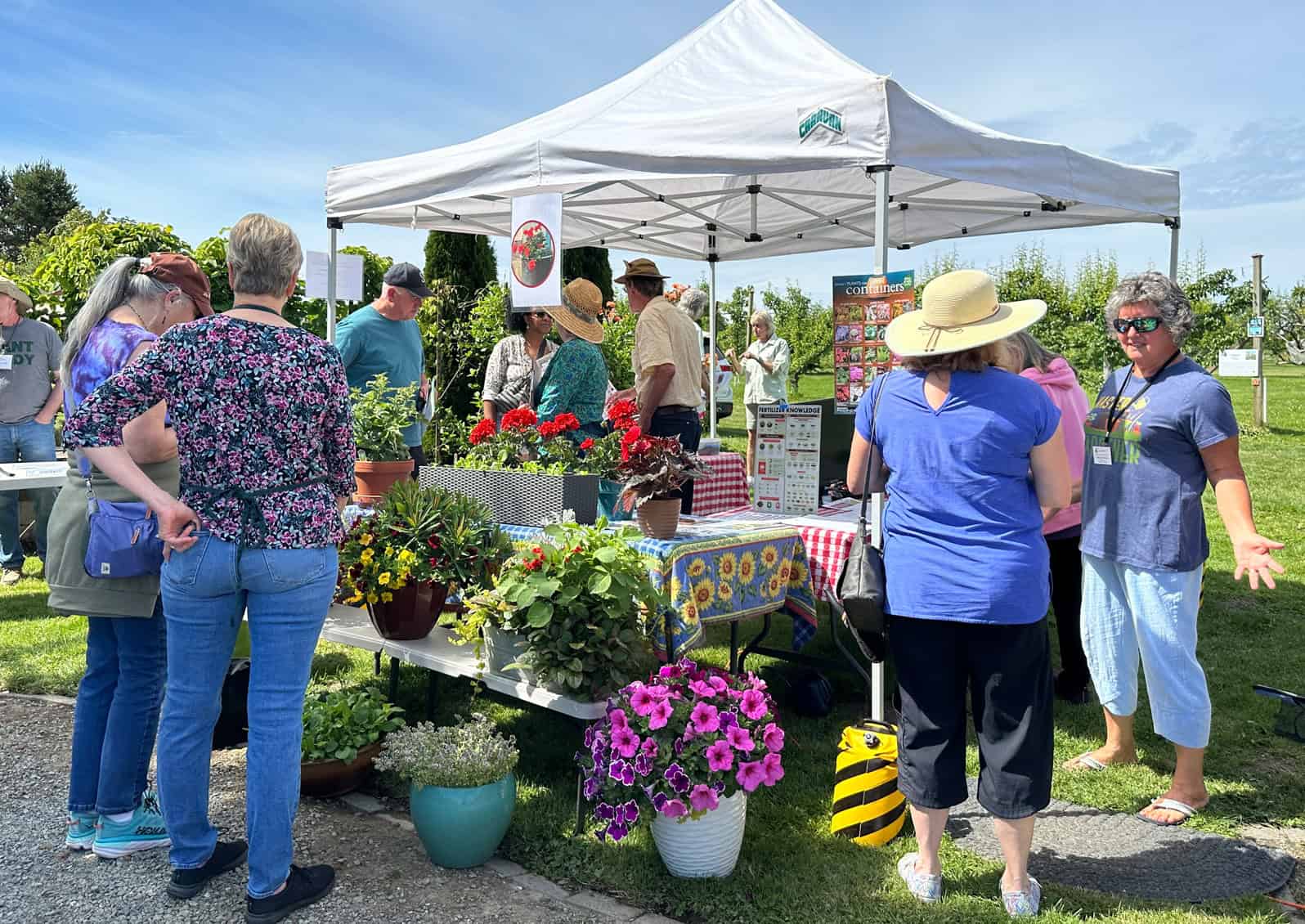
people at display table
The Garden Open House will feature displays about container gardening, drip irrigation systems, clean water practices, and dealing with noxious weeds. Credit: Credit: © Skagit County Master Gardeners

Salal Native Plant Garden:
Adjacent to the Discovery Garden, this half-acre oasis of native plants is maintained by volunteers of the Washington Native Plant Society’s Salal Chapter to demonstrate how native plants can be incorporated into the home landscape. A shaded trail leads visitors into a natural setting featuring dogwood, salal, cascara, vine maple, ferns, trillium, and more. Volunteers, representing north Snohomish, Skagit, and Island counties, will be on hand to guide garden tours and answer questions. For information, go to https://www.wnps.org/salal.
NW Fruit Garden:
Adjacent to the Discovery Garden, the NW Fruit Garden encompasses six acres of fruit trees, berry bushes, and other fruit-bearing plants, along with nut trees. Altogether, the garden features 606 plants – from peach and persimmon to apples and Asian pears. The garden features a growing collection of larger antique apples, many of which were grown during the 1960s and 70s. The mission of the NW Fruit Garden is “to advance fruit horticultural practices for the unique Western Washington maritime climate through advocacy, research, education, and demonstration for the benefit of the general public and the small farmer.” Volunteers will be on hand to answer questions, offer tours, and provide demonstrations.

A popular feature and photo op at the NW Fruit Garden is the welcome espalier – using grafted and supported fruit tree limbs to spell out the word WELCOME. The welcome and the entire tree fruit garden were designed in the 1990s by the late Kristan Johnson, https://nwfruit.org/fruit-garden-designer/ a landscape architect.

Booths and more features of the open house:

Get your “passport” and enjoy the open house:
Upon arrival at the open house, guests will receive a “passport” to track their visits to each of the activities offered at the event. Complete the passport and take home a prize!
Check out the Children’s Garden:
A wonderland of activities for children of all ages awaits visitors to the Children’s Garden with fun surprises and interactive features. During the open house, children can enjoy free rock painting and bubble blowing within the whimsical garden space.
Container gardening display:
Using pots and containers for gardening – from flowers to vegetables – is a popular method in the northwest. Containers can be useful options for gardeners with limited space or accessibility issues. The demonstration will feature containers for growing food as well as decorative elements, show how containers can allow hardy indoor plants to spend months outdoors, and provide opportunities for children to have their own mini gardens.

Nearly anything can provide a home to successfully grow plants, and volunteers will show examples to stimulate visitors’ creativity. The educational display will also feature information on soil types and amendments, as well as what contents to look for in commercial soil products.

Interested in Becoming a Master Gardener?

Application period is now open through August 15, 2025.

Stop by the WSU Extension booth to learn more about the new Washington Green School, the newly launched training platform designed to provide comprehensive research-based horticulture and environmental stewardship education. The Washington Green School offers two distinct tracks:

  • Washington Gardener Certificate Track
    This option is ideal for individuals seeking to enhance their gardening skills without the commitment of volunteering. This self-paced, online-only course provides a certificate upon successful completion.
  • Extension Master Gardener Volunteer Track
    This track is for those interested in becoming certified WSU Extension Master Gardener volunteers and includes the Green School online coursework, in-person, local volunteer training, and a commitment to volunteer service hours.

For more information, go to https://skagitmg.org/home/green-school/

To apply for the Skagit County WSU Extension Master Gardener Program, go to https://extension.wsu.edu/skagit/mg/apply/


Master Gardener Plant Clinic:
The plant clinic, located in the Pavilion structure at the center of the Discovery Garden, is a popular part of the annual open house and the Skagit County WSU Extension Master Gardeners Program’s year-round outreach to assist home gardeners in diagnosing plant problems. The variety of issues routinely brought to the clinics include identification of poison hemlock; treatment of rust on red raspberries; tent caterpillars; powdery mildew on grapes; how to mitigate damage by deer; and questions about soil testing. Guests may bring a plant sample and photos to the plant clinic to help the master gardeners identify the problem and provide advice.

The certified master gardeners provide science-based information to home gardeners about sound and sustainable gardening practices, including integrated pest management, efficient watering technologies, recycling garden waste, and cultural methods for preventing and treating plant disease.

Ask a Master Gardener Blog:
Master gardener volunteers who write, edit, and take photos for the twice monthly “Ask a Master Gardener” blog will staff a booth where guests can sign up to receive blog posts, pick up copies of popular articles, and offer suggestions for future articles. The blog features a wide range of articles written by Skagit County WSU Extension Master Gardeners on topics relevant to gardeners in the North Puget Sound area.
Plant Sale:
Master gardeners will offer a variety of perennial plants for sale at the open house, all propagated and nurtured over the past months. Ferns, figs, grapes, native trees and shrubs, epimedium, Douglas fir, and more will be available for sale.
Skagit County Noxious Weed Program:
Skagit County’s Noxious Weeds program surveys, treats, and supports landowners in treating invasive plants around the county. The program has a particular focus on knotweed, which often infests river and streambanks, and spartina, an invasive grass that grows in salt marshes.

County program staff will be on hand to show photos of and information on many of Skagit County’s most notorious and harmful noxious weeds. Staff will answer questions about what weeds may have infested visitors’ properties, offer suggestions for treating them, and provide informational materials to take home.

Skagit County Clean Water Program:
Skagit County’s Clean Water Program uses a variety of efforts to keep pollution out of local waters. The program team works to reduce stormwater pollution and monitors local waterways to spot bacterial pollution from dogs, failing septic systems, and farms. Their projects reduce dirty runoff into streams and work with the public to help protect water.

At the Garden Open House, Skagit County Clean Water staff will focus on how beautiful gardening and landscaping can go hand in hand with protecting our water. The booth will include a display and information on permeable pavement (paved surfaces that still allow rainwater to soak into the ground underneath). Educational materials will address how to garden without adding harmful chemicals and excess nutrients to local waters, as well as how planting native plants can create a habitat, protect water, and look amazing in the garden.

Skagit Conservation District
The Skagit Conservation District’s mission is to bring voluntary, incentive-based natural resource solutions to the citizens of Skagit County and beyond by providing technical, financial, and educational resources.
​The district works with landowners and farm operators to plan and implement conservation practices on private land. The district is a non-regulatory agency, which means that all practices implemented by landowners and farm operators who participate in its programs (cooperators) are voluntary.

The district’s booth will feature information on creating and maintaining healthy landscapes, rainscaping, and planting for pollinators, birds, and other wildlife.

For home gardeners who can’t make it to the open house, master gardeners have work sessions at the Discovery Garden from 9 a.m. to noon on Tuesdays through September, and visitors are welcome to stop by, ask questions, and learn some tips from the experts.

All three gardens are open year-round and are free to the public seven days a week from dawn to dusk. Visitors are invited to stop by throughout the year to view the seasonal changes, colors, and blooms. Signage in each garden identifies the plants, making for interesting and educational self-guided tours.

REFERENCES AND RESOURCES:

Kenny, E. (2007) Bob Norton, the king of apples, brings his passion for fruit to Vashon.

NW Fruit. (2025)

Skagit Conservation District. (2025)

Skagit County Clean Water Program. (2025)

Skagit County Master Gardener Foundation. (2025).

Skagit County Noxious Weed Program. (2025) 

Washington Native Plant Society Salal Chapter. (2025)

ABOUT THE AUTHOR:

Kari Ranten is a retired journalist and health care communicator who became a certified Skagit County WSU Extension Master Gardener in 2024. 


Questions about home gardening or becoming a master gardener may be directed to Skagit County WSU Extension Office, 11768 Westar Lane, Suite A, Burlington, WA 98233; by phone: 360-428-4270; or via the website: www.skagit.wsu.edu/mg

Washington State University Extension helps people develop leadership skills and use research-based knowledge to improve economic status and quality of life. Cooperating agencies: Washington State University, US Department of Agriculture, and Skagit County. Extension programs and policies are available to all without discrimination. To request disability accommodations contact us at least ten days in advance.


AMGPost_header5
Mock Orange © Joan Stamm

Tallamy’s “Homegrown National Park”

A grass-roots movement of individual homeowners and gardeners growing native plants to restore habitats for biodiversity

              Subscribe to the Blog >

By Joan D. Stamm, Skagit County WSU Extension Master Gardener

Joan D. Stamm

For the last thirty years, I’ve been enamored with native plants from Asia-peony, azalea, camellia, hydrangea, wisteria, kerria, bamboo, and chrysanthemum to name a few. I’ve grown or tried to grow all of them in my garden to use in ikebana (Japanese flower arranging). But more recently, after reading Douglas Tallamy’s Nature’s Best Hope: A New Approach to Conservation that Starts in Your Yard-a book that would irrevocably change my view of gardening-I’ve turned to NW natives.

Tallamy, a professor of entomology and wildlife ecology at the University of Delaware, urges us to ditch our lawns and ornamentals-our “introduced” species-and grow native plants instead. Conservation zones and national parks are not enough. Although these areas are meant to preserve native habitat for native plant, animal, and insect species, they are a small fraction of our overall landmass. “Turfgrass has replaced diverse native plant communities in more than 40 million acres, and we are adding 500 square miles of lawn to the United States each year,” says Tallamy, quoting from Elizabeth Kolbert’s Pulitzer prize-winning book The Sixth Extinction.

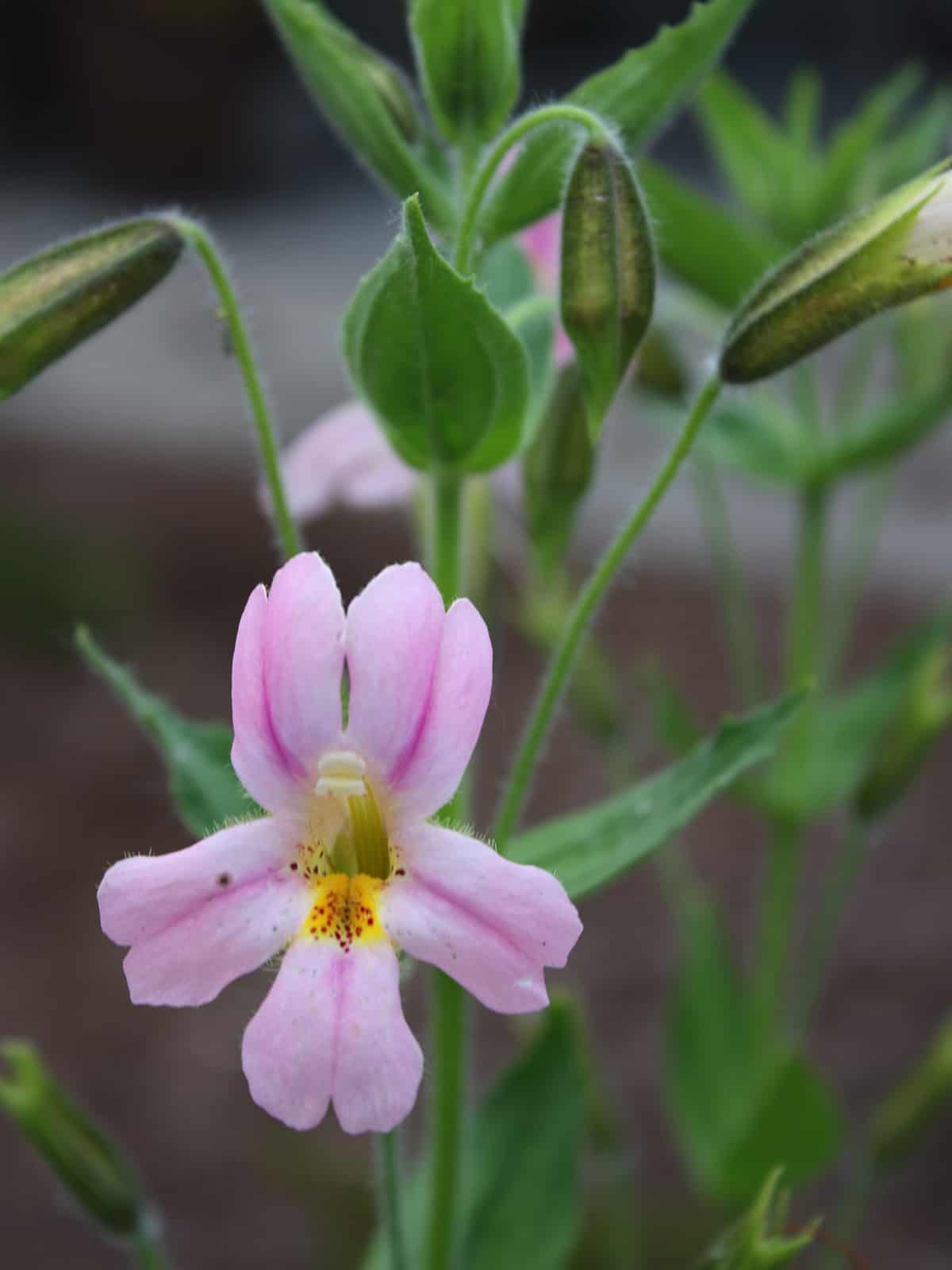
Monkey flower (Erythranthe lewisii) © Joan Stamm
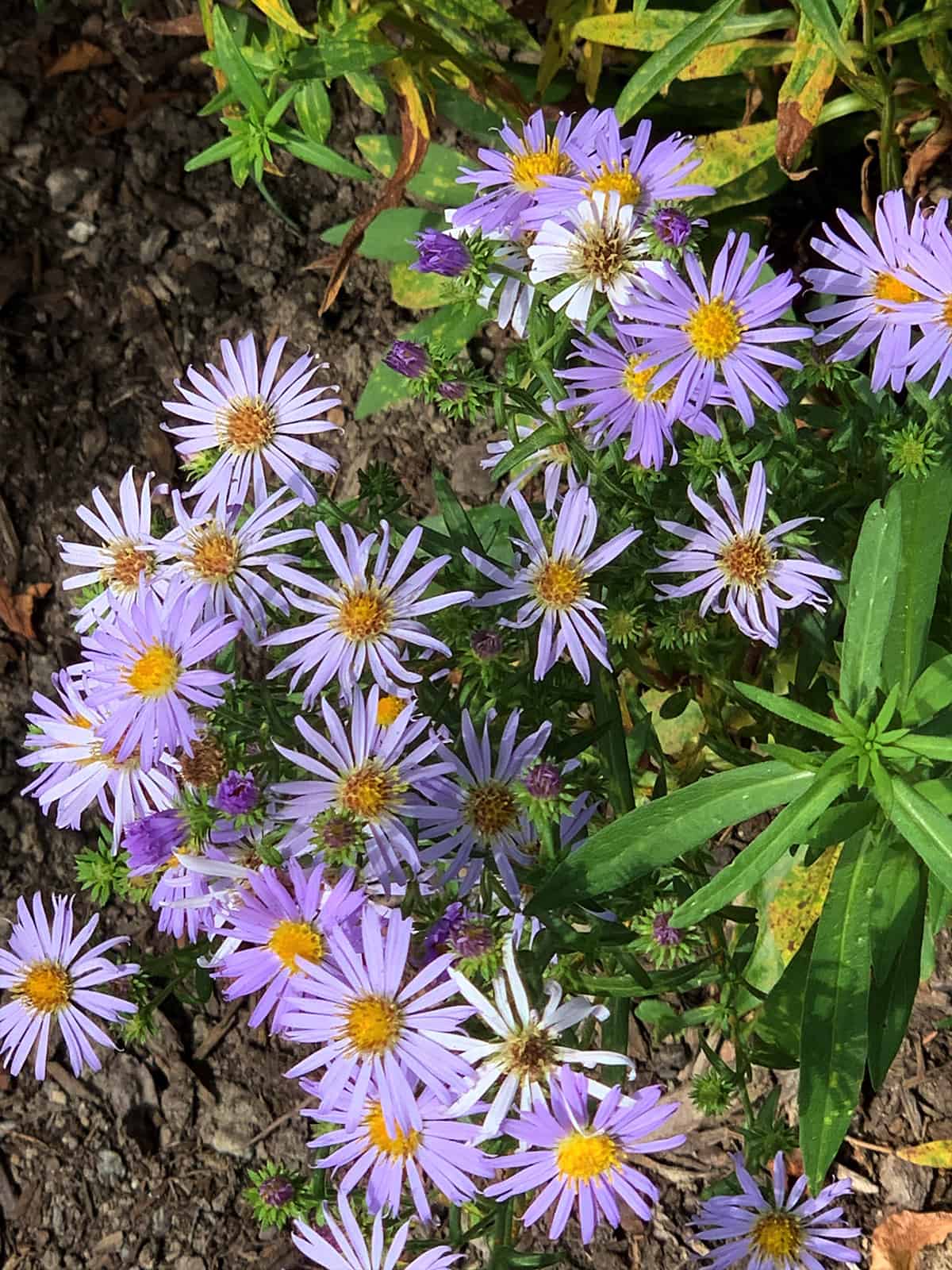
Douglas aster (Symphyotrichum subspicatum © Joan Stamm

Then there’s the question of how we use our water resources as we see drought spreading across the Western U.S. and other parts of the world. “In the U.S., lawn irrigation consumes on average more than eight billion gallons of water daily”; and, according to the Environmental Protection Agency, “40-60 percent of fertilizers applied to lawns end up in surface and groundwater.” In addition, we have pesticides that further contaminate our water and routinely kill pollinators. “Forty percent of these chemicals are banned in other countries because they are carcinogens.”

Tallamy goes on to say that 3 billion birds have already disappeared since 1970 due to loss of food and habitat. “A staggering loss that suggests the very fabric of North America’s ecosystem is unraveling.” Birds are like the “canary in the coal mine” of climate change. When our birds start disappearing, we humans are in trouble. “In North America, 432 species of birds are at risk of extinction.”

Tallamy’s mission is to begin a grass-roots movement of individual homeowners and gardeners growing native plants to create corridors of natural landscape. His argument is simple: instead of millions of acres of lawns, golf courses, and urban/suburban “deadscapes,” we need native habitats to restore biodiversity. “It is insects that run the world,” he says, “and it takes certain native plants to support healthy populations of those insects.” In short, we need what Tallamy calls a “Homegrown National Park”: a return to the natural world with a balanced ecosystem.

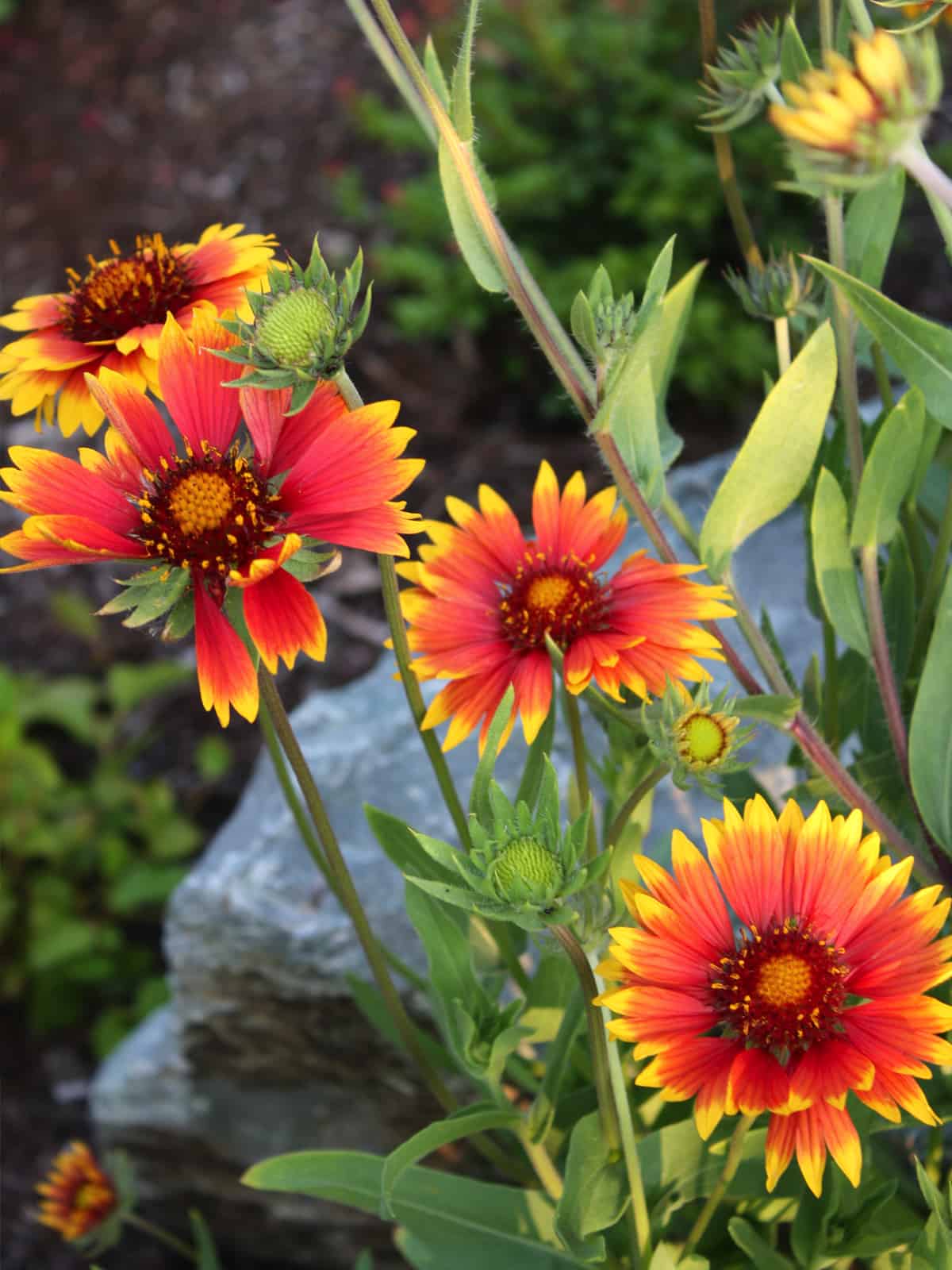
Blanket flower (Gaillardia aristata) © Joan Stamm
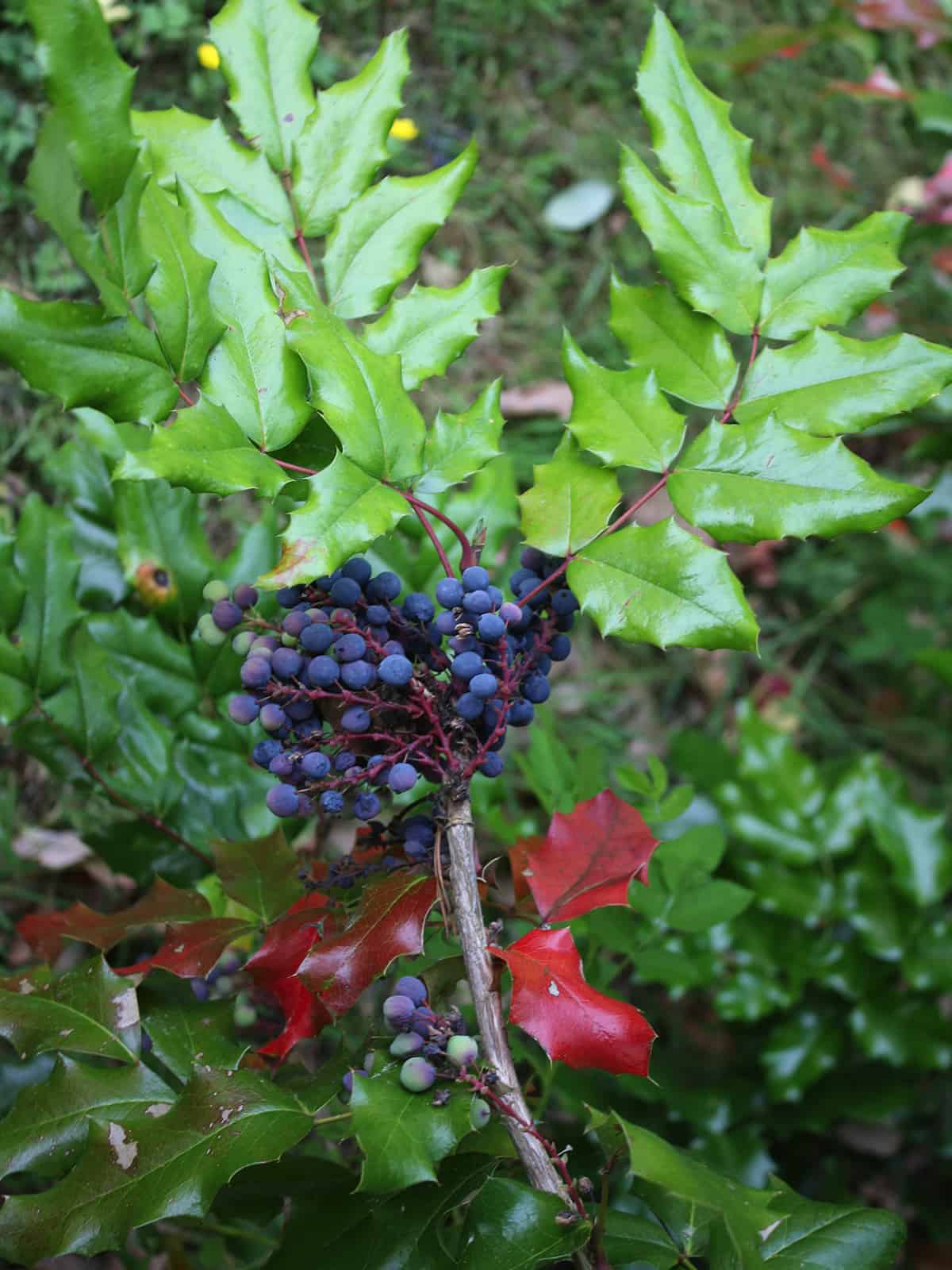
Oregon grape (Mahonia aquifolium) © Joan Stamm

Tallamy suggests three action steps:

  • Reduce our lawns (which will curb water, fertilizer, and pesticide use).
  • Plant more natives (which will bring in beneficial habitat, food for native pollinators, and reduce water use).
  • Remove invasives (because they crowd out and replace vital natives).

After reading Tallamy’s book I woke up to how “me” centered my gardening had been: growing plants that pleased only me, without the slightest thought to our many birds, butterflies, bees, and other creatures struggling to survive. For example, I found no reference that listed my beloved peonies as pollinator-friendly plants in the Pacific Northwest. Hydrangea? No. Kerria and wisteria? Not really. Camellia? Maybe. Cisco Morris suggests that Anna’s hummingbirds enjoy ‘Yuletide,’ since it is red, single-petaled, and blooms in winter, but I have no personal observation to report. More importantly, “80% of a hummingbird’s diet is insects and spiders.”

Backyard before conversion to natural landscape © Joan Stamm
Backyard after conversion to native corridor landscape © Joan Stamm

“And what about cultivars?”, many ask Tallamy. What about those many stunning and alluring flower and leaf varieties produced through selective breeding that we find at most of our nurseries? According to research done by Tallamy and other scientists, whether a cultivar retains any benefit to pollinators depends on what got modified. He advises avoiding plants where the leaf color has been changed from green to brown, purple or red (because insects like chlorophyll), and best to avoid flowers that went from single-petaled to multi-petaled (bees can’t get inside), or plants that have been made sterile. On the other hand, a woody plant made shorter is relatively okay. In sum, no size fits all. A quick tutorial can be found on the Grow Native website https://grownative.org/learn/natives-cultivars-and-nativars/ or in the Q&A in Tallamy’s book.

Two last bits of important advice for encouraging beneficial insect/caterpillar production to feed those hungry birds is to “leave the leaves” and turn off outdoor nighttime lighting. Cleaning up leaf litter destroys important habitat for invertebrates. “Our fall cleanup,” says Tallamy, “is particularly hard on bee populations; the perennials we are anxious to cut back after they have bloomed are where pithy stem nesters are hoping to spend the winter.” As for outdoor lighting, harsh LEDs destroy moths and other nighttime insects that are crucial to the ecosystem. Either turn off outdoor lighting at night, invest in motion detectors, or if you must have light, use “yellow bug lights.”

Ikebana arrangement with Madrone, Mahonia nervosa, and yarrow © Joan Stamm

As for my ikebana arrangements? Well, my strong attachment to certain Japanese flowers won’t depart easily, and I’m not saying that I won’t grow a few peonies anymore, but I know too much now to return to my old habits. I’ve started using native plants and flowers in my flower designs.

If you do decide to join the Homegrown National Park movement and go “native,” get registered here: https://www.homegrownnationalpark.org/ . Collectively, I believe we can make a difference and help restore our earth’s ecosystem. With so many dire statistics, there’s no time to lose.

REFERENCES:

  • Fitzpatrick, John and Marra, Peter. September 2019. “Decline of the North American Avifauna.” Science.
  • Kolbert, Elizabeth. 2014. “The Sixth Extinction: An Unnatural History”. New York: Henry Holt & Co.
  • Morris, Ciscoe. October 11, 2017. “Keep your hummingbirds happy…” The Seattle Times.
  • Tallamy, Douglas W. 2019. “Nature’s Best Hope: A New Approach to Conservation That Starts in Your Yard”. Portland: Timber Press.

ABOUT THE AUTHOR:

Joan D. Stamm has recently completed the requirements as a Skagit County WSU Extension Master Gardener (EMG) Class of 2023. She is the author of several books, most recently The Language of Flowers in the Time of COVID: Finding Solace in Zen, Nature and Ikebana.

_________

Questions about home gardening or becoming a Master Gardener, may be directed to: Skagit County WSU Extension Office, 11768 Westar Lane, Suite A, Burlington, WA 98233; by phone: 360-428-4270; or via the website: https://extension.wsu.edu/skagit/mg/