summer garden with colorful flowers and birdbath

Attracting Pollinators to the Home Garden

Making the right plant selections will help draw pollinators to the home garden

Posted July 18, 2025

Subscribe to the Blog >


By Kari Ranten, Skagit County WSU Extension Master Gardener

Kari Ranten

Pollinators are the heroes in our landscape and food chain. The small but mighty bees, hummingbirds, butterflies, and other birds and beneficial insects are key to crop production and creating a diverse environment. The home gardener often sets out to create a pollinator-friendly landscape and quickly discovers how enjoyable it is to watch these pollinators in the garden.

Proper plant selection and placement is key to luring vital pollinators to the home garden.

Scientific research emphasizes the importance of pollinators, crediting them with the reproduction of 90 percent of flowering plants and one-third of human food crops. “Each of us depends on these industrious pollinators in a practical way to provide us with the wide range of foods we eat. In addition, pollinators are part of the intricate web that supports the biological diversity in natural ecosystems that helps sustain our quality of life,” say the authors of Selecting Plants for Pollinators.

“Without bees, there would be no apples, pumpkins, strawberries or many other fruits and vegetables . . . Approximately one in three mouthfuls of food and drink require the presence of a pollinator.” – Xerces Society

Research shows that pollinator populations, including bees and butterflies, are declining in Washington state and the United States. “Unfortunately, the numbers of both native pollinators and domesticated bee populations are declining. They are threatened by habitat loss, disease, and the excessive and inappropriate use of pesticides.” 2 In March of 2025 Washington State University staff published a study showing that butterfly numbers have decreased by more than 20 percent from 2000 to 2020, with some species declining by more than 90 percent.7

Selecting the right plants is foundational to drawing pollinators to your garden. The two Pollinator Gardens in the Skagit County WSU Extension Master Gardener Discovery Garden, west of Mount Vernon, provide examples of plants that attract pollinators throughout the seasons. Master Gardener Alix Foster oversees the Pollinator Gardens and several years ago wrote an article describing the basics about the pollination process and why pollinators are so important, along with what each gardener can do to support pollinators. Read the article here >

pink flowers on bush with bright green leaves

Spiraea japonica Golden Princess attracts pollinators in the Pollinator Garden in the Discovery Garden.
© Skagit County Master Gardeners

blue purple flowers blooming in the garden

Jacob’s Ladder (Polemonium reptans) and foxglove attract various pollinators, especially bees. Other pollinators like butterflies, moths, and flies are also attracted to the flowers. © Skagit County Master Gardeners

Foster recently led a tour of one of the compact Pollinator Gardens to showcase the selection and placement of plants that maximize the number and variety of bugs and birds visiting the garden. Efforts are underway to add more native plants and enhance the number of plants that bloom in sequence over the months along with a variety of colors, shapes, and sizes to span the seasons. During daytime hours, 365 days a year, enjoy a self-guided tour of the Discovery Garden where signs list the plant names, what pollinators they draw, and the bloom time for the specimens on display. To see the complete list of plants in the Pollinator Gardens at the Discovery Garden, go to https://skagitmg.org/home/discovery-garden/pollinator-garden/.

Fortunately, there is an abundance of options for pollinator-friendly plants. The Pollinator Partnership, a global non-profit dedicated to the protection and promotion of pollinators and their ecosystems, offers a tool on their website to generate a list based on zip code at https://www.pollinator.org/find-your-roots-tool. A search using Mount Vernon, WA 98273, yields a list of 1,172 perennial flowers, shrubs, and trees to consider for a pollinator landscape.

Several fundamentals apply when choosing plants to draw pollinators:

Use native plants: Natives, including wildflowers, shrubs, and trees, are naturally adapted to the region’s climate and soil. Research by Gordon Frankies 3 shows native plants are four times more likely than non-native plants to attract bees and significantly increase the abundance of butterflies and moths. The Salal Native Plant Garden, adjacent to the Discovery Garden, introduces home gardeners to many varieties native to northwest Washington. According to the Pollinator Partnership, “Non-native plants such as cultivar and hybrid plant species are, in most cases, not good for pollinators as they can result in double flowers, changes in flower color, and sterile flowers with no pollen.”

Select plants that bloom across the seasons: Flowering plants, including annuals and perennials, serve as a draw for pollinators. When shopping for plants, nursery tags often list the pollinators that are attracted to the specific plant. As an example, a tag on Monarda fistulosa, a perennial commonly called bee balm, lists that the deep pink blooms attract bees, hummingbirds, and butterflies.

Pollinators love flowers – keep blooms going throughout the seasons: Pollinators are drawn by a variety of plant qualities, colorful blooms, and the availability of pollen and/or nectar.
Interested in Becoming a Master Gardener?

Application period is now open through August 15, 2025.

WSU has recently launched a new training platform called Washington Green School, designed to provide comprehensive research-based horticulture and environmental stewardship education. The Washington Green School offers two distinct tracks:

  • Washington Gardener Certificate Track
    This option is ideal for individuals seeking to enhance their gardening skills without the commitment of volunteering. This self-paced, online-only course provides a certificate upon successful completion.
  • Extension Master Gardener Volunteer Track
    This track is for those interested in becoming certified WSU Extension Master Gardener volunteers and includes the Green School online coursework, in-person, local volunteer training, and a commitment to volunteer service hours.

For more information, go to https://skagitmg.org/home/green-school/

To apply for the Skagit County WSU Extension Master Gardener Program, go to https://extension.wsu.edu/skagit/mg/apply/


In the search for food resources, each type of pollinator has preferences for the color, nectar, odor, pollen, and flower shape. The Pollinator Partnership has compiled the Pollinator Syndromes chart below describing characteristics which draw eight different pollinator groups. For example, butterflies prefer flowers shaped like a narrow tube with a spur and a wide landing pad, often in bright red and purple colors. Bats pollinate plants which emit strong musty scents and open at night.


In addition to referring to the plant lists for the two local Pollinator Gardens, consider regular visits to the Discovery Garden or local nurseries to check what is blooming each month, or seek out another pollinator garden, such as Pollinator Pathway Northwest at 21 Acres in Woodinville (https://21acres.org/).

Plant several similar plants in close proximity: Create several extensive, round plantings of each plant to minimize the distance pollinators need to travel to obtain their nutrition and transport pollen. Additionally, experts recommend planting at least three different pollinator plants within each of the three blooming seasons: spring, summer, and fall 3 for maximum benefit.

Consider a bee lawn: Adding flowers in with turfgrass can provide a draw for pollinators seeking nectar and/or pollen. The bee lawn is available for human recreation and as an attraction for dozens of species of native bees 4.

Use care with chemicals: For details about chemical use to protect pollinators, see Washington State University Extension bulletin “Pollination and Pollinator Protection” in the references below.

In addition to flowers and plants, home gardeners should be aware of the basic needs of pollinators:

  • Appropriate nesting areas Off-season hibernation sites
  • Good sun exposure
  • Adequate source(s) of water
  • And lastly, allow leaves to gather [and self-mulch] on the ground as a haven for insects, birds, and others through winter.
swallowtail butterfly on purple stalks of lavender bush
In the warmth of summer, the tiger swallowtail butterfly is attracted to lavender. Photo © Shelly Hanks, WSU Photo Services
Yellow Welsh poppies blooming in garden
Yellow Welsh poppies bloom from June – August, providing nectar and pollen for bees and butterflies. Photo © Skagit County Master Gardeners

REFERENCES AND RESOURCES:

  1. Lawrence, T. (2015) WSU Extension bulletin FS174E. Pollination and Pollinator Protection (Home Garden Series). 
  2. Ley, E., Buchmann, S., and Holmes, K. (2025) Selecting Plants for Pollinators Including the states of: Oregon and Washington a Regional Guide for Farmers, Land Managers, and Gardeners in the Pacific Lowland Mixed Forest Province. The Pollinator Partnership™/North American Pollinator Protection Campaign.
  3. Mader, E., Shepherd, Matthew, Vaughan, M., Hoffman, S., LeBuhn, G. (2011) Xerces Society Guide: Attracting Native Pollinators. Storey Publishing. North Adams, MA.
  4. Moncada, K., Reiter, M., and Wolfin, J. (2023) Planting and maintaining a bee lawn. University of Minnesota Extension.
  5. Pollinator Partnership. (2025)
  6. Pollinator Threats. (2025) Pollinator Partnership.
  7. U.S. Butterfly Populations are Severely Declining. (2025) Washington State University Office of Research. (2025)
  8. Wollaeger, H., Getter, K. and Behe, B. (2015). Consumer Preferences for Traditional, Neonicotinoid-free, Bee-friendly, or Biological Control Pest Management Practices on Floriculture Crops. Michigan State University Department of Horticulture. HortScience 50(5):721-732.

ABOUT THE AUTHOR:

Kari Ranten is a retired journalist and health care communicator who became a certified Skagit County WSU Extension Master Gardener in 2024. 


Questions about home gardening or becoming a master gardener may be directed to Skagit County WSU Extension Office, 11768 Westar Lane, Suite A, Burlington, WA 98233; by phone: 360-428-4270; or via the website: www.skagit.wsu.edu/mg

Washington State University Extension helps people develop leadership skills and use research-based knowledge to improve economic status and quality of life. Cooperating agencies: Washington State University, US Department of Agriculture, and Skagit County. Extension programs and policies are available to all without discrimination. To request disability accommodations contact us at least ten days in advance.

AMGPost_header5
hummingbird and purple flower

Hummingbirds in the Garden: Food Sources and Benefits

Food sources for resident Anna’s and migrating Rufous hummingbirds and tips for safely hosting a feeder in your garden.

              Subscribe to the Blog >

By Joan Stamm, Skagit County WSU Extension Master Gardener

There’s a wealth of information out there about our beloved hummingbirds-fascinating mythology, a horrifying feather trade history, descriptions of dazzling aerial dynamics, and arduous migratory habits-but this article will focus on beneficial food sources for our resident Anna’s and migrating Rufous, as these hummingbirds are not only an important part of our ecosystem that helps control insects, but are great pollinators. If this weren’t enough, they are simply a delight to watch.

Let’s start with the basics:

© Photo: Mason Maron | Audubon Society
25-0117_Pic-1

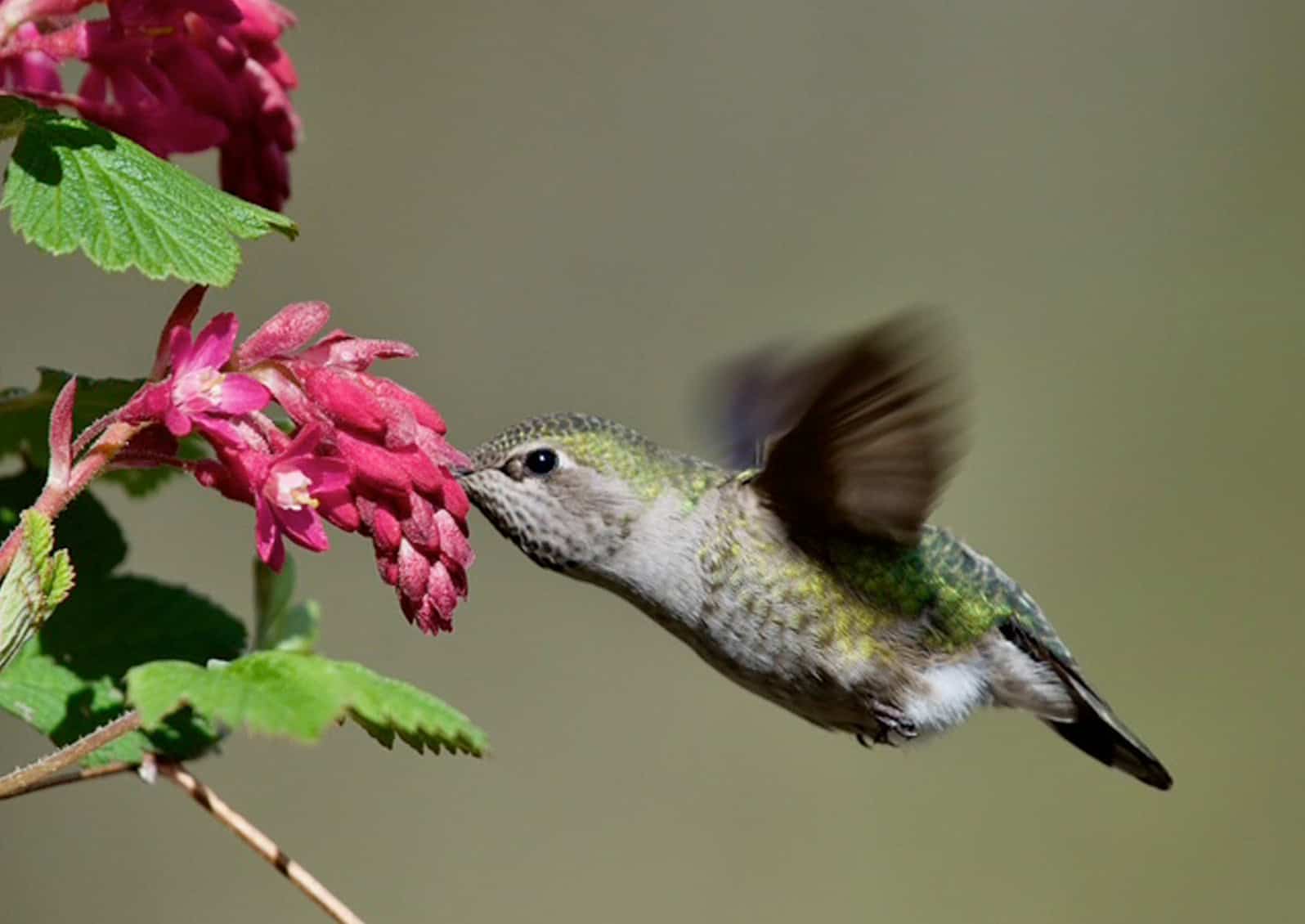
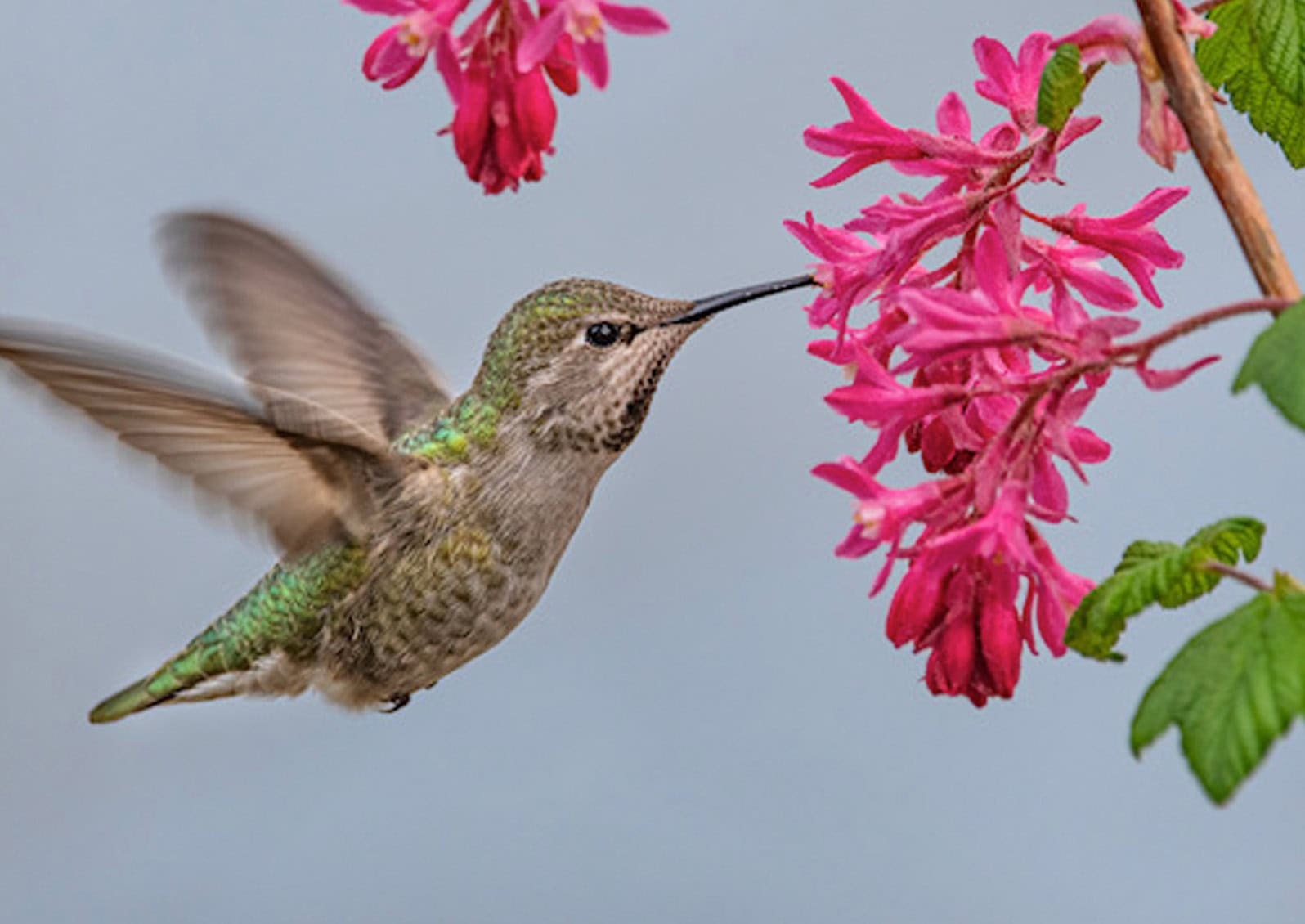
In early spring, Anna’s hummingbird finds nectar in the red-flowering currant (Ribes sanguineum) © Photos: Mason Maron | Audubon Society 

Insects and Spiders
The least glamorous but one of the most important hummingbird food sources is insects. Female Anna’s, when raising their young, can eat up to 2,000 bugs per day. In fact, Douglas Tallamy, a professor of entomology at the University of Delaware, claims that although “Hummingbirds like and need nectar … 80 percent of their diet is insects and spiders.”

Native trees and shrubs, more than “introduced” varieties, provide the highest potential for attracting native insects. To ensure a steady supply of native invertebrates that all birds, but especially hummingbirds, enjoy, plant a variety of native plants in your garden. Another way to increase insect populations is to leave the leaves in the fall. Many insects hide and winter in leaf litter. Instead of tidying up and throwing all those wonderful leaves in the compost bin, pile them up around your plants and postpone cutting away all the dead flower debris until spring. These practices will increase your insect population, and hummingbirds will help keep your bugs in check.

Make the choice to avoid pesticides.
Pesticides containing neonicotinoid insecticide are widely used by farmers and homeowners, and on pets for flea and tick treatments. Even though neonicotinoids are relatively less toxic to beneficial insects and pollinators, and their use is supported by WSU and USDA, many gardeners prefer to avoid their use. Some research institutions have found that hummingbirds exposed to systemic neonicotinoid insecticides for even a short time can disrupt their high-powered metabolism. Hummingbirds are pollinators. They can visit hundreds of flowers in a day. Any pesticide that can harm bees will likely harm hummingbirds.


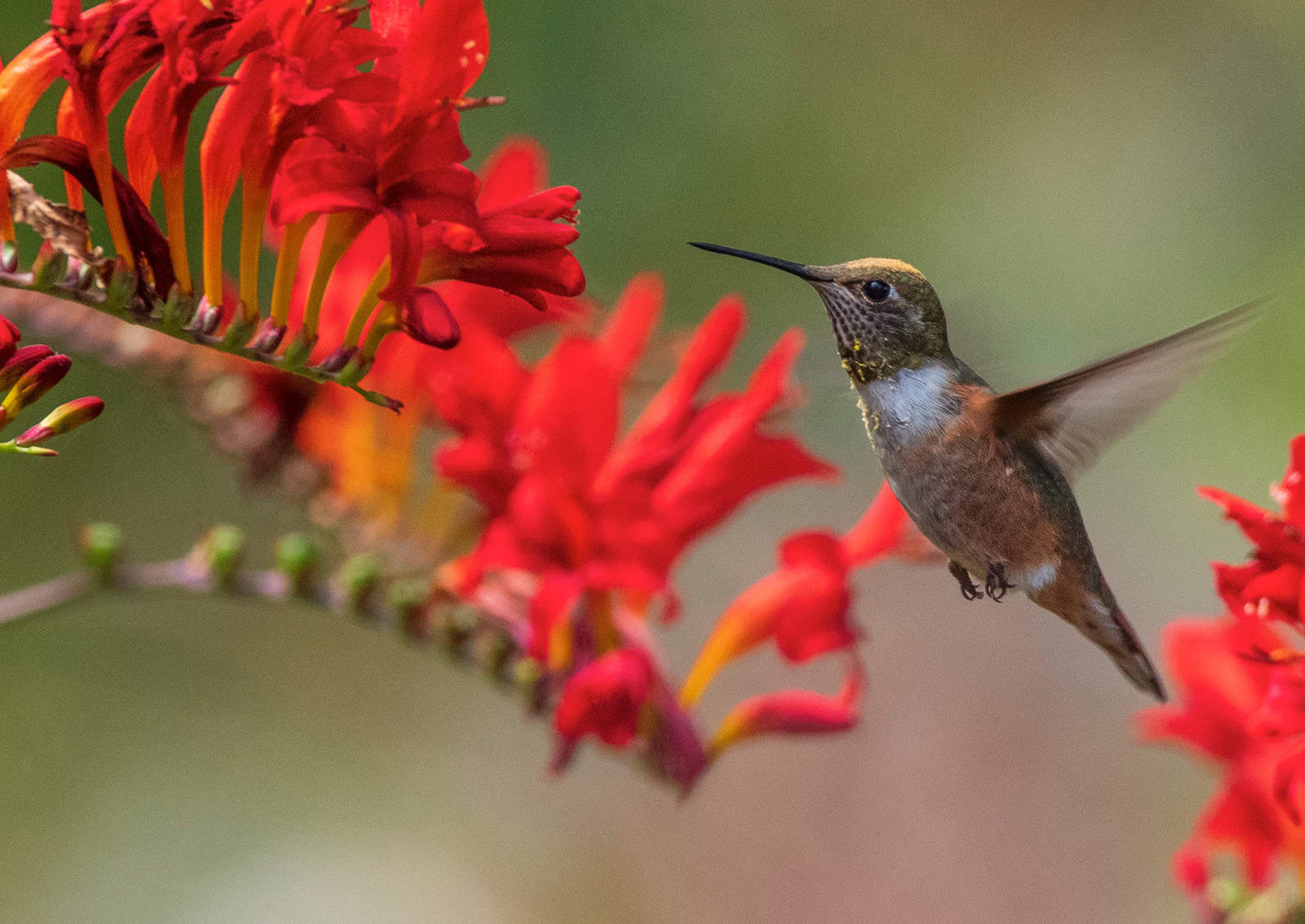
Though not native to the Pacific Northwest, the brilliant red flowers of Crocosmia 'Lucifer' attracts hummingbirds throughout the summer. © Photo: Nancy Crowell | Nancy Crowell Photography

Though not native to the Pacific Northwest, the brilliant red flowers of Crocosmia ‘Lucifer’ attracts hummingbirds throughout the summer. © Photo: Nancy Crowell | crowellphotography.com

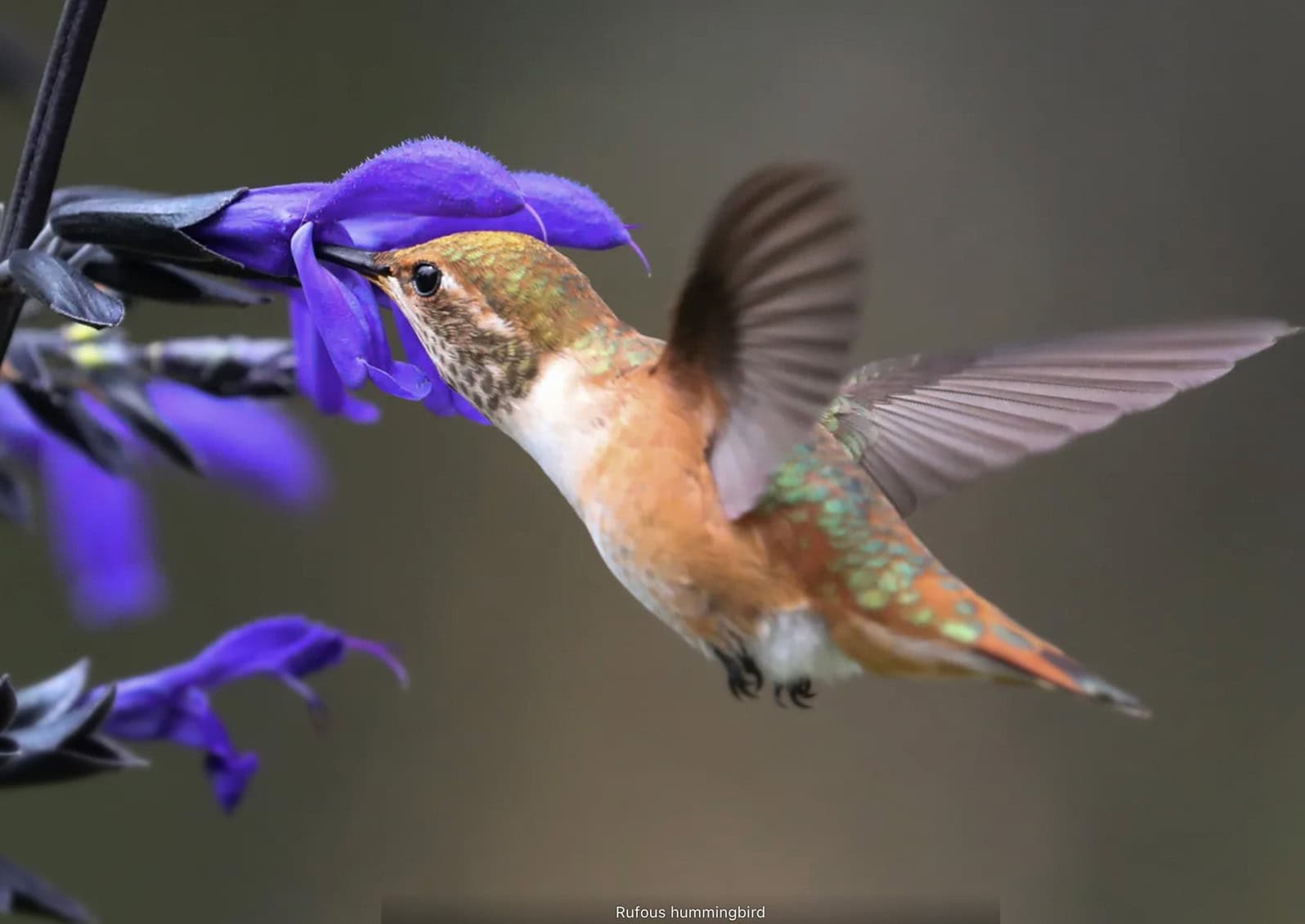
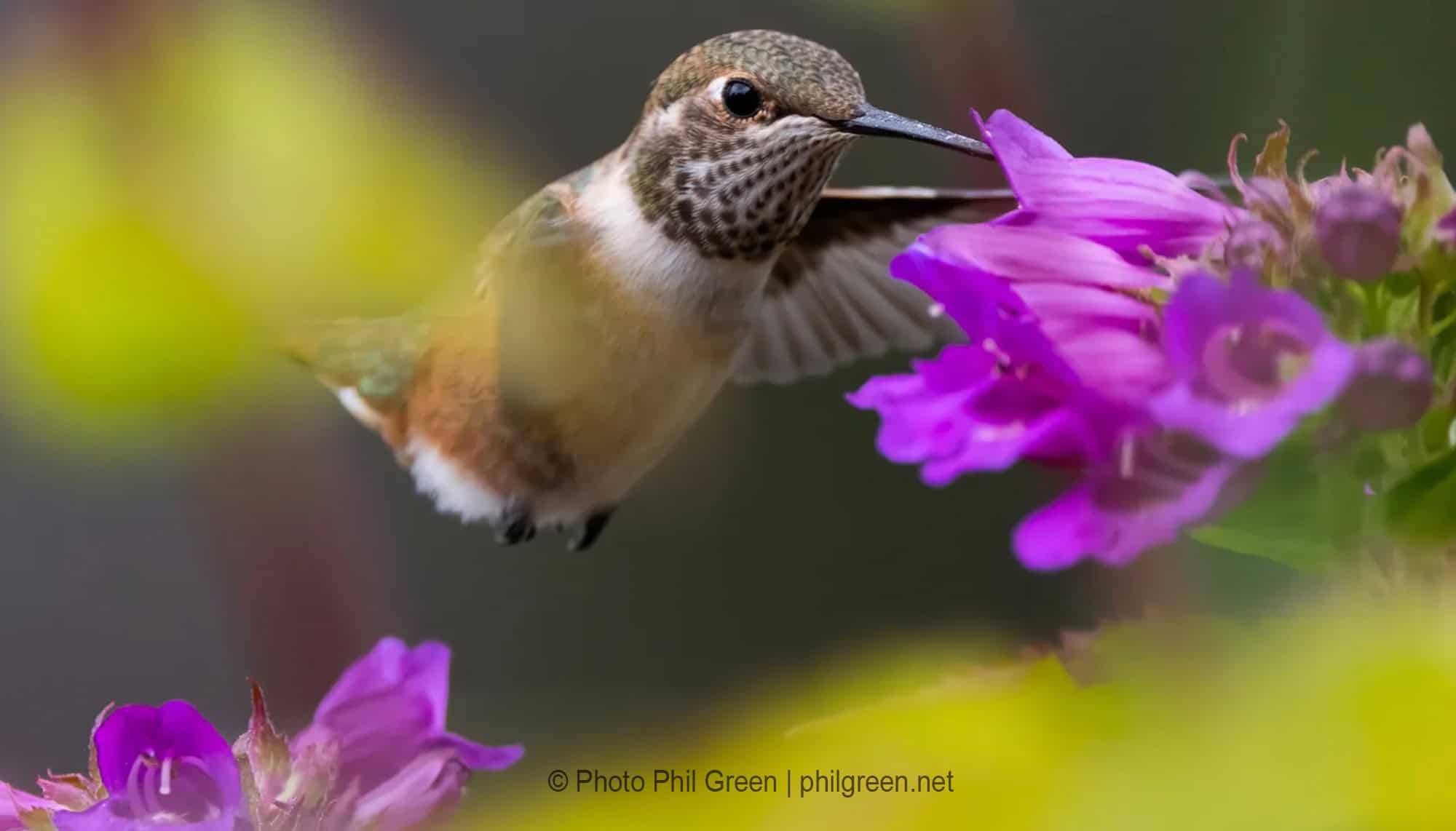
The Rufous hummingbird is attracted to 'Black & Blue' anise sage (Salvia guaranitica) © Photo: Phil Green | philgreen.net

 The Rufous hummingbird is attracted to ‘Black & Blue’ anise sage (Salvia guaranitica) © Photo: Phil Green | philgreen.net

Tree Sap
We don’t often think of tree sap as being an important food source for birds, but when flower nectar is scarce our migrating Rufous hummingbird will turn to sap in tree wells left by red-breasted sapsuckers and woodpeckers. If your garden can accommodate aspen, birch, or pine, you will create another potential food source for our Western Washington hummingbirds; plus providing important nesting and perching habitat.
Native and Non-native Flowers
Along with the protein, fats, and amino acids found in insects and the minerals found in tree sap, other nutrients important to hummingbirds are found in flower nectar. “Scientists have learned that the richness of the nectar matters more than the color of its source,” which in most cases would come from plants native to our region. A perfect example is our native snowberry (Symphoricarpos albus) which has tiny pink (not red) flowers that hummingbirds return to again and again. They also like our native nodding onion (Allium cernuum) with its tiny pinkish mauve flowers. Even osoberry (Oemleria cerasiformis), with its white pendulous flowers, offers good quality nectar early in the season as they are one of the first native trees to bloom.

But if you want to give hummingbirds their preferred red-orange range, try our native red paintbrush (Castilleja miniata), western columbine (Aquilegia formosa), red-flowering currant (Ribes sanguineum), Cascade penstemon (Penstemon surrulatus), and hot pink and scarlet monkeyflower (Mimulus lewesii and cardinelli) to name a few.

Along with natives, and to ensure a steady supply of flower nectar throughout the year, there are many introduced varieties that hummingbirds love. Most notably in my garden are the salvias- ‘hot lips’ and ‘black and blue.’ They also like bee balm, crocosmia, fuchsia, and weigela. For winter bloomers, Ciscoe Morris, the NW gardening guru and host of “Gardening with Ciscoe” recommends witch hazel, Camellia sasanqua ‘Yuletide,’ sweetbox, Daphne odora, Viburnum x bodnantense ‘Dawn,’ Grevillea victoriae, and the Asian hybrid Mahonia x media.

During breeding season, the hummers helicopter from plant to plant until they get their fill, mixing nectar with insect protein to feed their young, which is strictly the female’s job, along with nest building. The males resume their independent lifestyle.

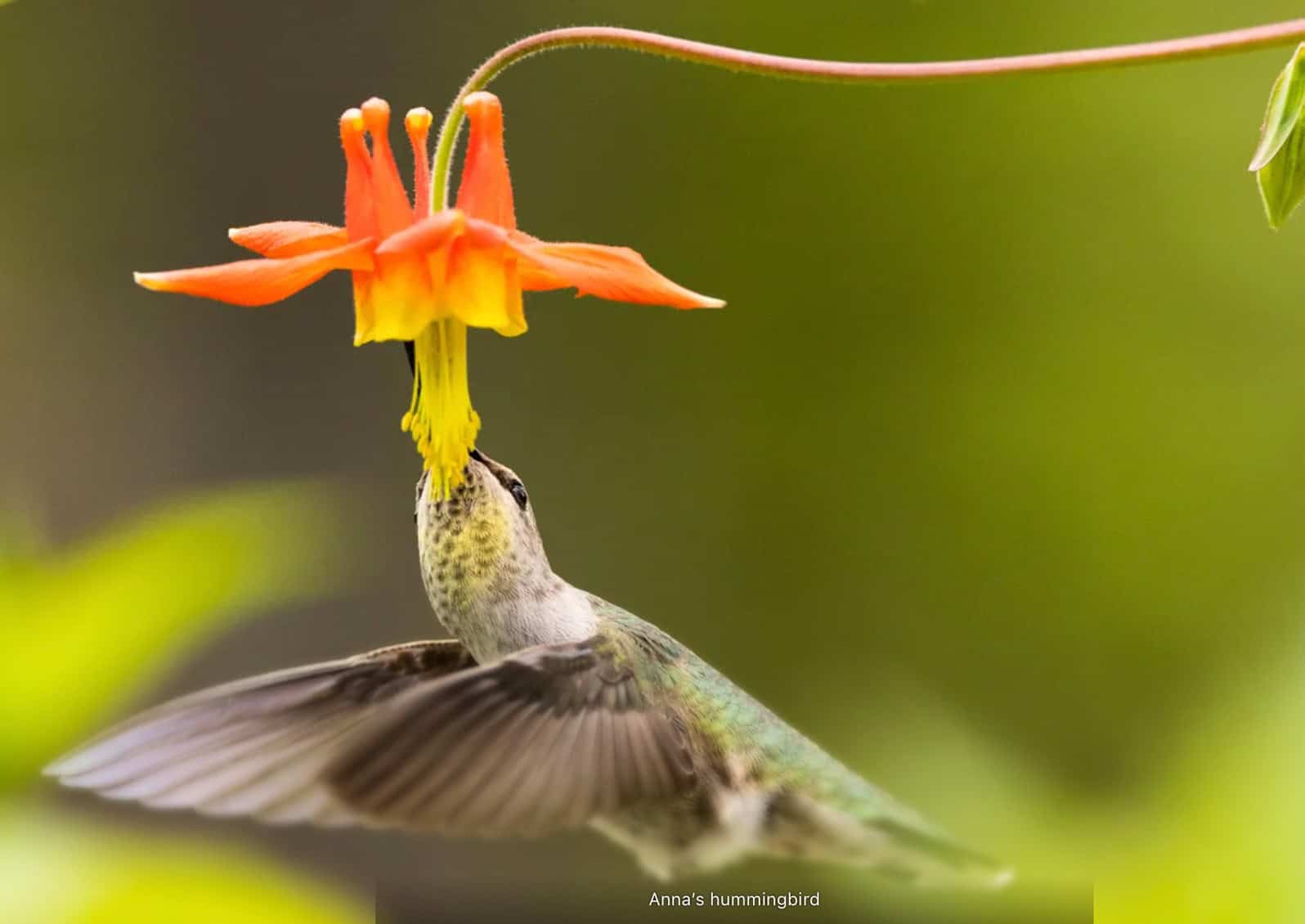
Western columbine (Aquilegia formosa) is native in our area and provides food for Anna's hummingbird © Photo: Phil Green | philgreen.net

Western columbine (Aquilegia formosa) is native in our area and provides food for Anna’s hummingbird © Photo: Phil Green | philgreen.net

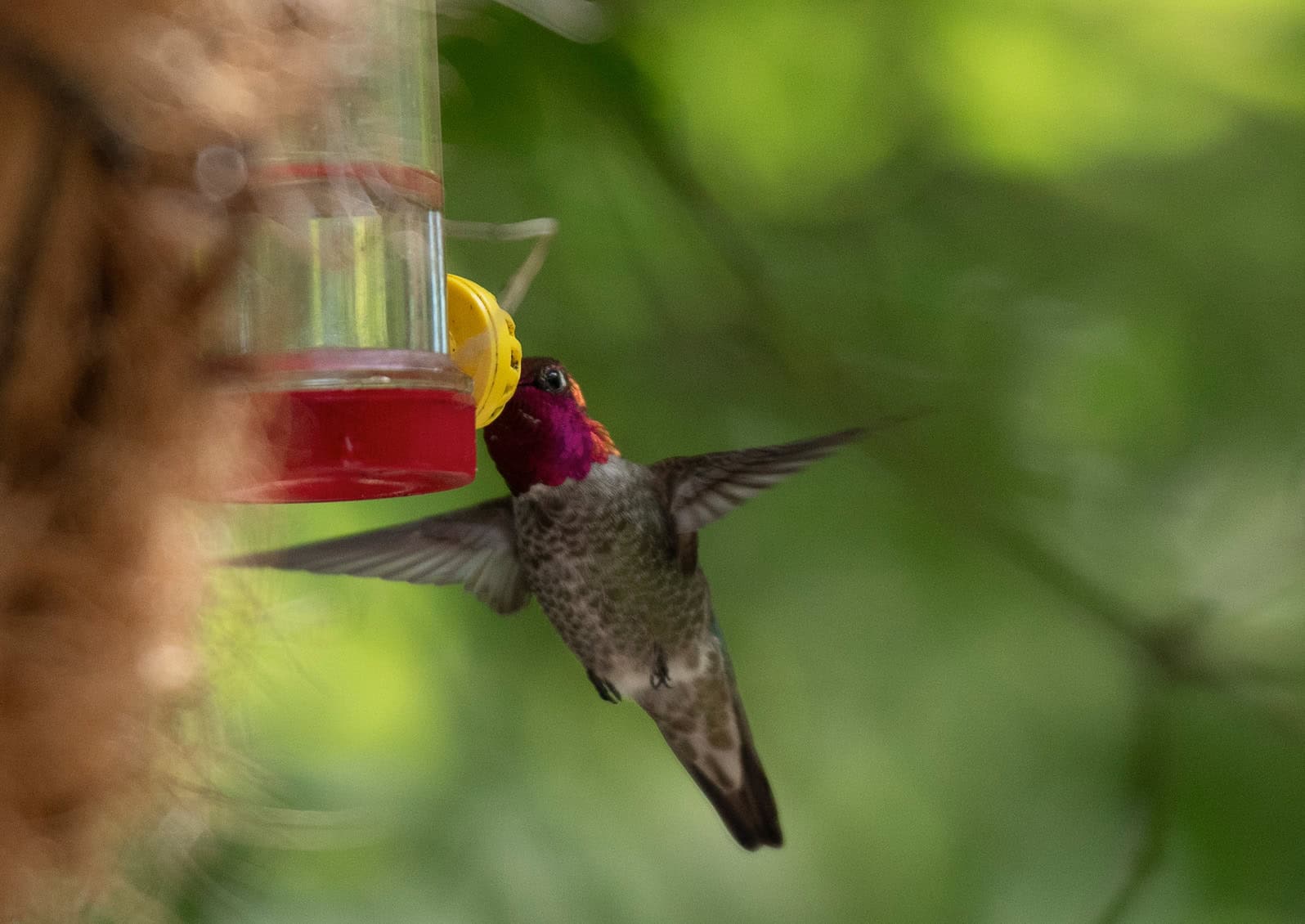
Many enjoy feeding hummingbirds, but doing so comes with the responsibility of keeping the feeders clean and free of bacteria to avoid harming the birds. It may be easier to native plants such as snowberry and red currant to help the hummers through late winter. © Photo: Nancy Crowell © Nancy Crowell Photography

Many enjoy feeding hummingbirds, but doing so comes with the responsibility of keeping the feeders clean and free of bacteria to avoid harming the birds. It may be easier to grow native plants such as snowberry and red currant to help the hummers through late winter. © Photo: Nancy Crowell | crowellphotography.com

Hummingbird Feeders
If you are going to use hummingbird feeders-and it’s really the overwintering Anna’s that mostly benefit as the Rufous is long gone by the end of summer-then the overwhelming advice from experts is that feeders be clean, clean, and clean. Some say feeders should be cleaned every 3 to 4 days, some say 5, and others say if the weather is above 65 degrees, they should be cleaned daily to prevent the sugar water from fermenting. “Sugar water is a nursery for bacteria, mold, and potentially dangerous pathogens.” Fermented sugar water can enlarge a bird’s liver imperiling its health. “Ten percent or more of the hummingbirds who wind up in rehabilitation centers have yeast infections from improperly maintained feeders.” Clean feeders with hot, soapy water or vinegar. Never use bleach as any residue is not only toxic to birds but to the environment in general.

The recipe for the sugar solution is one part plain white non-organic refined sugar to four parts water. Do not use red coloring or any commercial product with chemicals or dye. Boil the solution, let it cool, and fill your feeder. Hang more than one feeder to avoid competition. Hang them away from a window to prevent hummingbirds from flying into the glass and breaking their neck. In summer, hang them in the shade. In winter, hang them in the sun. If temperatures drop, you will need to rig up a heating element to keep the solution from freezing or rotate your feeders throughout the day. If all this sounds like too much work and responsibility-inadvertently harming hummingbirds rather than helping-it might be easier to grow a variety of nectar-rich flowers instead and leave the rest to nature.


Learn from the experts at the
Country Living Expo
& Modern Homesteading
Saturday, January 25, 2025
Stanwood High School 

Learn More and Register Here >>

These Gardening Topics and More:

  • Fruit Tree Pruning
  • Microclimates in the Garden
  • Garden Design
  • Roses
  • Bee Keeping
  • Growing Vegetables, Herbs and Flowers
  • Tool Care and Maintenance
  • Small Fruits: Elderberry and Blueberries
  • Growing Lavendar

https://extension.wsu.edu/skagit/countrylivingexpo/

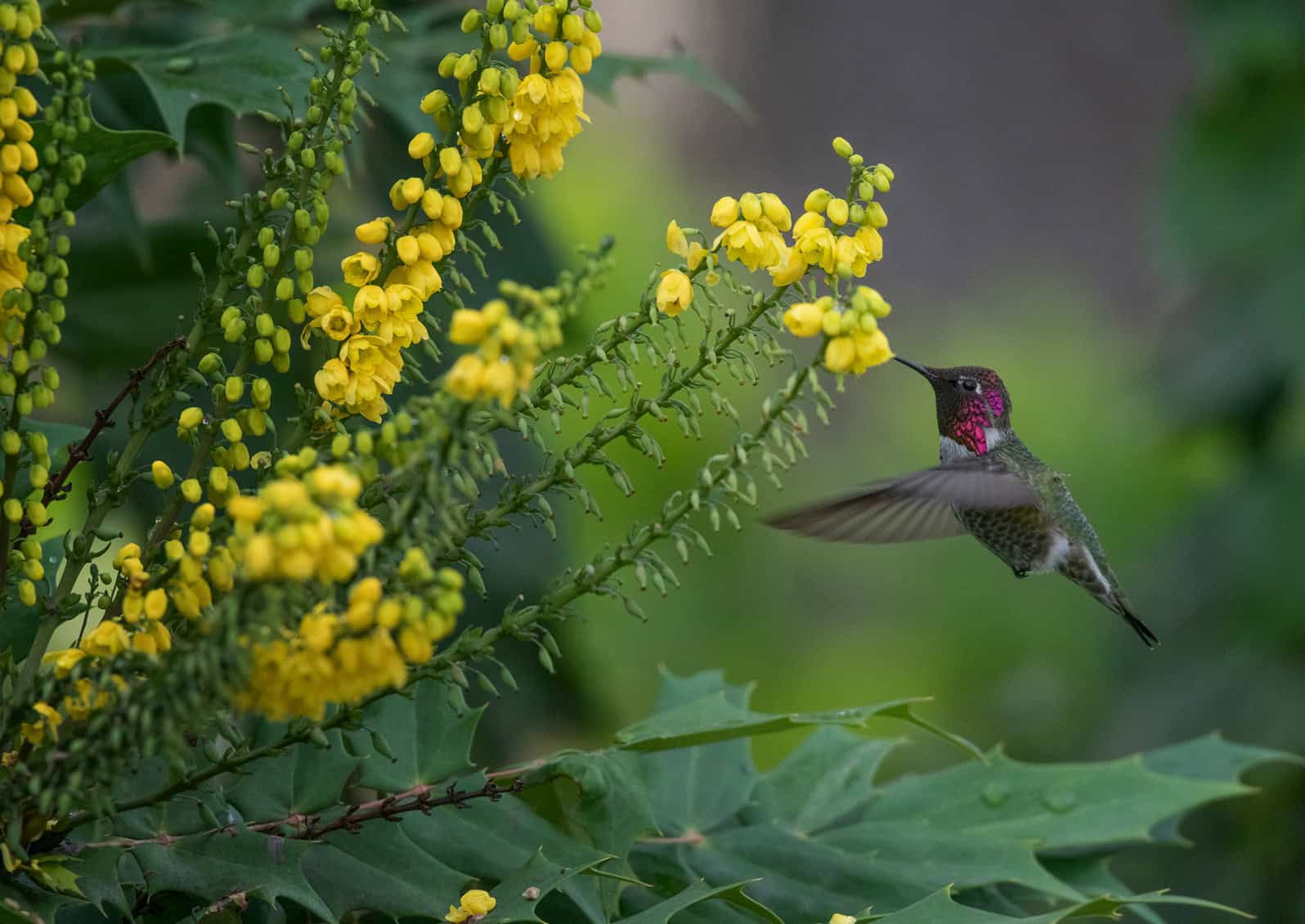
A native plant that thrives in the Pacific Northwest, Mahonia provides winter food for hummingbirds and is a well-behaved foundational planting in many home gardens. © Photo: Nancy Crowell © Nancy Crowell Photography

Mahonia x media, pictured here, is an Asian hybrid that blooms in winter. Several native Mahonias also attract hummingbirds and bloom in early spring. © Photo: Nancy Crowell | crowellphotography.com


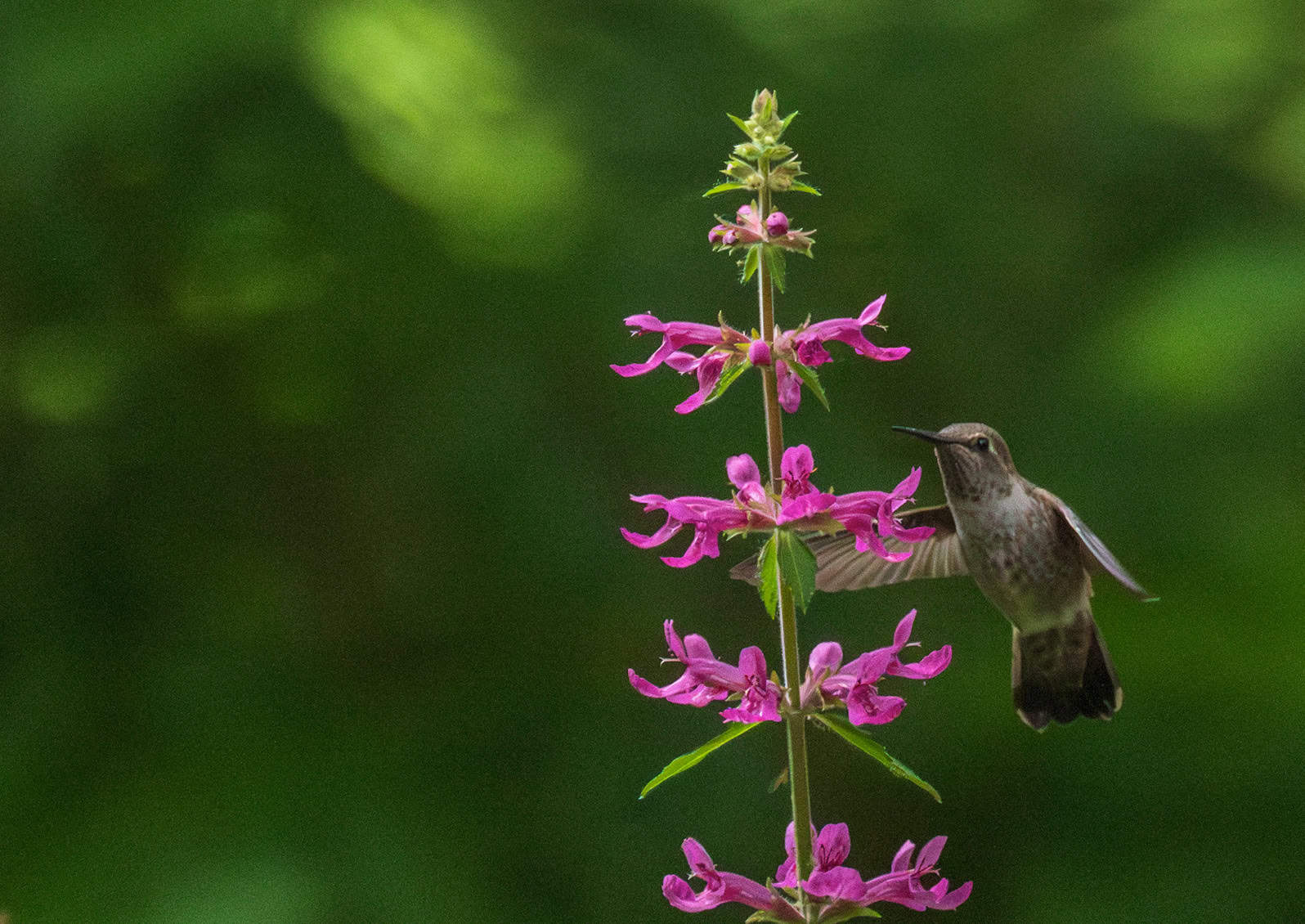
The coastal hedgenettle (Stachys chamissonis) is a native plant in the Pacific Northwest that thrives in moist soil near forests and provides support to birds, bees and butterflies. © Photo: Nancy Crowell © Nancy Crowell Photography

The coastal hedgenettle (Stachys chamissonis) is a native plant in the Pacific Northwest that thrives in moist soil near forests and provides support to birds, bees and butterflies. © Photo: Nancy Crowell | crowellphotography.com


REFERENCES AND RESOURCES:

BOOKS:

  • Link, R.Landscaping for Wildlife in the Pacific Northwest. Washington Department of Fish and Wildlife. 1999
  • Shewey, J.Hummingbird Handbook. Portland: Timber Press. 2021
  • Stark, E. M..Real Gardens Grow Natives. Seattle: 2014
  • Tallamy, D.Nature’s Best Hope: A New Approach to Conservation That Starts in Your Yard. Portland: Timberpress. 2019

ON-LINE:

Joan D. Stamm

ABOUT THE AUTHOR:

Joan D. Stamm, is a certified Skagit County WSU Extension Master Gardener and the author of several books, including The Language of Flowers in the Time of COVID:  Finding Solace in Zen, Nature and Ikebana.