woman pruning branches
© Adobe Stock

Post: September 4, 2026

Subscribe to the Blog >

Fall Pruning and Seasonal Care for Shrubs and Trees

It is key to understand growth and flowering habits of your trees and bushes as you are tidying up for the season

By Anne Kurt, WSU Extension Skagit County Master Gardener

At the tail end of summer, it seems that most of the hard labor of May, June, and even July has lightened up, and we’re able to spend more time admiring the results of another glorious gardening season in the Pacific Northwest.

Our veggies are ready for harvest, late-season flowers are still blooming, and shrubs and trees are starting to change color, alerting us that autumn is just around the corner. The moderate temperatures are inviting, making this a great time to take a look around, assess what went well, and start thinking about transitional tasks for fall.

bushy tree with dead branches
Prune dead, damaged, or diseased wood any time of year. © Skagit County Master Gardener Foundation
hydrangea with long branches sagging under weight of blooms
This panicle hydrangea should be selectively pruned in the fall so branches don’t break in the winter. © Skagit County Master Gardener Foundation

By now, you should also be able to see how your shrubs responded to spring pruning. Cuts in the spring produced a rush of new growth that you can continue to shape through summer. However, as we enter fall, we must carefully evaluate which tasks help plants prepare for winter and which ones should wait until spring.

This time of year, the growth response in our shrubs and trees has slowed down so roots can store energy for dormancy. Pruning cuts can trigger tender new shoots that are susceptible to the freezing temperatures that winter brings. Open pruning wounds are slower to seal when the weather is cool and damp, increasing vulnerability to insects, disease, or rot. Many shrubs have already set buds for next year’s flower display, so improper pruning could also cost a full season of blooms! 
green shoots coming up from base of tree
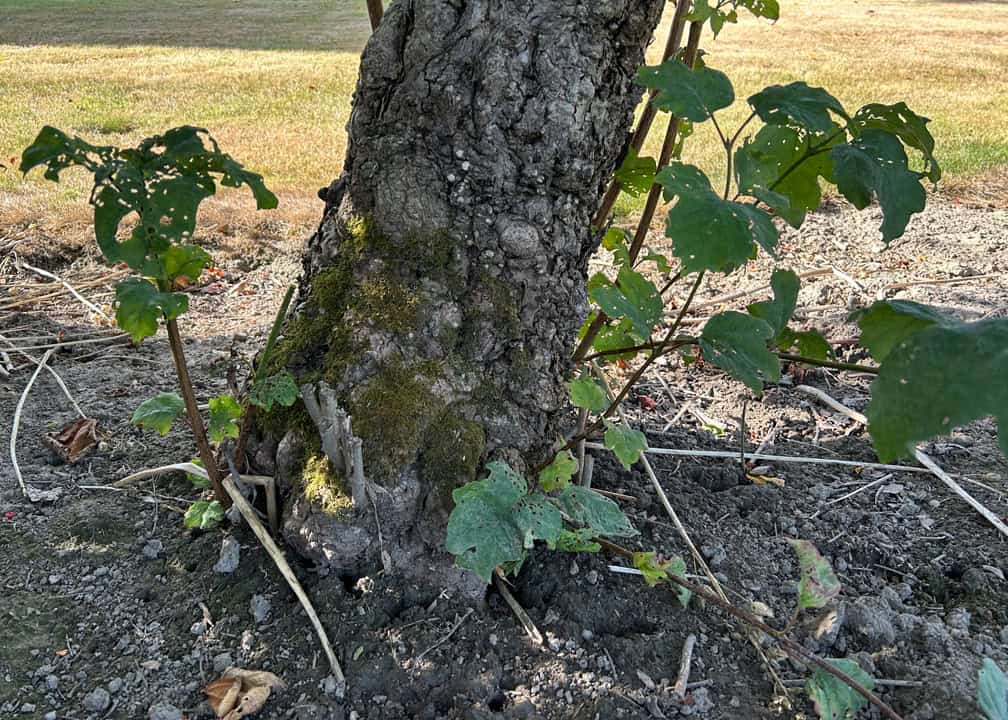
Fall is a good time to remove diseased limbs and suckers. © Skagit County Master Gardener Foundation

flower icon for WSU Master GardenerMark Your Calendar for These Free

Know & Grow Workshops


Spectacular Fall Color – How You Can Have it in Your Garden

Tuesday, September 15, 2026
1:00 pm – 2:30 pm
Prepare Your Garden for Fall and Winter
Tuesday, October 20, 2026
1:00 pm – 2:30 pm
Creating an Award-Winning Display Garden for the NW Flower and Garden Festival
Tuesday, November 10, 2026
1:00 pm – 2:30 pm
Sakuma Auditorium
16650 SR 536, Mount Vernon, WA 98273

As you are tidying up for the season, understand growth and flowering habits before making any cuts, then focus your pruning on the following:  

  • Prune dead, damaged, or diseased wood any time of year. Evaluate any crossing or deranged branches. If removal creates a larger wound, it may be best to wait until late winter or spring to provide the best opportunity for healthy healing.
  • Remove suckers from the base of shrubs or trees. These tender shoots are usually lighter in color and shoot straight up from the trunk at the base.  
  • Trim branches that are rubbing against a structure or creating a safety concern to people or property. Hazardous limbs at risk of wind or snow damage should also be removed (broken branches can tear bark or split trunks, causing severe injury to trees and shrubs). 

Refrain from pruning shrubs that bloom on old wood, as these have already set buds for next year. Rhododendrons, big leaf and oak leaf hydrangeas, forsythia, pieris and lilacs are a few examples of shrubs in this category. Removing a small branch back to its point of origin will not affect overall flowering, but wait until after spring flowering for most pruning needs.

Shrubs that bloom on new wood can tolerate fall pruning, but wait until their leaves have dropped and they have entered dormancy. After cutting out dead, diseased and damaged branches, you can gently shape shrubs by trimming back stems up to one-third their volume. These include:

  • Panicle (Hydrangea paniculata) and smooth (H. arborescens) hydrangeas
    Deadhead spent blossoms to prevent snow from weighing down and potentially snapping branches; but do consider leaving a few flowers for overwintering birds and beneficial insects. Read more about identifying and pruning hydrangeas.
  • Japanese spirea (Spirea japonica)
    If the shrub has become overgrown or leggy, pruning during dormancy will encourage healthy, compact growth in the spring. After the shrub has dropped its leaves, cut all stems to 6″-12″ above the soil. However, spring bloomers like bridal veil spirea should be pruned immediately after flowering.
gardener preparing to plant in hole

© Adobe Stock

Planting Shrubs and Trees

Autumn is an ideal time to install, transplant, or relocate shrubs and trees. The moderate temperatures and Mother Nature’s water contributions ease stress on plants as they settle into their new space. Evergreens can be transplanted in early to mid-fall, but deciduous shrubs and trees should wait until after the leaves drop in late fall. Wait until spring for either variety to do any pruning, so the plant has time for the roots to become established.

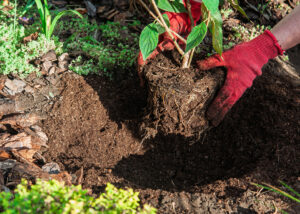
When planting, dig a hole twice the diameter of your root ball and ensure the hole is well watered. Gently loosen or detangle any binding roots in the root ball. Place the root ball in the hole, ensuring the root collar (the flare where the trunk meets the roots) is about 1″ above ground level to allow for settling. Backfill with soil and water again. Monitor watering needs and supplement during any dry spells. Mulch around the base of the plant, leaving about 3″ around the trunk area clear.

As leaves begin to fall, we have an opportunity to insulate sensitive trees and shrubs from harsher days of winter. Fallen leaves applied as mulch around the base can act as a thermal blanket protecting roots from freezing. This mulch also provides a winter habitat for beneficial insects and worms that will enrich your soil. Simply rake or blow leaves around the base of your shrubs, trees, and garden beds. Avoid using a mower to shred and collect leaves, as it can disturb insects and eggs that may already be present. Using leaf litter for mulch will also help suppress weeds and retain moisture while decomposition provides the soil with valuable nutrients.

As the gardening season winds down, we often have a strong desire to “tidy up,” but keep in mind that not every shrub needs a haircut and not every fallen leaf needs to go into the yard waste bin. Resist the urge to over-prune, plant wisely, and put fallen leaves to good use. The result may not be the tidiest garden in the neighborhood, but beneath the surface, roots are growing, beneficial insects are finding shelter, and plants are quietly preparing for spring. This is your time to step back, let plants rest, and anticipate the beauty that next spring will deliver.  

References and Resources:

Reasons to Prune Trees and Shrubs (Home Gardening Series). Washington State University Extension

Kohlhauff, T. Pruning Woody Landscape Plants. Washington State University Extension

General Care for Hydrangeas. (2018) Oregon State University Extension

Lilly, S., Gilman, E., Smiley, E.T. (2018) Best Management Practices: Pruning. International Society of Arboriculture, Atlanta, GA

Leave the Leaves  Xerces Society for Invertebrate Conservation, Portland, OR

picture of woman in grey top

Anne Kurt

ABOUT THE AUTHOR:

Anne Kurt is a Pacific Northwest gardener and certified Skagit County WSU Extension Master Gardener (2024) with a passion for sound, research-based landscape care. In early 2026, she became a certified Master Pruner through Plant Amnesty, deepening her knowledge of proper pruning techniques and principles. She gardens in Skagit County and enjoys sharing what she learns with fellow gardening enthusiasts.


Questions about home gardening or becoming a master gardener may be directed to Skagit County WSU Extension Office, 11768 Westar Lane, Suite A, Burlington, WA 98233; by phone: 360-428-4270; or via the Skagit County WSU Extension website.

Washington State University Extension helps people develop leadership skills and use research-based knowledge to improve economic status and quality of life. Cooperating agencies: Washington State University, US Department of Agriculture, and Skagit County. Extension programs and policies are available to all without discrimination. To request disability accommodations contact us at least ten days in advance.

AMGPost_header5
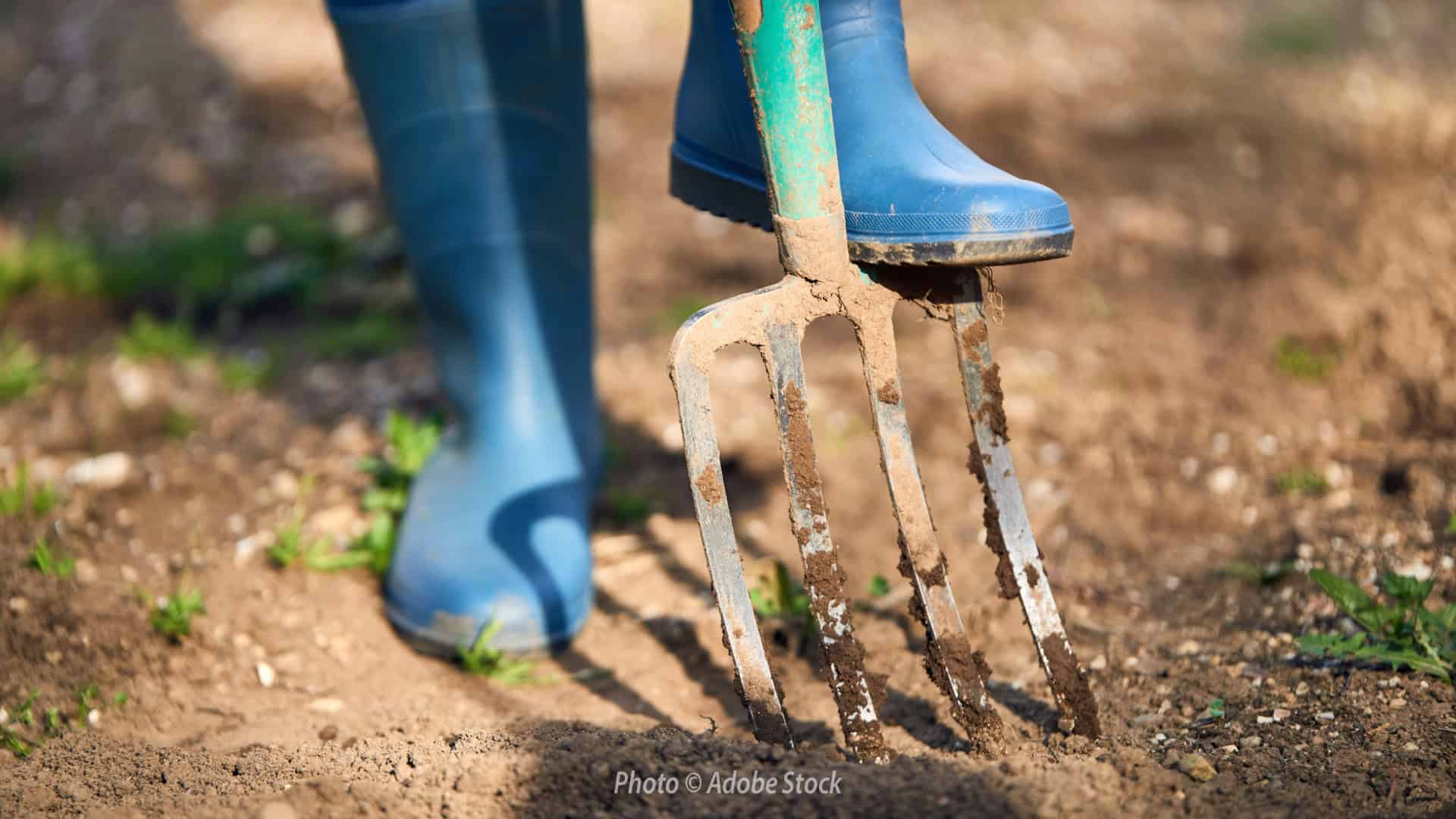
person in boots digging a garden fork nto soil

Tips for Garden Tool Maintenance and Care

Taking the time now will reward you well when spring smiles again

              Subscribe to the Blog >

By: Kathy Wolfe, Skagit County WSU Extension Master Gardener

What a gardening year it has been! All of the digging, seeding, watering, planting, pruning, mulching, raking, and harvesting have rewarded us well. The garden and gardener are now prepared to enjoy a respite going into the winter months. But wait. Are you sure you are done? Did you neglect to clean your garden tools? Guilty as charged, Your Honor!

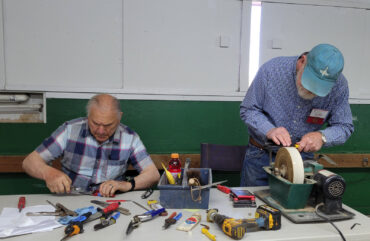
Ideally, it is best to clean and disinfect your implements every time they are used, but most of us probably don’t. Late fall is a great time to give these hard-working tools a good cleaning and sharpening to prepare them for storage and the new gardening year ahead. Any tool with nuts and bolts, screws, blades, or chains will need sharpening and maintenance. 

Just as a keen kitchen knife eases food preparation, sharp garden tools allow more efficient cutting, are easier to use, and last longer. A sharp blade is less likely to slip and will cause less cell damage to the plant, while a dull blade will crush, not cut the plant stem. The sharp edge allows the plant to heal faster with less chance of infection due to adverse weather or fungi.

shovel with brush and sandy bucket
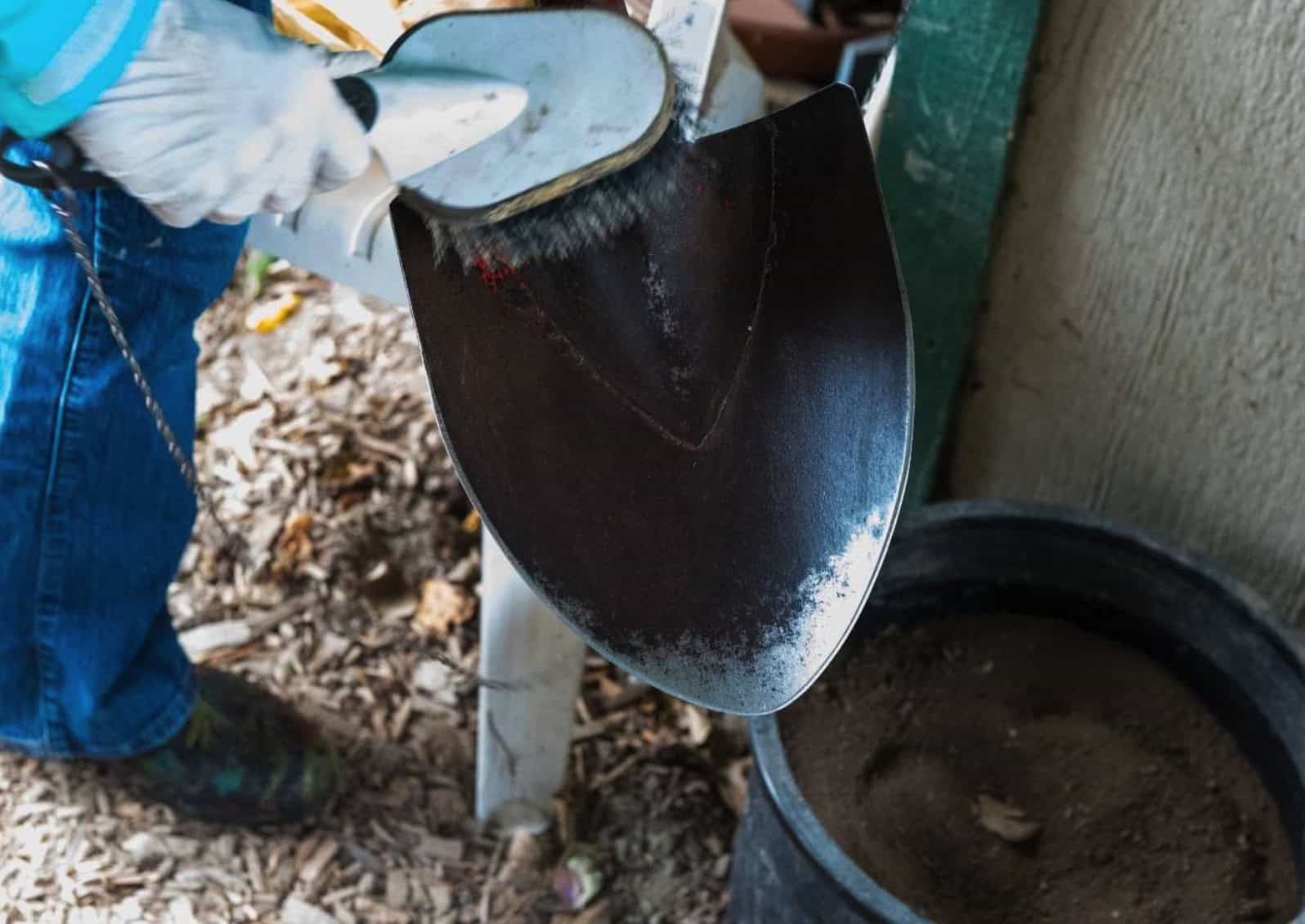
A cleaning station with a stiff wire brush, a rag and a bucket filled with sand and moistened with mineral or linseed oil makes it easy to clean tools after daily use. © Photographer: Nancy Crowell / Skagit County WSU Extension Master Gardener
dirty tools on work table
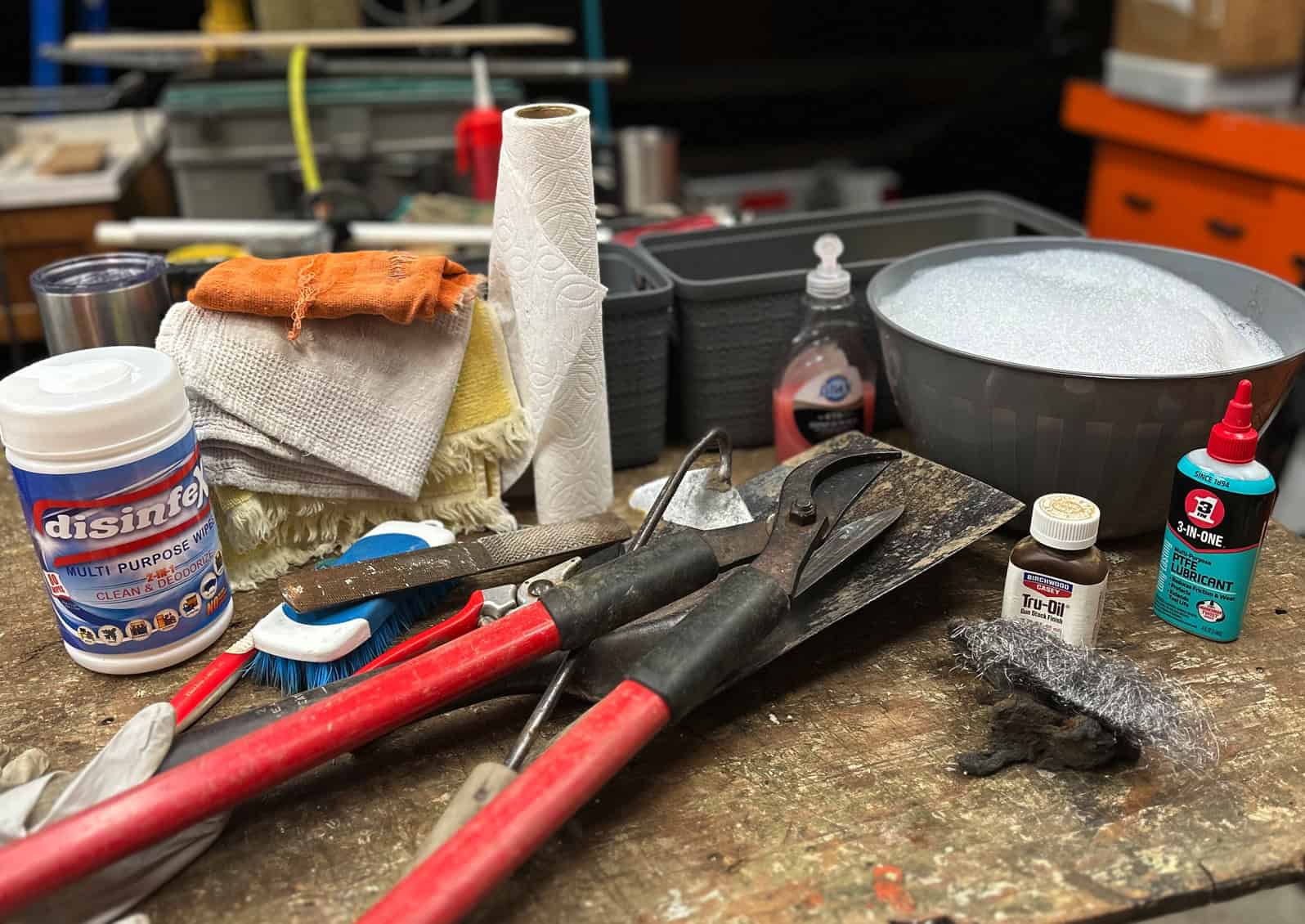
Setting up a work area with everything needed will ease the work of cleaning up tools in the fall. © Photographer: Ginny Bode / Skagit County WSU Extension Master Gardener

Shovel blades should be sharpened to increase ease of use. Sharpen them at a 45-degree angle by running a file across the edge until sharp. For pruners, sharpen periodically using a whetstone or carbide sharpener to give the blades a finer edge. Sharpen at the same angle of the blade, taking care to file out any notches or cuts. For larger or more irregular blades, research techniques from trusted sources and follow directions closely, or consider taking these blades in for professional honing each year. Many find that lawn mower blades are particularly tricky, as improper sharpening can make them out of balance, which can harm the mower motor as it turns at high speeds.

Clean garden tools prevent the spread of disease around the garden. Thorough cleaning deters the spread of infection when working with infected plants or pruning out diseased limbs. Keep a container of rubbing alcohol, bleach (1 part bleach to 9 parts water), or disinfectant on hand to clean blades between pruning each plant. Clean sticky plant sap from blades of saws or pruners using paint thinner, then wipe down with a rag.

The main enemy of most metal tools is rust. To clean, soak rusty tools in a weak (1:1) vinegar/water solution for 24 hours. Cheap white vinegar works well for this. After soaking, dry it with paper towels, and then use steel wool to remove the rust. You may have to repeat the process several times before all rust is removed. Severely rusted tools may require sanding with rough sandpaper or a wire bristle brush. In extreme cases, use a drill with a wire brush attachment or wire wheel. Be sure to wear safety glasses during this procedure. Use a light, circular motion rather than scraping to avoid thinning or scratching the metal beneath. After any de-rusting, wipe the metal with a coat of oil. To avoid rust problems, consider purchasing stainless steel tools.

oiling a pruners
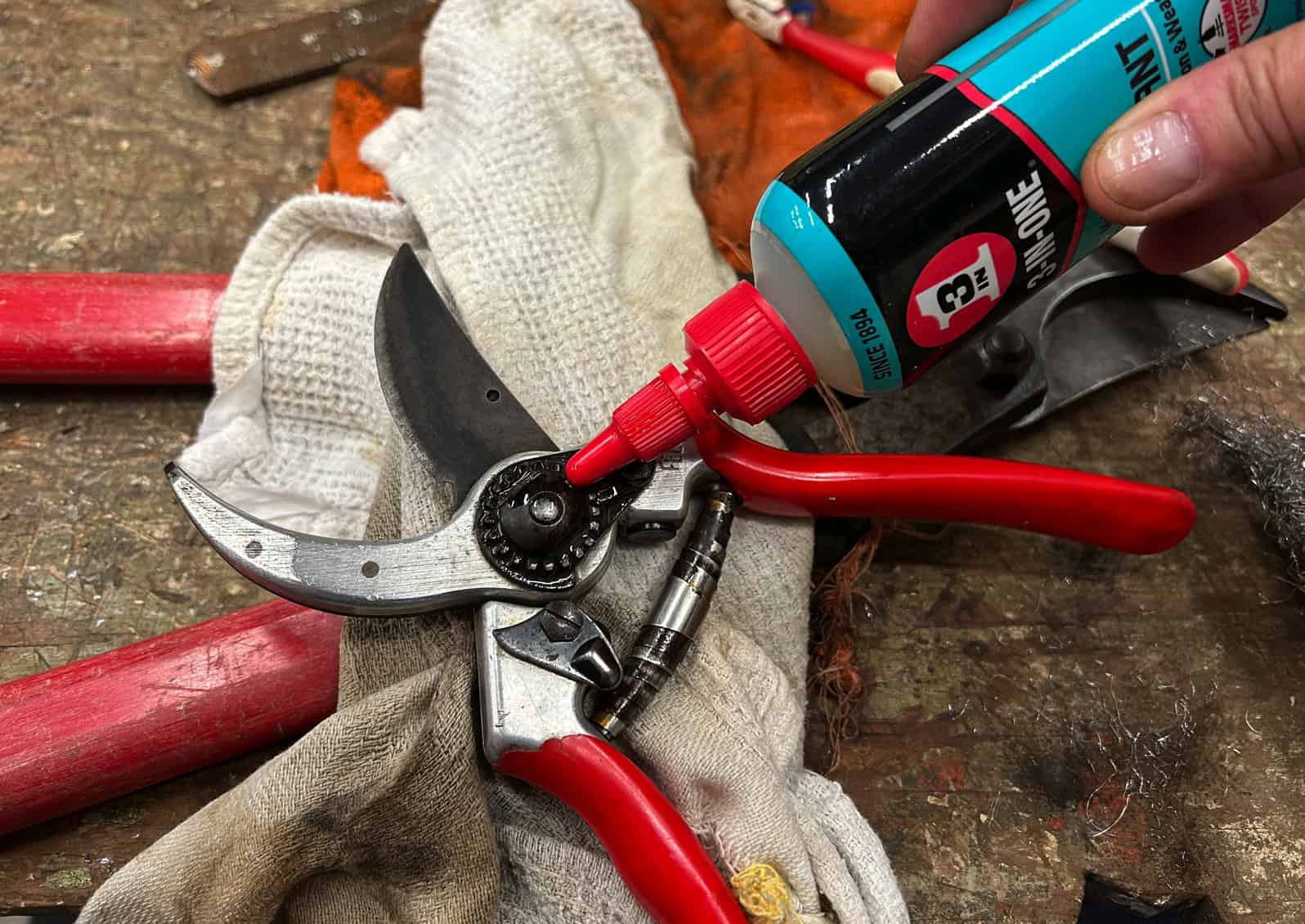
A good all-purpose oil cleans and conditions the working parts of tools. © Photographer: Ginny Bode / Skagit County WSU Extension Master Gardener
tools organized in bins
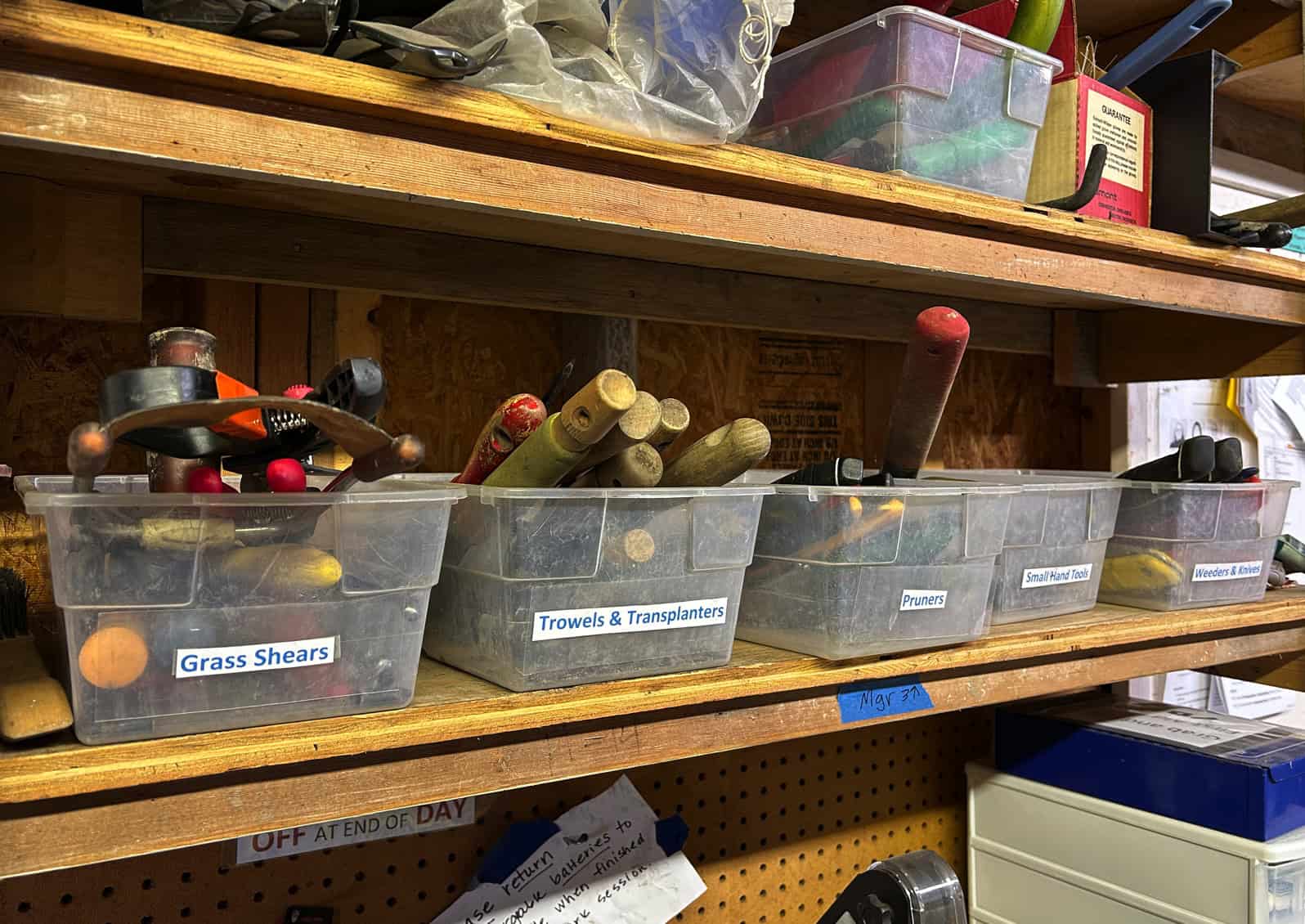
The correct storage of garden tools will extend their life and keep them sharper longer. Store items separately in a dry place, off the floor to prevent moisture, rust, and dulling. © Photographer: Ginny Bode / Skagit County WSU Extension Master Gardener

Master gardeners offer free tool sharpening at the annual Plant Fair in May. © Photographer: Kay Torrance / Skagit County WSU Extension Master Gardener

For day-to-day maintenance for tools used in soil, such as shovels, hoes, and garden forks, it is convenient to set up a cleaning station which includes a stiff wire brush with a scraper end, a rag, and a bucket filled with sand or kitty litter and moistened with mineral or linseed oil. When your gardening day is done, use a stiff wire brush to dislodge the debris, and then rinse your tools using a stream of water from the garden hose. Dry thoroughly. Drag the tool through the sand/oil mixture to coat the blade. The oil coating will retard moisture and limit rust, and the sand helps provide abrasion to remove residual soil.

Pruners are most easily washed with a nail brush or scrub pad using soap and water. Dry thoroughly, then lubricate a drop or two of multipurpose household oil, machine oil, or grease into the pivot point to allow blades to move freely and not catch or rub. Use mineral spirits to remove residue. If pruners are dull, give them a sharpening, carefully sliding the blade along the stone in one direction until sharp. Keep the file at the correct angle to the edge of the tool surface you are sharpening. Next, check that all tool bolts and screws are tight.

Dry wooden handles can split or break. Using a lightly oiled rag near the sand bucket, swipe the handles after each use. Twice each season, sand the wood with medium-grit sandpaper, then rub with a slightly moistened linseed oil rag to create a protective layer. Allow all oil rags to dry in the open air to avoid the risk of combustion. Store wood-handled tools indoors in a dry storage area.

The correct storage of garden tools will extend their life and keep them sharper longer. Store items separately in a dry place, such as a shed, garage, or closet. Keep them off the floor to prevent moisture, rust, and dulling. Consider adding hanging racks or a pegboard rack system. Place a waterproof cover over any machine, such as a lawn mower, that must be stored outside due to a lack of storage space.

Taking the time to set up a simple cleaning station for next year and doing some additional cleaning and maintenance of your garden tools now will reward you well when spring once again smiles upon us.

REFERENCES AND ADDITIONAL READING:

Disinfecting Your Garden Tools. University of Florida Institute of Food and Agricultural Services (UF/IFAS), Gardening Solutions. Retrieved from: https://gardeningsolutions.ifas.ufl.edu/care%20/tools-and-equipment/disinfecting-%20tools/

Grant, B. (rev. 2021). Caring for Garden Tools: Tips for Cleaning Garden Tools. Garden Know How. Retrieved from: https://www.gardeningknowhow.com/garden-how-to/projects/cleaning-gardening-tools.htm

Eckelberg, J. and Saxe, C. (rev. June 2013) “Maintaining Lawn and Garden Tools“. University of Wisconsin Extension, Juneau County, Item #XHT1214. Retrieved from: https://hort.extension.wisc.edu/files/2014/11/Maintaining_Lawn_and_Garden_Tools.pdf

Prichard, Phillip. (2023) “How to Care For and Winterize Your Garden Tools”. University of Georgia Extension, Paulding County. Retrieved from: How to Care For and Winterize Your Garden Tools | Paulding Vine (uga.edu)

Kappos, Carmen. (2015) “Garden Tool Care”. The Backyard Gardener. University of California, Master Gardeners of Inyo & Mono Counties. Retrieved from: https://ucanr.edu/blogs/blogcore/postdetail.cfm?postnum=18779

“Care and Maintenance of Garden Tools.” 10-Minute University, Clackamas County Master Gardener Association, Oregon State University. Retrieved from: https://clackamascountymastergardeners.org/wp-content/uploads/2022/02/garden-tool-care.pdf


Kathy Wolfe

ABOUT THE AUTHOR:
Kathy Wolfe has been a Skagit County WSU Extension Master Gardener since 2002. She is co-manager of the vegetable garden at the Discovery Garden on SR 536 west of Mount Vernon.