Post: June 19, 2026
“A Jewel of a teaching garden”
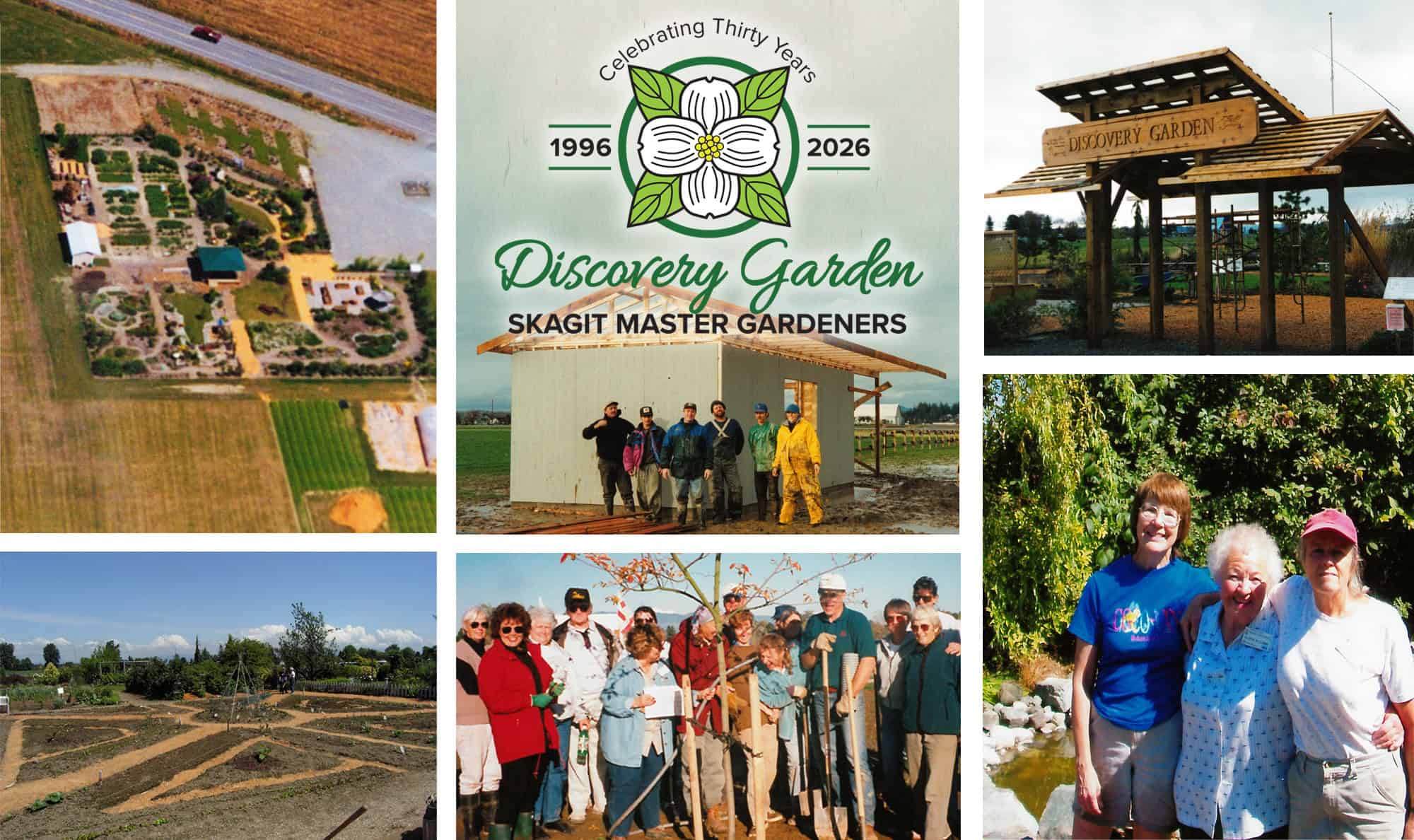
Discovery Garden Celebrates 30th Anniversary ~ Cultivating Plants, People, and Community
The development of every garden is a journey. Gardeners start with a vision. What do they foresee in the short and long term? What plants do they love? What will grow at their site? What is possible? These hopes and dreams are then put into motion with a series of carefully planned steps to begin the trek. The path will take twists and turns. The garden will weather storms, successes, and failures. It’s all part of the journey.
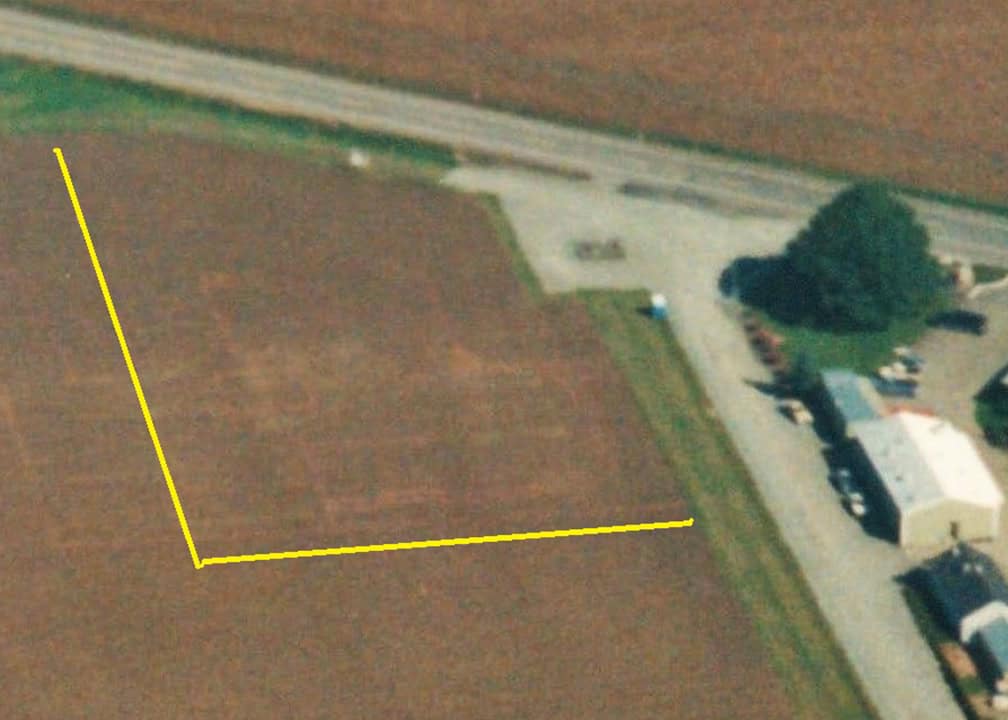
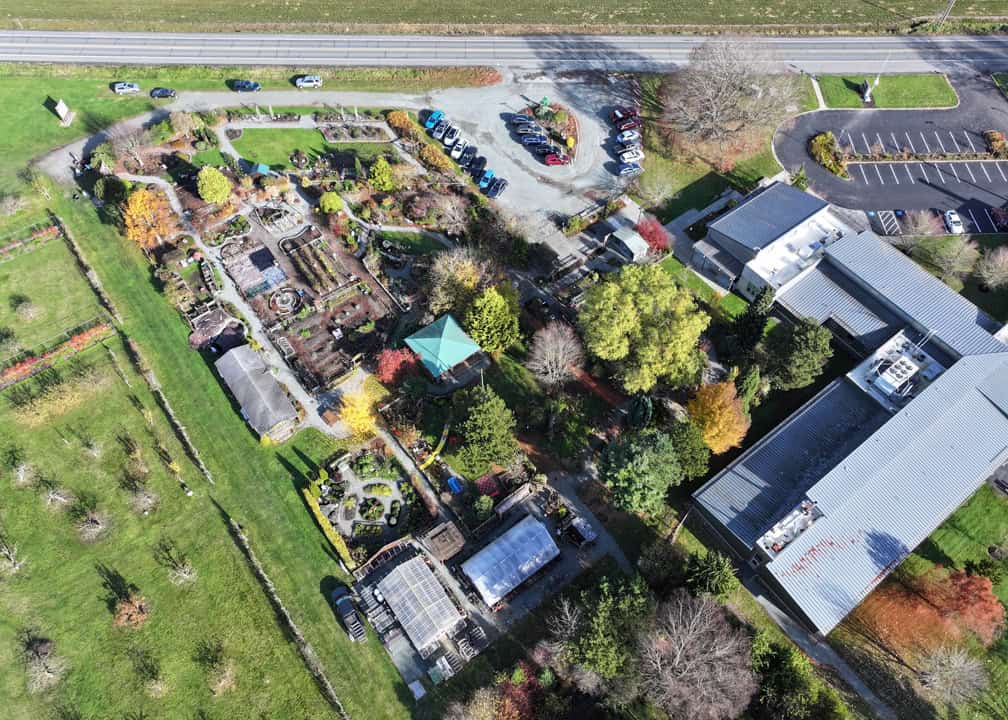
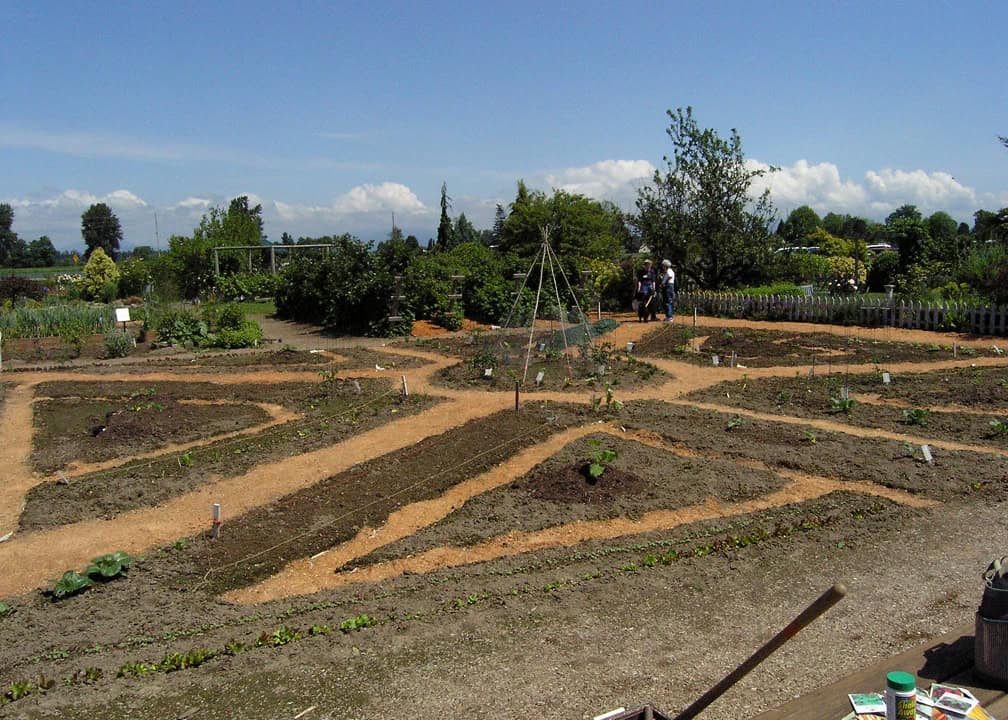
Now 30 years old, the WSU Extension Skagit County Master Gardener Discovery Garden in Mount Vernon is a true microcosm of a garden’s evolution – all playing out in the public eye. What started as a wide-open, muddy 1.5-acre former pea field now teems with an amazing array of plants and trees.
The Discovery Garden serves as an illustration of a three-decade garden journey that resulted in the creation of a community hub of learning. It’s also a testament to the dedication and commitment of the master gardener volunteers, who have developed, maintained, and weathered the garden trek over the decades.
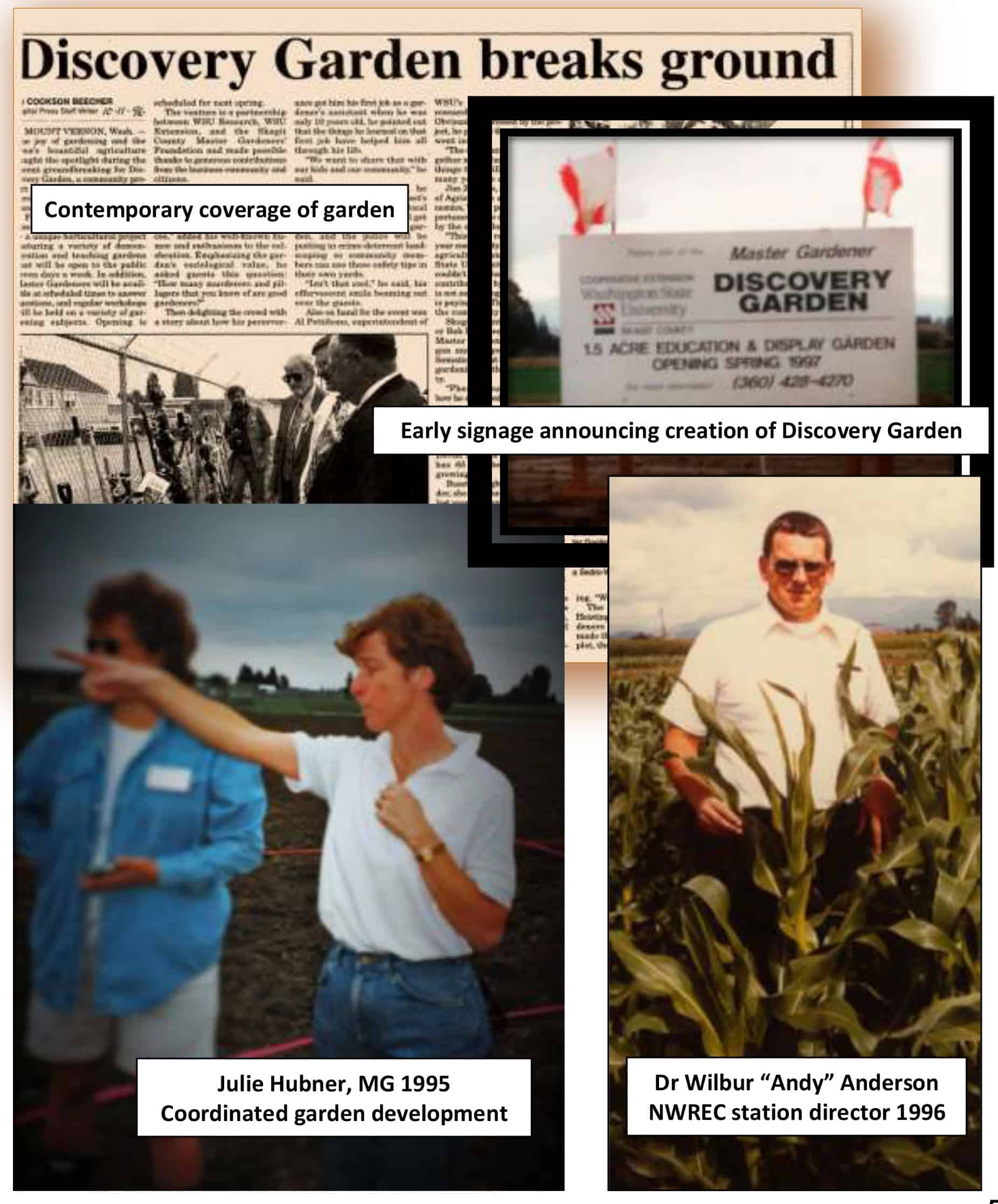
The vision for the Discovery Garden was articulated best in 1996 by master gardener and project leader Julie Hubner, who said it would become a “jewel of a teaching garden.”
Master gardeners spent two years discussing not just how the garden would come to be, but how it could fulfill the master gardener priorities around environmental stewardship and sustainability. In addition, they looked at the benefits of gardening, including access to healthy food, creating beauty, teaching people of all ages, including children, and creating a culture of volunteerism and inspiration for home gardeners. It was a heavy lift and representative of the process of developing any garden, large or small.
Starting a garden, at home or for the public, involves many key steps, including planning, understanding the site, choosing the right plants, potentially adding structures, and maintenance. The Discovery Garden journey was somewhat unconventional compared to the ideal process, however, as it started with a set location and without a complete plan. Despite that, the garden has become a showcase of gardening and an illustration for home gardeners of what plants can sustain and succeed in northwest Washington’s many microclimates.
Planning a New Garden
Having a plan for a garden is an essential step before digging. Experts suggest carefully selecting the site and drawing a map of the area, based on the gardener’s goals for the space and the environment’s realities. The University of Kentucky Cooperative Extension provides helpful landscape planning documents on their website.
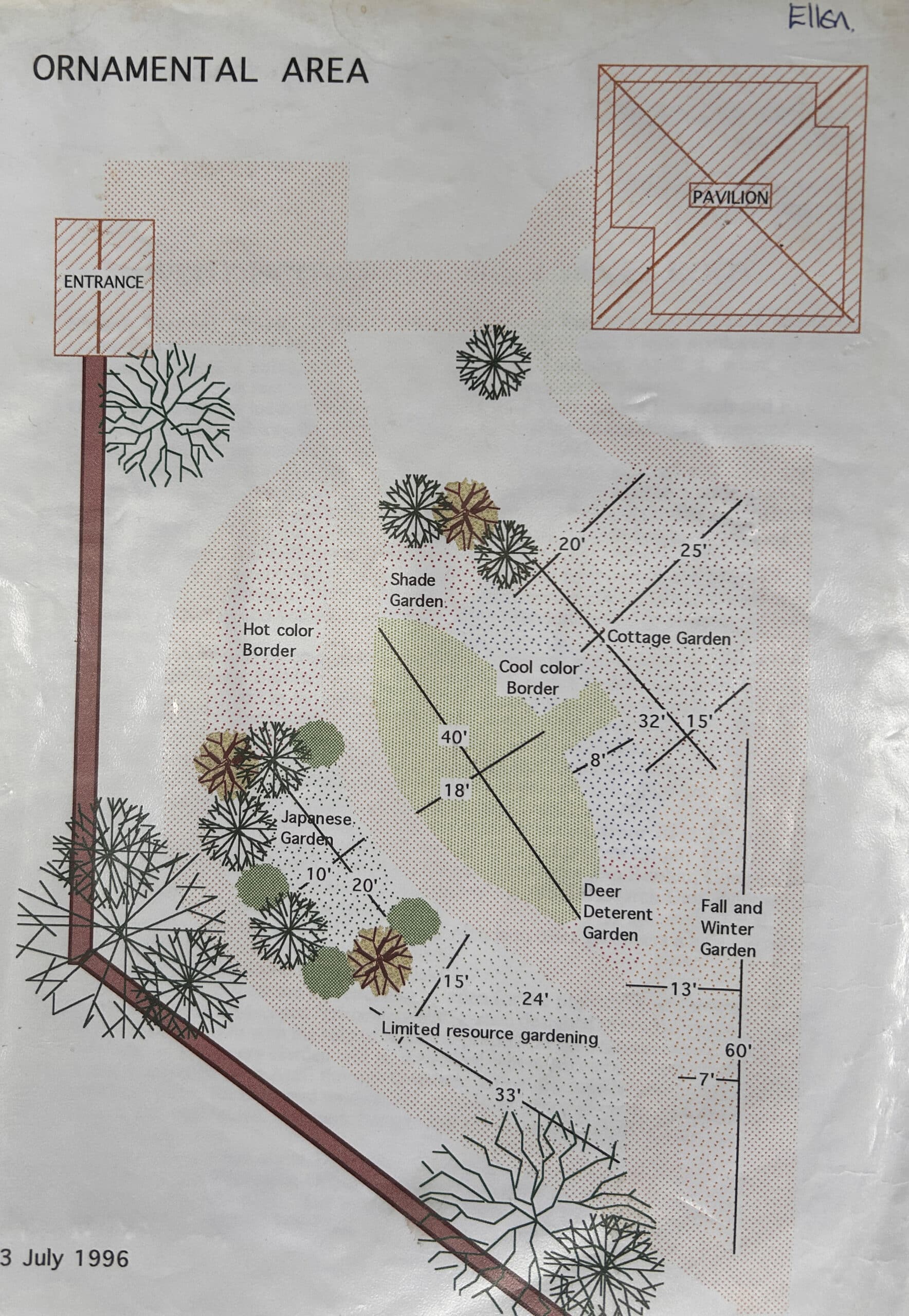
With a vision and volunteer-driven effort to develop the Discovery Garden, the path was a little different. Early drawings were created; however, the map was fairly general, and there was still much to organize and learn as ground was broken for the demonstration garden in September 1996. The agricultural field was just a blank but very muddy, canvas.
“It’s unimaginable what it has become. There was nothing here,” said Herta Kurp, who became a master gardener in 1995 and remains active in the garden today. “There were so many things we were not anticipating … no comprehensive plan to start.”
“An orphaned field
Abandoned toil,
Wide open sky
Dark dirt of Skagit soil…
Ever changing, all renewing
Growing and maturing
Then and now…
Discovery abounds.”
– Herta Kurp, June 2016, MG Class of 1995
Thirty Years of Discovery in the Garden
Providing a demonstration garden for the people of Skagit County was an early goal for local master gardeners. The first master gardener in Skagit County was Joe Dupre in 1977, for whom “Joe’s Place” is named in the Discovery Garden. The group grew to 44 members by the mid-1990s when talk officially turned to forming a display garden.
After two years of discussions, a 1996 cooperative agreement was reached with Washington State University, the Northwestern Washington Research and Extension Center (NWREC), WSU Extension Skagit County, and the Skagit County Master Gardener Foundation. The accord transferred management and care of 1.5 acres of fertile, unplanted land adjacent to NWREC, west of Mount Vernon, to the master gardeners.
On September 15, 1996, ground was broken for the WSU Extension Skagit County Master Gardener Discovery Garden, which opened to the public on August 15, 1997. The garden initially included 13 themed gardens ranging from herbs and shade to cool color and “Naturescape.” The outdoor classroom has since expanded to feature 33 “garden rooms,” along with greenhouses, a plant propagation house, welcome structures, a composting center, and more, all to inspire home gardeners.
Discovery Garden
30th Anniversary Open House
Saturday, June 27 ~ 10 am – 2 pm
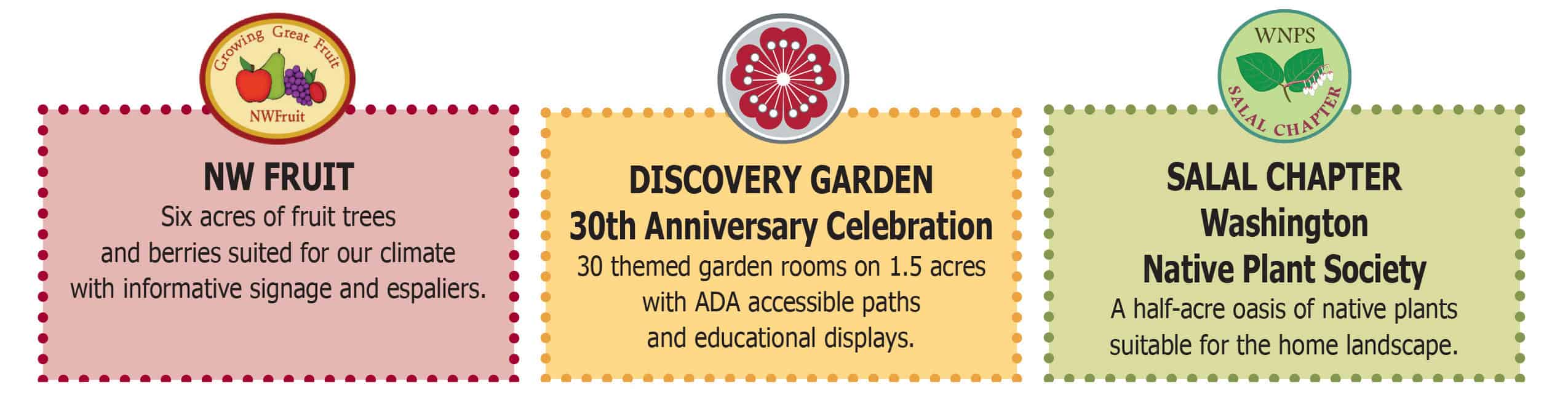
Talk to the people who maintain the garden rooms in the Discovery Garden, as well as representatives of the NW Fruit, and the Salal Native Plant Garden.
Learn more about:
- Noxious weeds
- Plant Clinic and gardening help
- Fruit trees
- Maintaining ponds and water features
- Pollinators
- Native plants for our area
Read all the details about the 30th Anniversary Open House.
The Discovery Garden, located at 16602 State Route 536 (Memorial Highway), is open daily throughout the year from dawn until dusk.
Anita Davis, another new master gardener in 1995, recalls, “There was absolutely nothing planted. The area was just weeds.”
Still, the potential was there, and the volunteers put on their boots and got started.
The plan opened with 13 gardens, including many themes that continue today, such as Naturescape, herb, vegetable, and Japanese. Along with Davis, Diana Wisen, (class of ’91) coordinated the “Easy Care” garden, aptly named to showcase “low maintenance types of plants.”
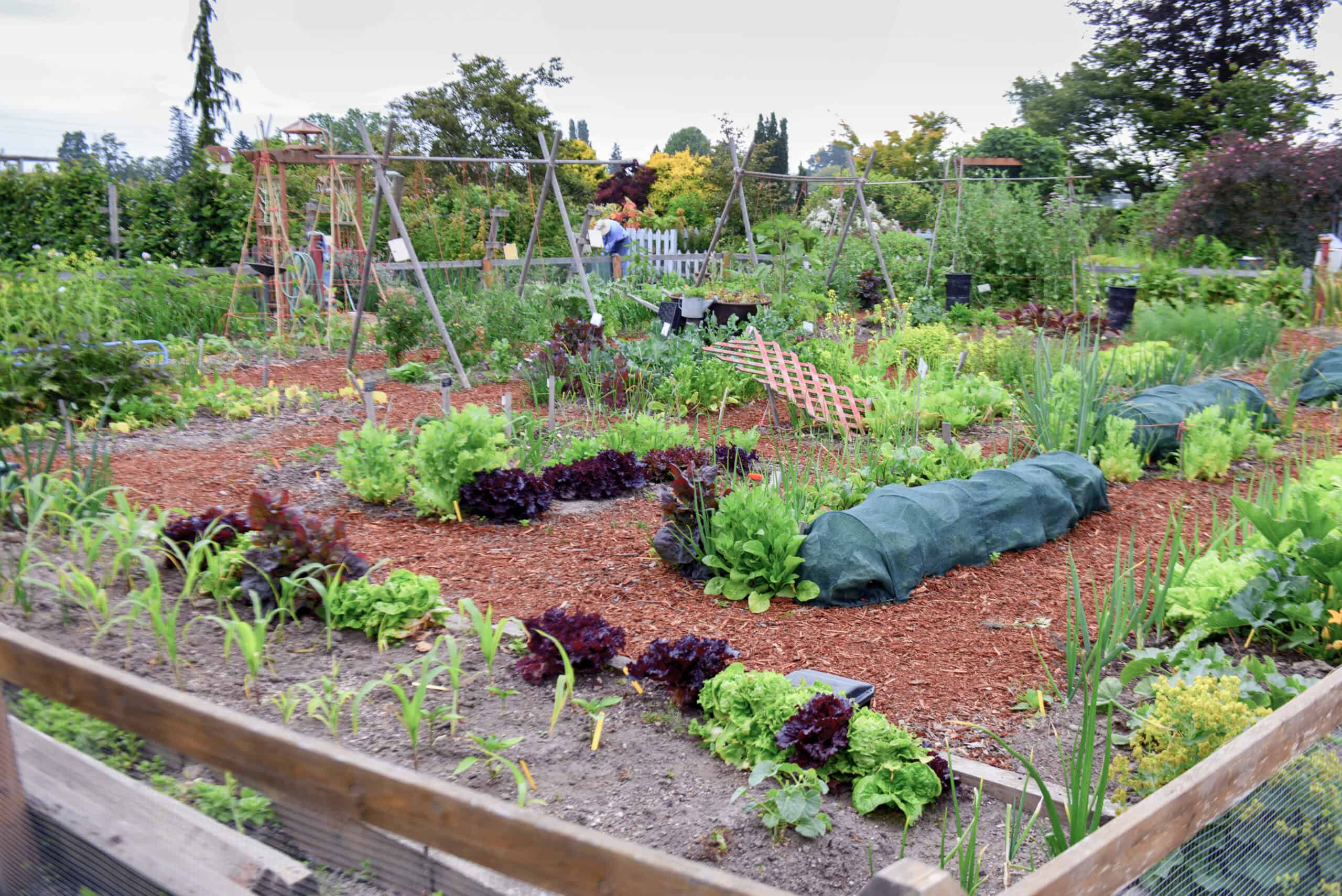
The vegetable garden space gets a fresh plan each year, to rotate crops and try new ones. “I love having a clean slate every year, as the veggie garden is always changing,” said Ruth Sutton (class of ’01), who became the vegetable garden co-coordinator, along with Kathy Wolfe (class of ’02).
As with any garden, plans evolve with space, ideas, and people. Today, a comprehensive plan and map of the Discovery Garden outline the layout (add link to the current garden map) Now, 33 gardens are on display. Some original concepts like Easy Care have morphed into other themes. Other “rooms” were added including spaces dedicated to hardy fuchsias and “four-season interest.”
Selecting and Understanding the Site
Performing a full analysis of a garden site to understand the soil, weather, microclimates, moisture, and other factors is all helpful for the success and sustainability of a new green space.
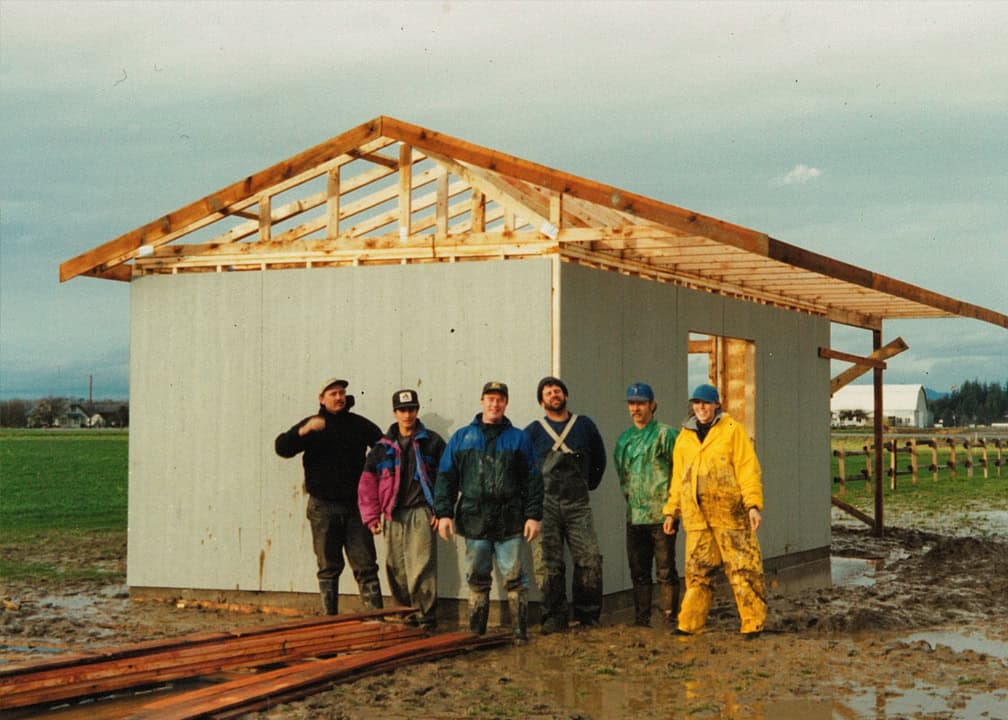
While the site was selected in advance, the master gardeners remain highly appreciative of being the beneficiaries who manage the 1.5-acre Discovery Garden site. At first blush, it was known that the site was fertile for agriculture. However, it was also very wet and muddy, as the land is within the Federal Emergency Management Agency’s 100-year floodplain map for the Skagit River. Mud and all, work began in fall 1996.
“This was the biggest mud hole you have ever seen. You would sink to your knees if you walked in it,” said Glenice Hanna (class of ’95).
With a goal of opening by summer 1997, the hardy band of gardeners did not let conditions deter them from moving forward. Volunteers initially dug ditches to wick away water and build paths, experimenting with various materials to allow people to access the site and lay the framework for future planting.
Flooding continues to be an issue at the site, as heavy rain can quickly lead to standing water, which is not conducive to many plants. Conditions improved dramatically in 2012 when a substantial drainage project was completed to add, replace, or repair storm drains and drainage lines in the garden, moving water away from the garden to an existing ditch on the north side of the property, next to Memorial Highway.
For the dry season, watering techniques have also improved over the years. Most of the gardens are now also served by a drip irrigation system on timers to handle summer watering, while serving as good stewards of the resource.
Choosing the Right Plants
Plant selection is another key element emphasized by experts in garden design and development, with attention to size, form, texture, color, and seasonal interest. At a high level, it’s important to know what plants thrive in the garden’s official zone on the U.S. Department of Agriculture’s (USDA) Plant Hardiness Zone map. Home gardeners can identify their zone by typing in a Zip Code in the map tool to learn more.
For a closer look, experts recommend zooming in to understand the garden’s microclimates and assess the impact of shade, sun, wind, moisture, soil, topographic features (e.g., elevation), structures, and hardscape. The Discovery Garden’s proximity to the Skagit River has a definite impact on the area causing a high water table. The garden is Zone 8b on the USDA map.
In choosing plants in the early days, the Discovery Garden’s budget was limited, so the master gardeners turned to the community for help. Through the generosity of individuals, businesses, nurseries, service clubs, and civic organizations, the master gardeners gladly accepted donations of more than 150 trees and shrubs, plus another 300 perennials, to get the garden started. The volunteer group formed the Skagit County Master Gardener Foundation, a non-profit organization, to raise funds to support the garden, and the ongoing mission of promoting science-based gardening practices and education.
Given the conditions and somewhat random collection of plants that were initially available, it should not come as a surprise that not all plants started off in the right place. Trees outgrew their locations. Some plants did not survive the high moisture level. Others crowded each other out.
“We planted things that quickly got too big and had to be taken out,” Wisen said. “You don’t have total control. It’s a constant learning for master gardeners as well.”
The fertile soil also led plants to outperform what the original nursery tags predicted for their future size.
“We learned that compared to plant tags from the nursery, we should double what you can expect the plant to grow here. Many trees were thinned. Others got too big and had to be removed,” said Judy Callahan (class of ’95) and coordinator of the herb garden today. “Even master gardeners learn lessons. We learn things every day.”
As trees have been removed, a number of stumps or snags remain to enhance the environment for birds, beneficial insects, and other creatures.
“When you start out, it’s going to look good,” said Jerry Sells (class of ’03). As the garden was starting to fill in, he noted “It’s not going to always look good. It’s the nature of the beast.”
Since the early years, the master gardener mantra of “right plant, right place” has taken center stage in the Discovery Garden as the volunteers have learned, grown, and dedicated thousands of hours to the project. Shade-loving bleeding hearts, ferns, and hellebores tuck under the refuge of trees on the south side of Naturescape while a wide range of crops flourish in the full sun of the vegetable garden, and bees are drawn to the combination of colorful bloomers in the pollinator garden. Through trial and error, the garden has matured to show beauty during every season of the year.
“When you visit the garden today, it’s impressive,” Sells said.
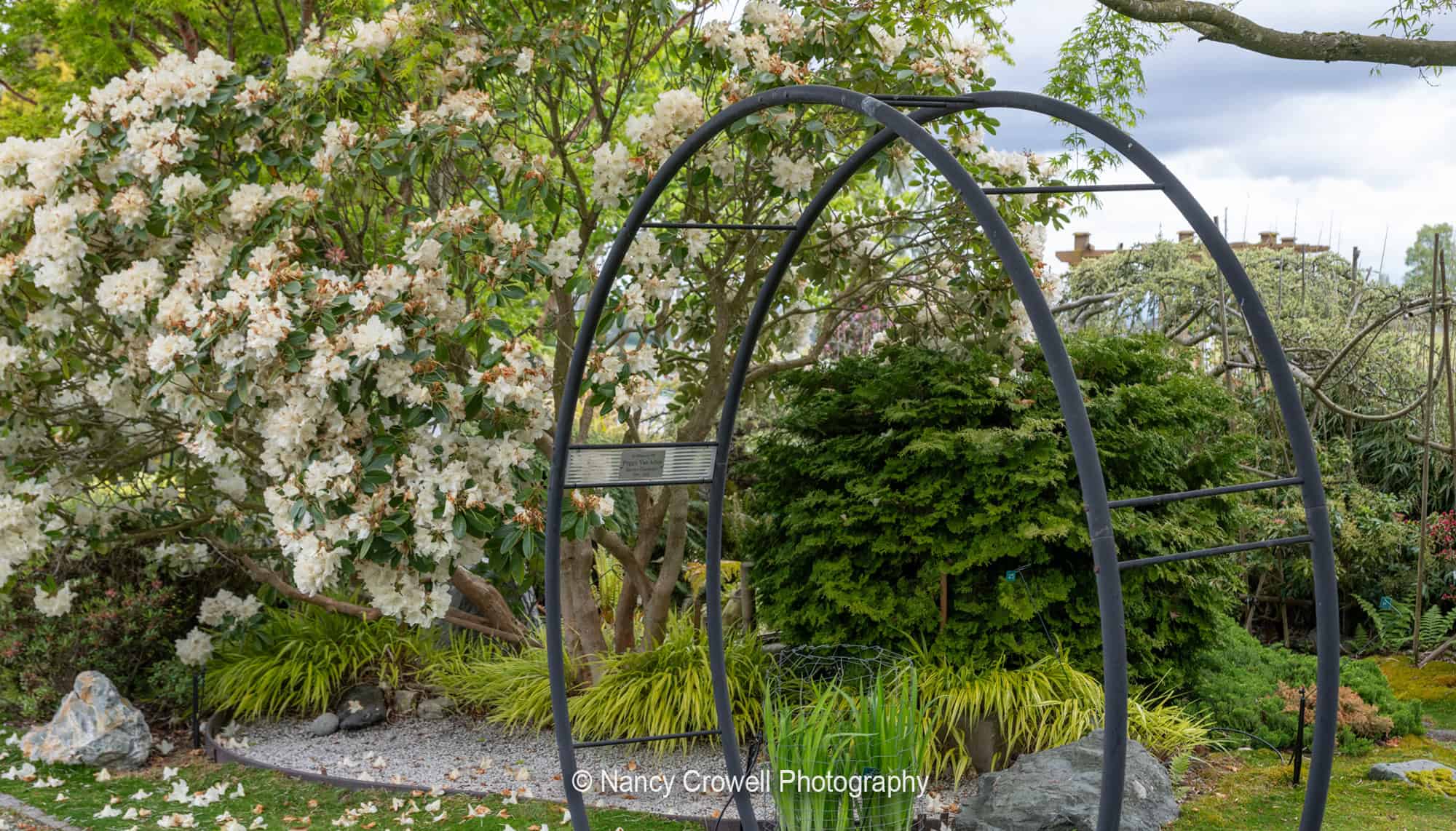
Many gardens benefit from the inclusion of structures, both functional and artistic.
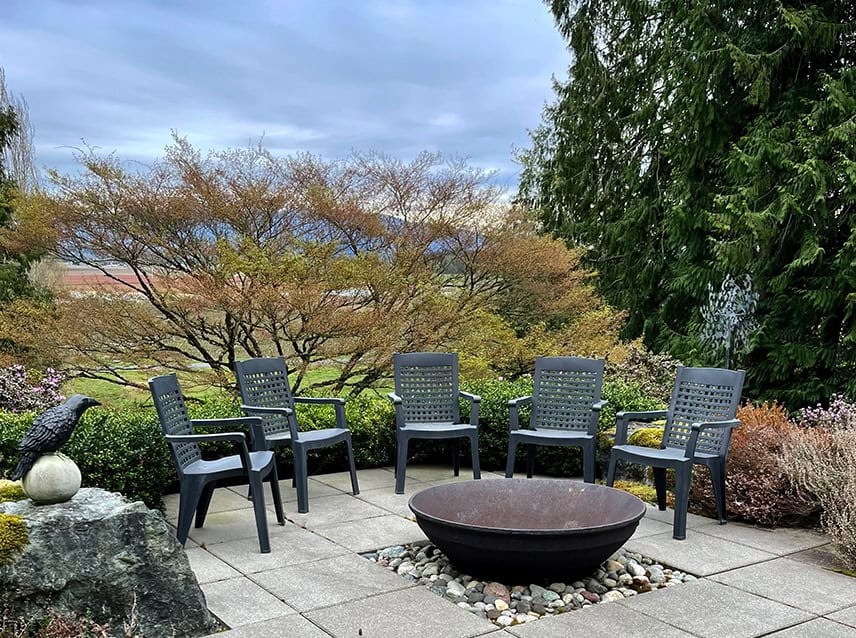
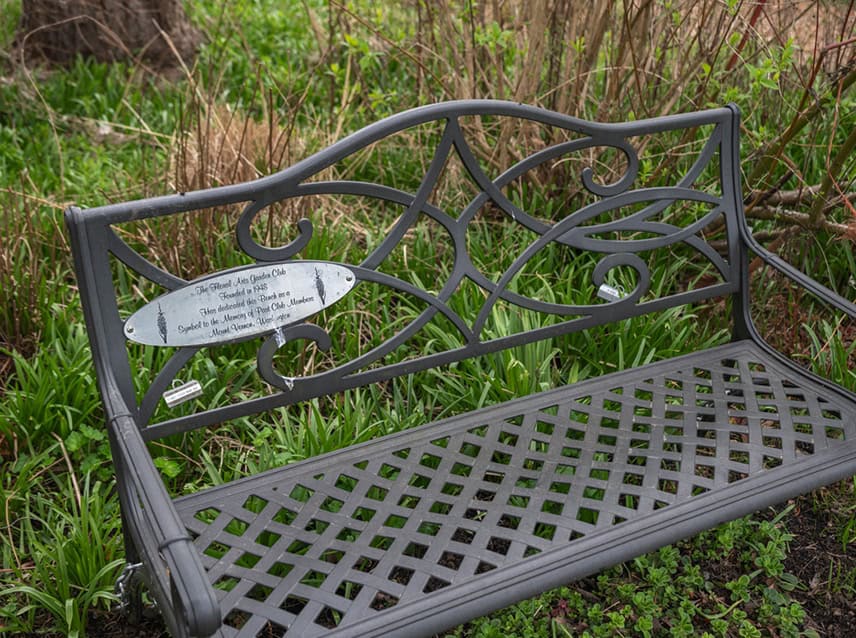
For families, it may be a place to gather in the garden or a children’s play area that encourages engagement with the garden. Small items provide water sources for birds and other creatures, and art pieces enhance the look and visual interest. A bench, pergola, or fountain adds to the ambiance. Making space for composting within the garden helps handle green waste and provides a nutritional supplement for later use in the garden.
Construction of several structures at the Discovery Garden was also aided by community support, which helped fund and provide supplies and labor for structures including a tool and storage shed and the garden’s hub – the Pavilion.
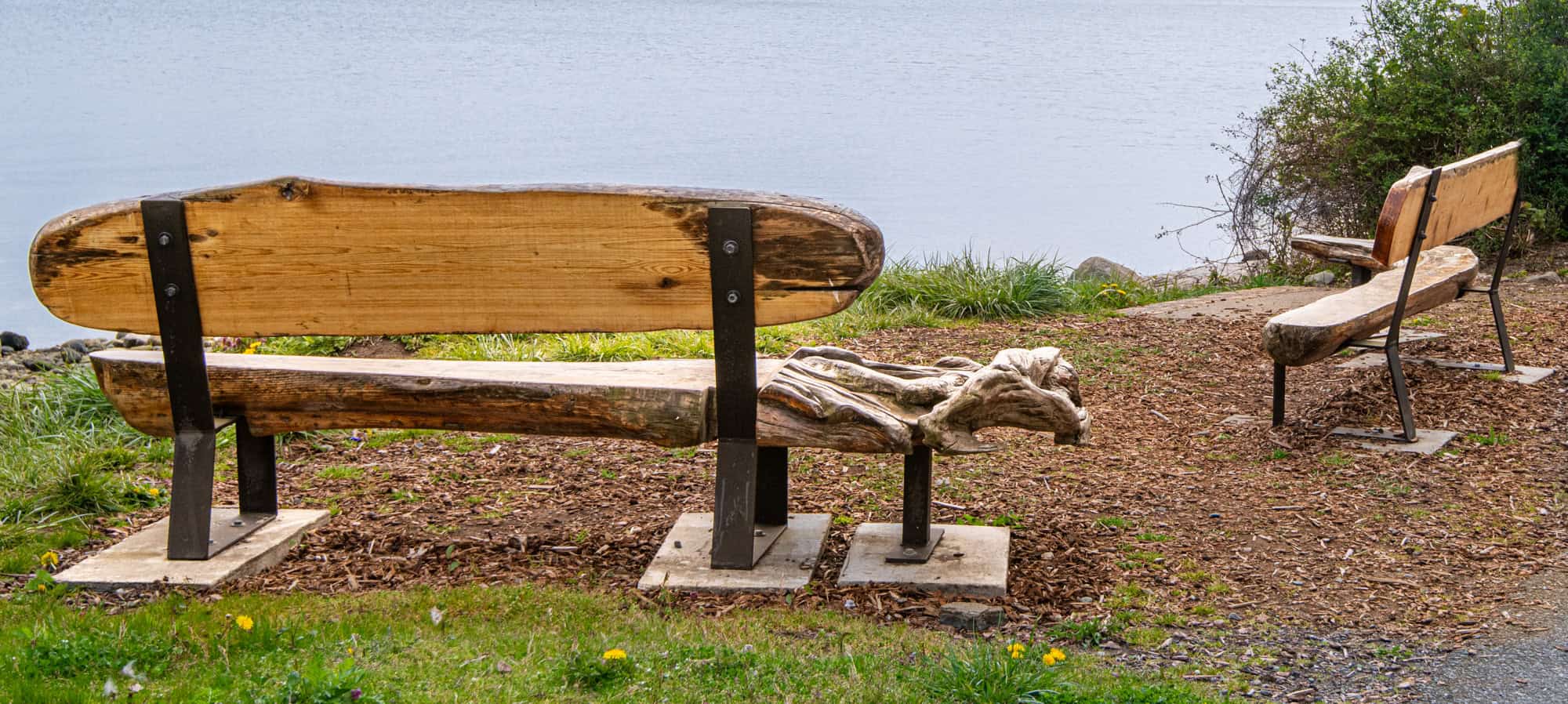
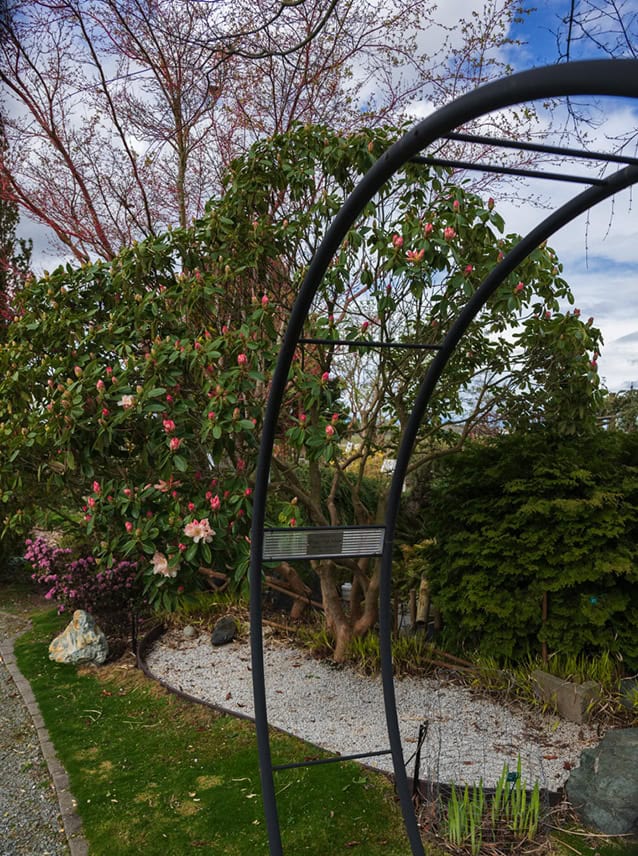
Herta Kurp employed her skills as an architect to design and help build most of the structures in the garden today, including the Pavilion, entrance arches, fences, gazebo, benches, and shade structure. With each project, Kurp said it was her goal “to take any opportunity to make things more beautiful” by complementing the plants, trees, and blooms.
In a 2016 “Seeds for Thought” newsletter article, Julie Powell (class of ’90) noted that the Discovery Garden serves a need beyond horticultural education. “Benches tucked throughout the corners of the garden help enhance the experience,” she said.
“You’re creating a space for someone who really needs somewhere to sit and think and for families to come out here in the late afternoon,” Powell said.
Support buildings were added at the Discovery Garden, including a greenhouse in 2002, which expanded the master gardeners’ ability to start seeds, and the Plant Propagation House in 2011, which replaced a simple hoop-house concept.
Click on the info button “I” above to read captions.
Maintaining the Evolving Garden
As the years go by, the journey for all gardens continues, as does the effort to follow or adjust the vision. Over time, as the garden shifts from newly planted to a more mature environment, it will take on a new look and will adapt to changing conditions. The challenges a gardener faces are varied, ranging from seasonal pests and diseases to the overarching impacts of climate change.
According to the U.S. Department of Agriculture (USDA) Climate Hubs, the Pacific Northwest is not alone in experiencing significant climate shifts, characterized by average temperature increases of 2 to 3 degrees Fahrenheit since 1900. The USDA also notes that “the region faces an ongoing decline in mountain snowpack, more intense winter storms, rising sea levels along coastlines, and an increase in summer heat waves and severe wildfires.” These environmental factors require gardeners to learn and adjust practices and plant selections to ensure sustainability.
“Some things are not as successful now,” Wisen said of the changing environment. “Others are coming in and surviving that didn’t use to.”
Composting has been a cornerstone of the garden since the beginning. The amount of green waste generated by the 1.5 acres of gardens has sometimes outpaced the available space. A remodel of the area was completed in 2007 to organize and maximize the volume that can be chopped, spend time in the decomposition process, and make it available in the garden to enrich the soil.
“We did not realize how much garden waste would be generated on a regular basis from a garden this size. It is one of the big challenges we are currently facing,” Wisen said.
 Mark Your Calendar for These Free Home Gardening Know & Grow Workshops
Ways You Can Help Your Backyard Birds
Tuesday, August 18, 2026
1:00 pm – 2:30 pm
Spectacular Fall Color – How You Can Have it in Your Garden
Tuesday, September 15, 2026
1:00 pm – 2:30 pm
Prepare Your Garden for Fall and Winter
Tuesday, October 20, 2026
1:00 pm – 2:30 pm
Creating an Award-Winning Display Garden for the NW Flower and Garden Festival
Tuesday, November 10, 2026
1:00 pm – 2:30 pm
Sakuma Auditorium
16650 SR 536, Mount Vernon, WA 98273
“We need to have a compost program here. Compost just belongs in a garden,” Kurp said. “Especially in a demonstration garden where we can show how to recycle plants and soils.”
The Discovery Garden will always be a work in progress, as noted in 1997 by then master gardener Marty Jerome, who was quoted in the November 2016 “Seeds for Thought” Washington State Master Gardener Foundation newsletter. “A garden like this will be in progress forever. You put in something and, if it doesn’t work, you pull it out, and you put in something else.”
The Discovery Garden is a place to learn. Over the years, many successes and some failures have been on full display to the public, all dedicated to helping educate home gardeners.
“With plants, you just never know. There’s an uncertainty about it. It’s also teaching you,” said Kurp. “You have to be flexible. If there is a failure, you can do something else. You can work around it. You can beautify it. You can learn and try again.”
True to the can-do attitude of early master gardeners and a generous community in Skagit County, the Discovery Garden continues to flourish. Each year, the garden is visited by thousands of people from across the country and beyond. The Discovery Garden journey continues in its mission to educate and inspire.
References and Resources
Cornell Cooperative Extension College of Agriculture and Life Sciences. (2026) Planning Your Design.
Federal Emergency Management Agency. (2026) FEMA Q3 100 Year Floodplain Map – November 2017.
Master Gardener Foundation of Washington State. (2016). Skagit County Master Gardeners’ Discovery Garden is now 20 Years Old. Seeds for Thought, a newsletter of the Master Gardener Foundation of Washington State, Volume 16, Issue 4.
PennState Extension. (2024) Gardening and Climate Change.
University of Kentucky Cooperative Extension Service. (2026) Landscape Design.
Washington State Climate Office. (2023) Climate Matters, Ecology, Temperature: Plant Hardiness Zones for Washington State

Kari Ranten
ABOUT THE AUTHOR:
Kari Ranten is a retired journalist and health care communicator who became a certified Skagit County WSU Extension Master Gardener in 2024.
Questions about home gardening or becoming a master gardener may be directed to Skagit County WSU Extension Office, 11768 Westar Lane, Suite A, Burlington, WA 98233; by phone: 360-428-4270; or via the Skagit County WSU Extension website.
Washington State University Extension helps people develop leadership skills and use research-based knowledge to improve economic status and quality of life. Cooperating agencies: Washington State University, US Department of Agriculture, and Skagit County. Extension programs and policies are available to all without discrimination. To request disability accommodations contact us at least ten days in advance.