birdbath with leaves floating on water in fall

Post: October 3, 2025

Subscribe to the Blog >

Getting Your Garden Ready for Winter and Beyond

A fall checklist to prepare for next season’s success

Diana Wisen

By Diana Wisen, Skagit County WSU Extension Master Gardener

It’s been a lovely summer for gardening and your landscape may still be going strong, but the soggy, overcast days will soon be here. One late October morning you will wake up and your glorious dahlias are a black slimy mess, signaling our first frost occurred overnight. In our area, the first frost usually occurs around Halloween. With this, our dry summer and fall weather will come to a close, opening the door to November, often the rainiest month of the year here.

With the first frost most likely less than a month away, there is much you can and should do in your garden this time of year.

1. Assess Your Entire Landscape and Make Notes
Take a cup of coffee or tea and your camera and walk around your yard. (This is not the time for wine.) Ask yourself what is doing well? What do I like? What is not doing well? What don’t I like? What’s okay but could be better? What am I tired of? Is there anything I want more of such as color, shade, flowers, or that I want less of? What needs significant maintenance, pruning or removing? Think about rejuvenation, renovation, or no changes. Just seasonal maintenance? Don’t put them off. Now is the time to start dealing with your ideas.
person planting plant in garden soil2. Fall is a Good Time to Plant
Plant more flowering spring bulbs. Next spring you will be so glad you did. And most will naturalize and multiply over the years. If you have a deer or squirrel problem you will want to take precautions to protect some kinds of bulbs. This is the best time of year to plant perennials, shrubs, and trees. The ground is still warm enough for the roots to begin to grow. It may take at least a year or two for the roots of shrubs and trees to become fully established, which means they are able to take up enough water and nutrients to sustain the shrub or tree. When planting, dig a wide shallow hole. Set the plant in at the same level as the soil around the trunk (or a little higher). Refill the hole with the same soil you dug out. Water well to settle it in. Water regularly for the next year or two. Mulch with arborist chips about three-inches deep but not touching the stem or trunk.
3. Weed. Weed. Weed!
Pacific Northwest weeds are super survivors. That’s one reason they are weeds. Many tend to grow year around and set thousands of seeds that can last for years. The cool season weeds such as shot weed (aka hairy bittercress) are beginning to germinate and the summer weeds are still going strong. Dig out weeds while they are small, before they flower, and especially before they set seed. This is particularly true for the vegetable and annual flower beds. If not tended, weeds can overpower next year’s crops before they can get established.

rose trunk in soil
Plants benefit from a layer of mulch to keep soil moisture stable. Spread the mulch away from the plants stem or trunk. © Photo: Skagit County Master Gardeners
4. Mulch
There are several reasons to mulch. It helps keep soil moisture stable, and prevent erosion and soil compaction. It thwarts weed seeds already in the soil from germinating. Using a plant-based mulch such as arborist chips or compost slowly adds organic matter and nutrients to the soil and can make the landscape look attractive. Wait until there have been some thorough rains before putting down the chips. Save your homemade compost to put around your perennials and roses to slowly feed them over the winter. Some bagged or commercial compost may have very little nutrient content (read the labels!) and is best used as soil cover or conditioner.

5. Help Your Soil
A wide variety of soil types and conditions can be found throughout Skagit County. Before amending your soil, have your soil tested. Without knowing what your soil needs, additives could be wasteful, harmful, and expensive, as well as just not needed. Local native soil tends to be on the acidic side with sufficient levels of phosphorus. Too much phosphorus actually causes problems. Adding organic matter such as homemade compost is a good way to enrich the soil. You do not need to add a lot-2-5% compost by volume is sufficient. Rain will leach out the nitrogen, so wait until spring to put it on your vegetable area.

wire cylinder filled with leaves in garden

Place interesting wire towers throughout your garden to make easy disposal of leaves for composting over winter. © Skagit County Master Gardeners
6. “Leave the Leaves”
As you cut back plants at the end of the season, leave the stems and leaves in place on the ground. By doing so, you are providing food for soil microorganisms, which is the beginning of the food web. They in turn provide food for insects that become food for birds and other small creatures.

As you clean up the garden, you may find diseased plant materials. Do not leave this in the garden or put it in your compost bin or pile. Put diseased plant stems and leaves in your garbage or commercial yard waste bin. Disease spores and microorganisms will overwinter in the soil or in a home compost pile. Pick up dropped and rotting fruit from under trees and handle the same way.

If you have an abundance of leaves in the yard, you can pack the slightly damp deciduous leaves into large black plastic bags and let them sit for a year or two. They make leaf mold, often called “black gold” by gardeners because of its excellent compost quality. For more info on improving your soil’s health see > Master Gardener Soil Health Tips

Know & Grow: Conifers in the Home Landscape

Free, no registration required
Listen to Master Gardener Alison Hitchcock speak on caring for conifers in the home garden. Alison Hitchcock has been a Skagit County WSU Extension Master Gardener since 2001. Prior to retirement, she worked for the Department of Natural Resources as the Northwest Regional Silviculturist.

Tuesday, October 21, 2025 – 1 pm – 2:30 pm

NWREC Sakuma Auditorium  16650 State Highway 536, Mount Vernon

Conifer_K&G
broken branch on rose bush
Remove damaged branches and canes. © Photo: James W. Amrine Jr., West Virginia University, Bugwood.org
7. Pruning
Generally fall is not a good time to prune except for the 4 D’s–Prune out the dead, the diseased, the damaged, and the dys-functional (or deranged?) anytime of the year. However, pruning healthy plant material in the fall tends to encourage new growth, which you do not want during the colder months ahead. Tender new growth is much more susceptible to cold and wind damage. Pruning now might also cut off the flower buds of next spring’s flowering shrubs. If in doubt about when to prune flowering shrubs, a good rule is to prune right after a plant has bloomed, and not yet set next year’s flower buds. Roses are best pruned in late March, though you can cut back a bit the tall floppy canes of grandifloras now.
8. Lawn Care
Fall is also the best time to fertilize a lawn. Always read and follow the directions on the bag. Don’t use a Weed ‘n Feed until absolutely needed. A few weeds in a lawn are fine and can be dug out with a kitchen or Hori Hori garden knife if they bother you. Some people even plant crocus in their lawn for spring blooming.
9. Winter is Knocking
Water. Before you unhook your hoses make sure those big shrubs under eaves or large trees are well-watered. Rain may not reach their roots. Shallow rooted big rhododendrons can get quite thirsty in the fall.

Bring in tender plants and containers. Plants in containers could freeze and die because their roots are above ground.

Dig and store summer blooming bulbs, or take your chances on their survival.

Wrap arborvitae hedges with plastic deer fencing if you expect to get heavy snow. If you think a shrub or tree may have died during the winter, wait until June to dig it out. It may come back, just slower. Scrape and test for green tissue to see if it is still alive lower down.

10. Take Care of Your Tools and Equipment
Good, high-quality tools make gardening easier and more productive. We often have more than one pair of shears or shovel, using different sizes for different tasks and users. Take the time to clean and sharpen them. A freshly sharpened shovel or hoe is so much easier to use. Sharp pruning shears and loppers make it fun to prune. Do not use bleach as it corrodes the metal. Read our blog post on Tool Care and Maintenance
11. Refresh a Container for Seasonal Interest.
Stick some branch greens in a bucket or vase and put in a container. Add some seasonal plant material such as berries, pansies, leaves, colorful branches, pumpkins, or whatever you have in your yard. Do one for your front door and your back door. You deserve to look at nature’s beauty every day.

Have more fall plant or gardening questions? WSU Skagit County Master Gardeners are here for you. Plant clinics in Burlington and Anacortes are staffed through October. Check the dates and info here > Master Gardener Plant Clinic Hours Throughout the year you can submit a plant problem onlineSubmit a plant clinic question, leave a phone message at 360-395-2368, or send an email to askamastergardener@skagitmg.org

planter filled with pumpkins and branches with colorful leaves
© Photo: Adobe Stock

RESOURCES AND REFERENCES :

Pacific Northwest Gardener’s Handbook: Growing for the Future. Washington State University Extension, Pullman, Washington. (Rev. 2025) Available for download at > https://pubs.extension.wsu.edu/product/pacific-northwest-gardeners-handbook-growing-for-the-future/

ABOUT THE AUTHOR:
Diana Wisen has been a Skagit County WSU Extension Master Gardener since 1991 and is the coordinator of the Hardy Fuchsia Garden at the Discovery Garden on SR 536 in Mount Vernon. Diana is a member of the master gardener training team each year, teaching on a variety of topics including tool maintenance, managing slugs and snails, and weed identification.


Questions about home gardening or becoming a master gardener may be directed to Skagit County WSU Extension Office, 11768 Westar Lane, Suite A, Burlington, WA 98233; by phone: 360-428-4270; or via the website: www.skagit.wsu.edu/mg

Washington State University Extension helps people develop leadership skills and use research-based knowledge to improve economic status and quality of life. Cooperating agencies: Washington State University, US Department of Agriculture, and Skagit County. Extension programs and policies are available to all without discrimination. To request disability accommodations contact us at least ten days in advance.




AMGPost_header5
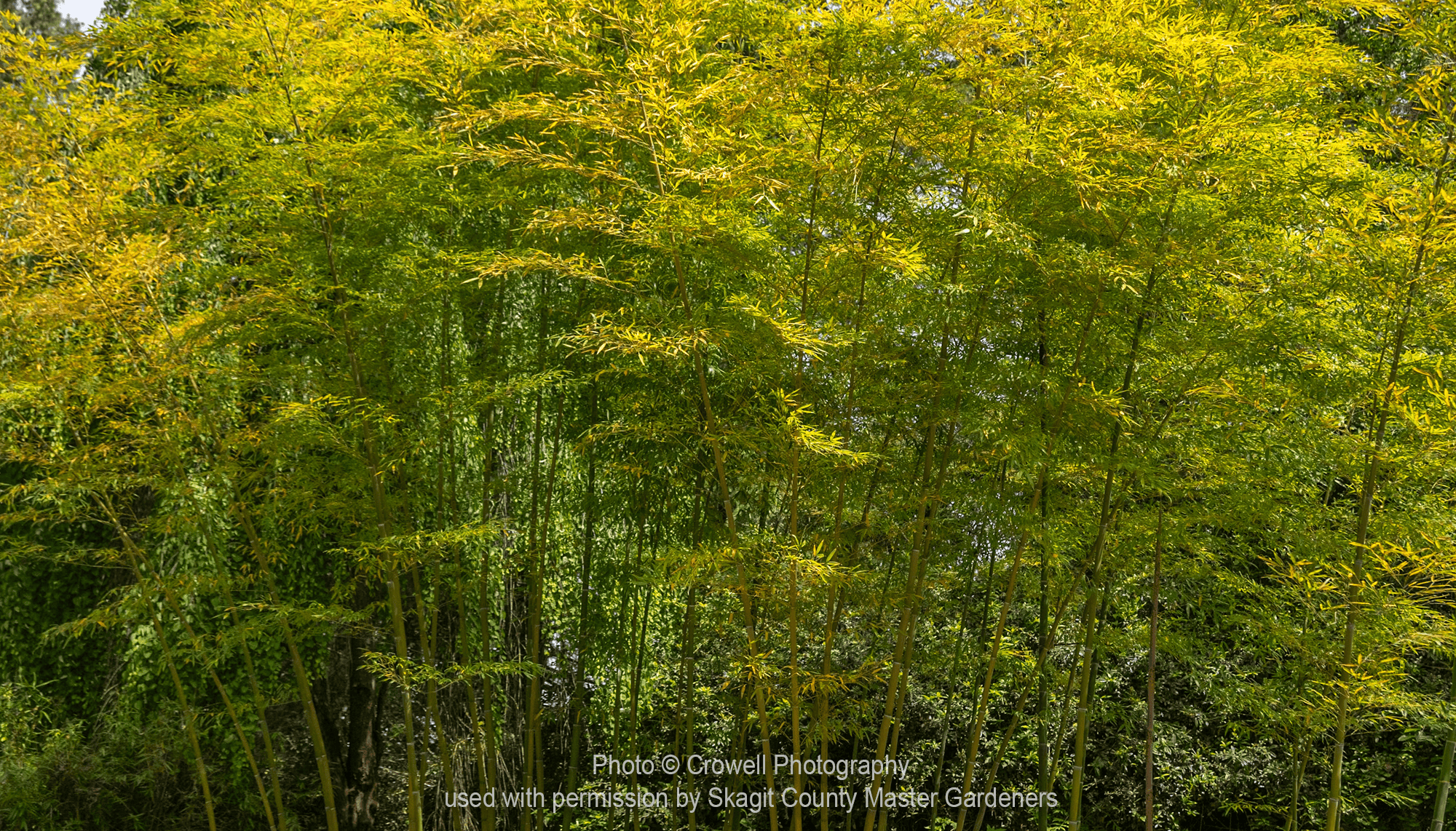
Bamboo in UBC Botanic Garden, Vancouver BC
© Crowell Photography

Is Bamboo for You?

If you love bamboo, be a good neighbor and understand how to select, grow, and maintain the plant.

              Subscribe to the Blog >

By Kay Torrance, Skagit County WSU Extension Master Gardener

Bamboo is alternatingly loved and hated by home gardeners. Typically, gardeners are firmly planted in one camp or the other. Full disclosure: I love bamboo. With its soft green glow and exotic sculpted leaves rustling in the breeze, the impact of bamboo in a garden can be transforming. It invokes tranquility and quiet contemplation. Bamboo is unlike any other plant in the garden.

Bamboo resists drought, deer, pests, and disease.  As a landscape plant, it is self-mulching and evergreen. It grows well in poor soil. With all this going for it, why do so many cringe at the thought of growing bamboo? Bamboo has a reputation for being invasive and difficult to maintain. Is that a tired stereotype? Bamboo is not maintenance-free, few plants in the garden are. It requires at least annual maintenance and more extensive care every 3-4 years. Much less than a fruit tree but more than a cactus.

Often, bamboo is planted as a fast-growing evergreen privacy border, with the expectation that no pruning or maintenance will ever be needed once it is grown. Is that reasonable for any plant? Before planting, was the selected bamboo evaluated to see if it had a clumping or running habit? Whether it was short or timber-sized? The key to being in zen with your bamboo is understanding how to select, grow, and maintain the plant.

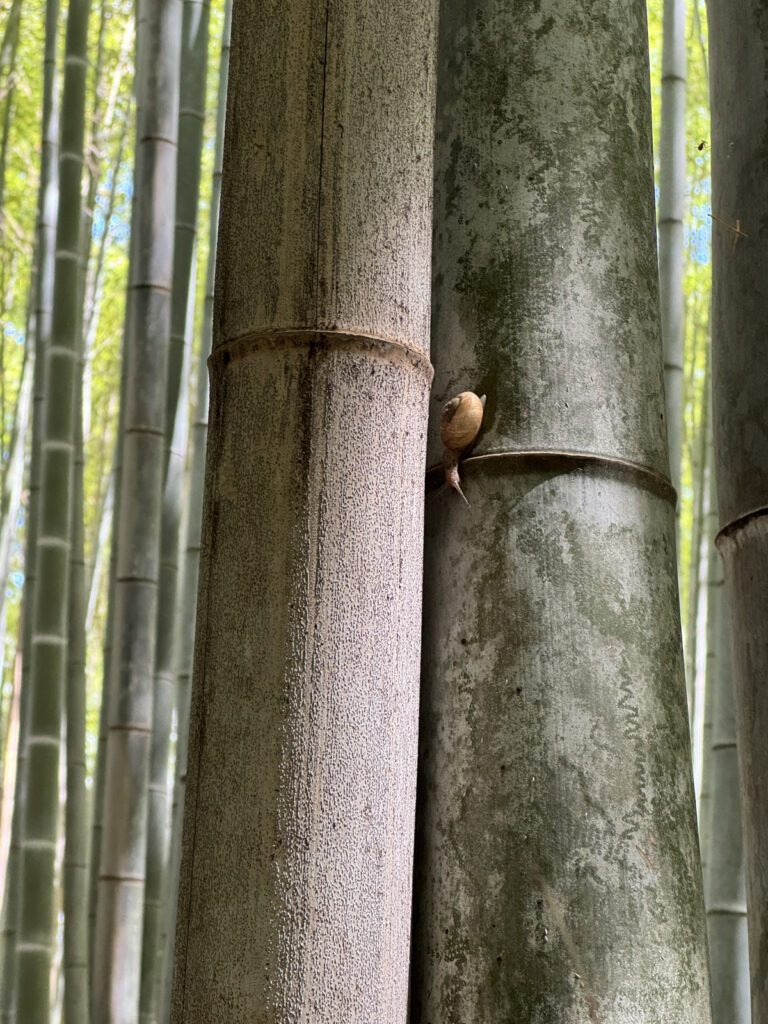
Phyllostachys Edulis 'Moso' is a common timber variety growing in Arashiyama
Bamboo Forest in Kyoto Japan. Photo © Bobbi Lemme

Phyllostachys Edulis ‘Moso’ is a common timber variety growing in Arashiyama Bamboo Forest in Kyoto, Japan. Photo © Bobbi Lemme

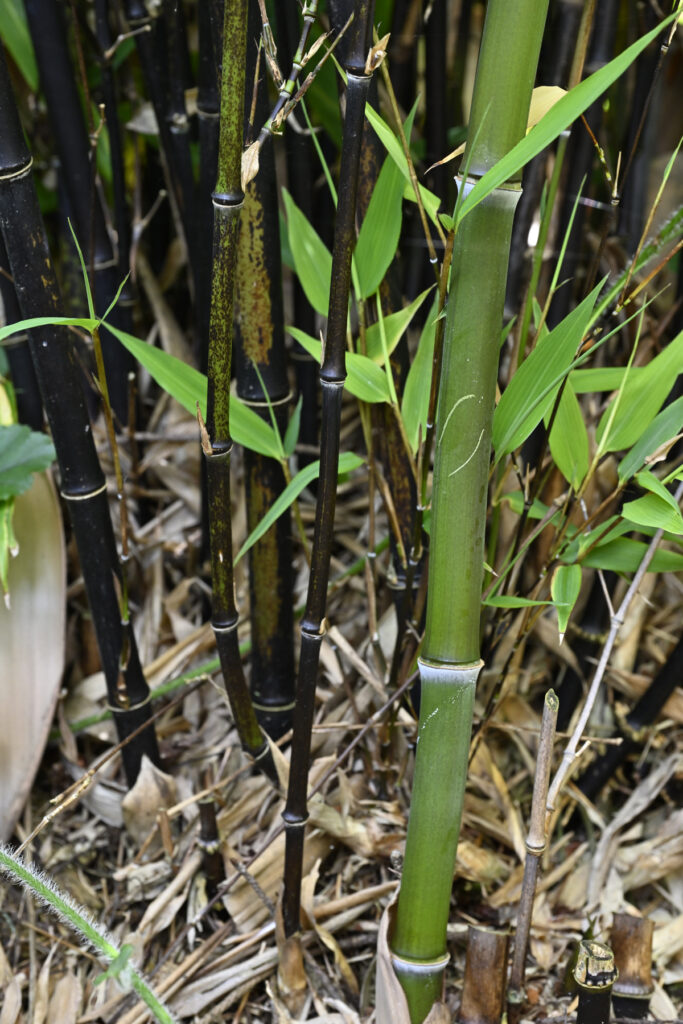
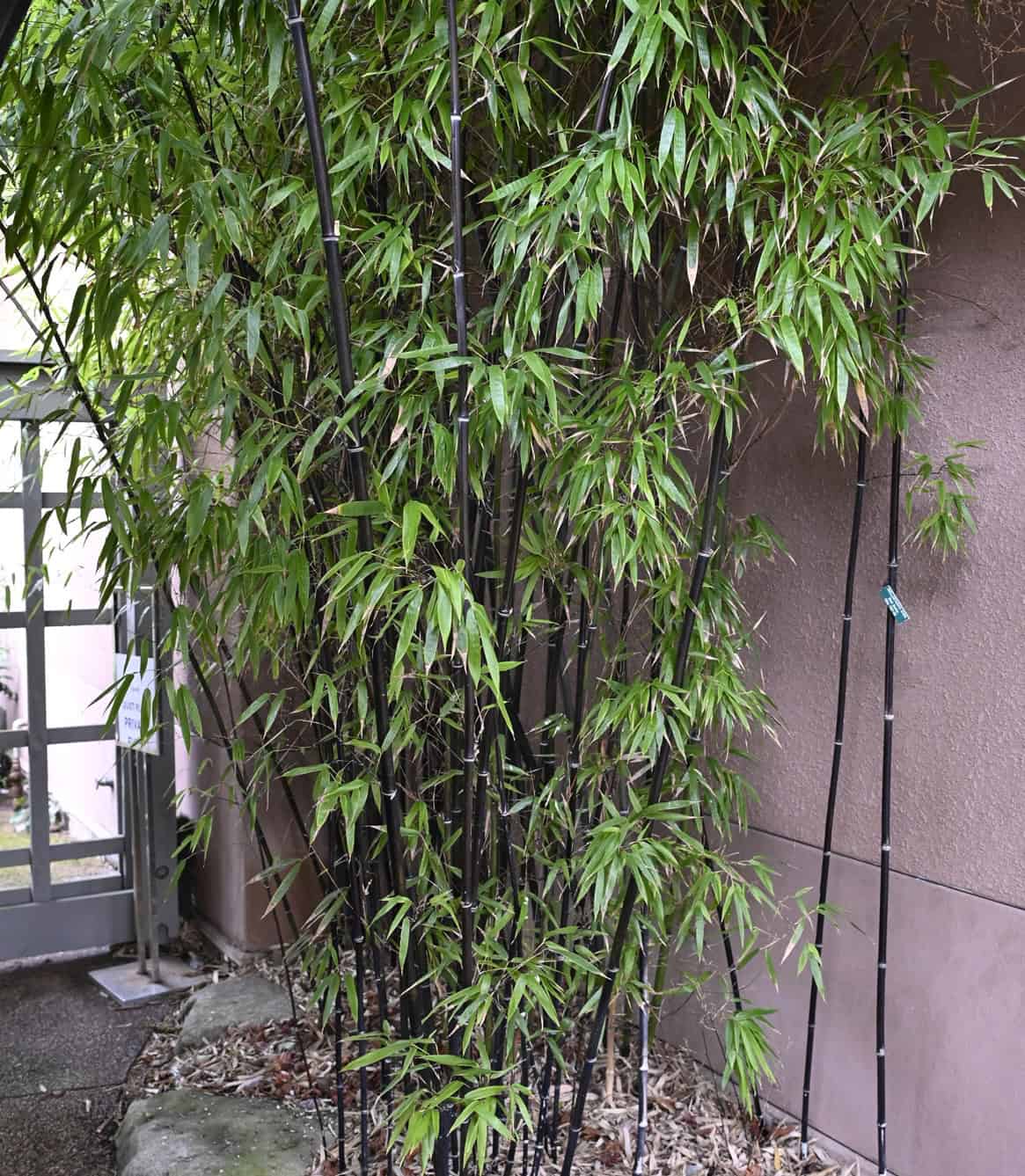
Phyllostachys nigra 'Black Bamboo' showing the smaller canes from the purchased nursery pot in the back and the new larger green culms produced two years later. Photo © Kay Torrance

Phyllostachys nigra ‘Black Bamboo’ showing the smaller canes from the purchased nursery pot in the back and the new larger green culms produced two years later. Photo © Kay Torrance

What is Bamboo?
Bamboo is the tallest member of the grass family. Believed to originate in China, over a thousand species are growing worldwide in various climates. Some timber varieties grow over 100 feet tall with culms over a foot in diameter. In lush tropical environments, varieties can grow three feet a day. You can also find bamboo thriving in the snow-covered foothills of the Himalayas. Most bamboos originate from Asia, but several species of the genus Arundinaria are native to the Southeastern US.

Botanically, the plant is an evergreen perennial. Like all grasses, it has a woody ringed hollow stem known as a culm (commonly called canes). The joints along the culms are called nodes, and branches grow out above the nodes. The plants have an underground stem called a rhizome, and roots are clustered along the rhizome. New plants erupt from rhizomes as buds. These are called shoots once they emerge from the ground. New culms are protected by papery sheaths, which fall off when they mature and harden.

Not only is bamboo beautiful, it is functional. Strong enough for buildings, furniture, and fences, it is still used today in Asia as scaffolding to build skyscrapers. It is a renewable resource for home décor, garden stakes, brooms, livestock food, and charcoal. Tender baby culms are a dietary delicacy.

How Bamboo Grows
Bamboo produces new culms from rhizomes in the spring. They grow rapidly for 30 to 60 days, obtaining their full height. Only then will they start producing limbs and leaves. After the spring surge, bamboo does not generally grow taller or produce new culms until the following year. Individual culms can last 5-15 years before dying if not damaged. Bamboo rarely flowers, and it is typically propagated by division.

Bamboo is generally grouped by rhizome growth habits such as clumping or running. Growth habit is the single most important consideration when choosing a variety for your landscape! Clumping bamboos have U-shaped rhizomes that produce culms that are a shorter distance from the parent. Running bamboos naturally spread by sending new rhizomes many feet away from the parent plant. One hears stories of bamboo taking over yards and damaging sidewalks and foundations. To avoid such problems, carefully choose a variety suited to your selected location. Consider pots or containers instead of direct planting.

Newly divided bamboo typically takes 3-5 years to reestablish its root system and produce full-size canes. More vigorous running varieties take less time, and clumping varieties take longer. In an established grove, the new culms are roughly the same size as the existing ones. Proper sunlight, water, and soil nutrition will establish new plants quickly. Adequate watering in the first year is essential while the roots are established.

The growth habit of above-ground branches also varies between bamboos and is important when selecting bamboo for the right look in your yard. Some bamboos suppress branches on the lower nodes, creating a very upright and open appearance. Some are naturally weeping and have a more informal look. Some have a single branch emerging above a node, while others have multiple branches at each node, producing dense foliage. These branches can be pruned, but selecting a variety with the desired growth characteristics is easier than pruning each year.

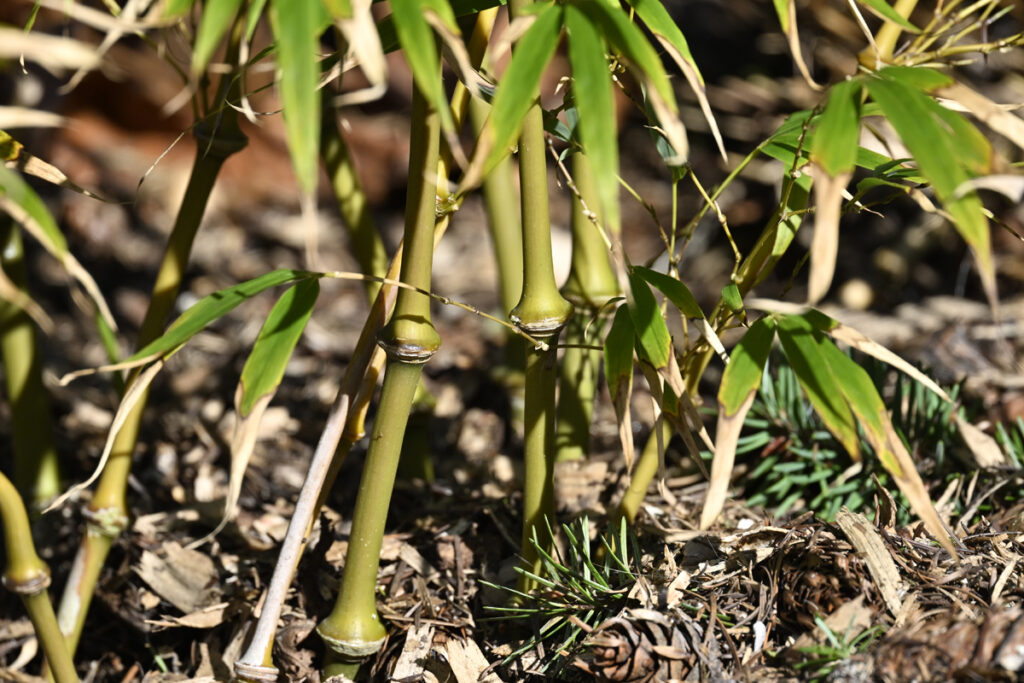
Qiongzhuea tumidissinoda 'Walking Stick' bamboo has enlarged nodes. It is a fun variety that grows up to 12' (less in a container). It is also an aggressive running bamboo, sending rhizomes a long distance from the source and likes to jump barriers. Photo © Kay Torrance

Qiongzhuea tumidissinoda ‘Walking Stick’ bamboo has enlarged nodes. It is a fun variety that grows up to 12′ (less in a container). It is also an aggressive running bamboo, sending rhizomes a long distance from the source and likes to jump barriers. Photo © Kay Torrance

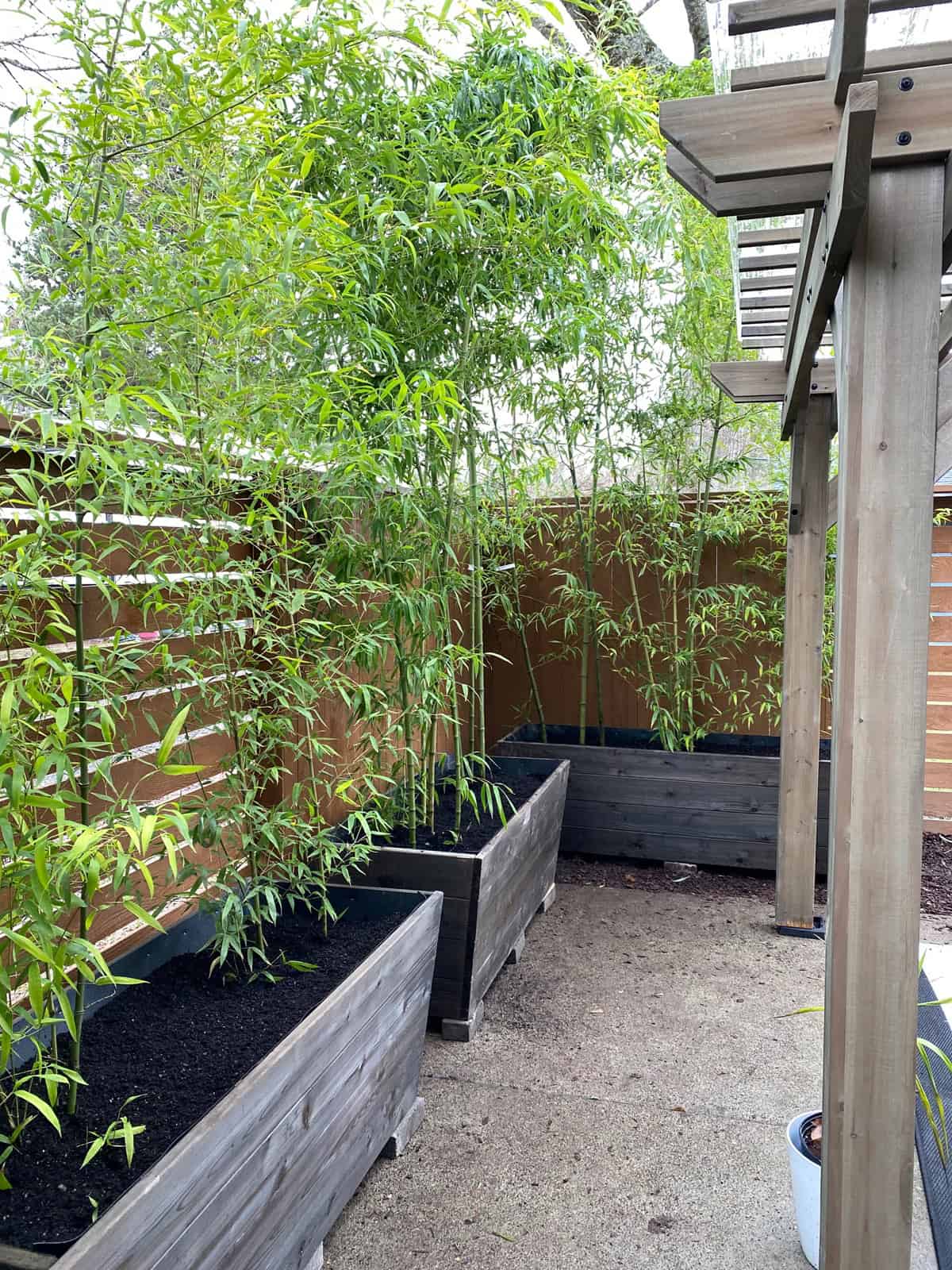
Bamboo garden and planter studio. Photo courtesy of Bamboo Garden Nursery

Bamboo garden and planter studio. Photo courtesy of Bamboo Garden Nursery

Varieties and Selection
The American Bamboo Society lists almost 500 kinds of bamboo grown in the US and Canada. Sizes vary from under a foot to over 100′ tall. Many bamboos have gold, blue, red, black, and variegated canes. The nodes can be straight or bulbous, like the walking stick bamboo in Bu Belly or Chinese. There are even varieties with zigzag canes. See the section below for a list of varieties suited for the PNW.

The Pacific Northwest is not an ideal growing location for bamboo. Bamboos grow slower in our cool summers with limited rain. Some bamboos that are invasive elsewhere are not a problem here. For example, Phyllostachys aurea, common ‘Golden’ or ‘Fishing pole’ bamboo, has a reputation for being invasive. However, here, bamboo grows slower than in climates where summer temperatures average 90+ degrees Fahrenheit. If you plant it in the shade, the growth will be slower. A neighbor planted Phyllostachys aurea next to a water garden over 50 years ago. Initially, it thrived, but as conifers grew up around the area, it struggled for light and recently died. Like other grasses, most bamboos can take full sun and will thrive in it. Some prefer part shade. None will grow in full shade.

Is bamboo right for you? Before adding bamboo or any plant to your garden, think about your goals and expectations:

  • What do you want to accomplish? Privacy? Texture? Most people select bamboo as a natural evergreen privacy screen or a focal point for their garden.
  • How much room do you have? Do you want a forest, a clump, or a pot on your deck? There are varieties appropriate for all of these uses.
  • How much maintenance do you have time for? Clumping varieties require less root pruning and are less likely to escape.
  • How tall should the plants grow? Although bamboo tolerates pruning well, the resulting boxy look might not be desired. Selecting a variety that matures to the desired height without topping is better.
  • Do you want small, delicate leaves that tinkle in the wind or large leaves that rustle? I have a patch of Pseudosasa japonica ‘Japanese Arrow’ bamboo. Its large leaves rustle delightfully in a breeze, growing only to 15′. It provides year-round privacy but is a running bamboo, so its growth needs to be limited with semi-annual root pruning.
  • Is there a color preference? In addition to solid green, culms can be yellow, orange, red, blue, silver, or even variegated. Leaf colors can be shades of green, yellow, blue, silvery, and variegated. Beware that many colorful bamboos are from the tropics, so choices for the PNW are limited.
  • Do you want pencil-width stalks, medium size, or a diameter measured in inches? If you want a cane that is an inch across, make sure you have room for a forest. If you choose a large-diameter bamboo, you can have bamboo canes for projects around your home. Small-diameter culms can provide endless plant stakes, craft supplies, and weaving material. Having uses for pruned canes makes maintenance enjoyable.
  • Are you looking for an open upright structure or a dense natural fence? Running bamboos have more space between the culms and a more upright appearance. Clumping bamboo culms grow more closely together. Some bamboos have more horizontal branches that make a good privacy screen.

Phyllostachys nigra ‘Black Bamboo’ grown against a foundation and contained by a sidewalk at the Elisabeth C. Miller Library in Seattle. In this shady contained location, it will not grow to its unconstrained height of 35′. Photo by Kay Torrance

If you are considering bamboo:

  • Avoid buying large (over ½ mature culm size) running bamboo unless you are committed to containing and maintaining it. See maintenance requirements below.
  • Avoid planting a hedge of any type of bamboo along a property line for privacy and not building a containment system along the property line to keep it on your side.
  • Avoid planting bamboo in areas where there is irrigation or where you fertilize routinely. It will grow fast and require more maintenance. Bamboo planted next to turf lawns will soak in all that water and fertilizer and grow quickly.

Planting and Management
Even though bamboo is likely filling the role of a shrub or tree in your yard, manage it like the grass it is. If you want to contain a plot of grass, you either put a barrier in the ground to redirect the root growth, or you can edge (cut) the roots. The same method is required to contain a stand of bamboo. Bamboo rarely seeds and is surprisingly difficult to propagate from seed. 
Container Planting
The most obvious barrier to preventing bamboo spread is planting it in a pot or container. Like any potted plant, it will need to be thinned every few years or become a root-bound mess. Choose straight-sided pots and use a perennial root-cutting blade to reduce the size. You can build wooden planters with a removable side, making thinning easier. Don’t wait too long. The job just gets more challenging.
Root Barriers
You may have a natural root barrier, such as a rocky terrain or a pond. Despite its tropical appearance, bamboo does not like wet feet. It makes a great companion planting around ponds and will grow best on a small mound, elevating its roots from moisture. You can use a densely forested area as a natural barrier, as bamboo needs some sun. You do not want to plant larger or timber bamboo close to your home, driveway, or sidewalks. Clumping bamboo can also put a lot of pressure on a barrier or pot. Allow room on all sides of the barrier to do maintenance. Don’t install a barrier right on a property line. Set it back about two feet so you can manage the back side.

Most yards do not have suitable natural barriers, so fabricated barriers are needed. Typical bamboo root depth is around 8-12″, with some timber bamboo roots reaching around 18″. A healthy bamboo with vigorous roots will try to dig under or over the top of your barrier, so a barrier height of 24″ is common. Barriers up to 30″ may be required for timber bamboo. If you mound your bamboo, a shallower barrier can work.

You can use metal, wood, or fabric as barriers. Metal will rust and disintegrate over time, and wood will rot. The most long-lasting barriers are either rigid 40 mil HDPE (high-density polyethylene) or flexible EPDM (ethylene propylene diene monomer). Alternatively, you can buy a thick EPDM pond liner and cut it to size. Standard landscaping fabric is insufficient for control. You can buy molded pond liners in various shapes and fill them with dirt instead of water. You will need to cut holes in the bottom so they drain, but don’t cut them too close to the sides.

Barriers will do a good job of containing the bamboo, but you still need to inspect the area during the spring and summer and check for the occasional rhizome trying to go over or under the barrier. The bamboo stand will overgrow its area over 3-7 years and must be thinned. It is best to do this before the roots become a solid mass and are hard to cut. Plan on removing a third of the bamboo every 3 years. Battery-operated or electrical reciprocating saws with long wood or pruning blades make the job easier.

Perimeter Trench
Another method of containment is a loosely filled perimeter trench. Dig an 18″ deep trench about 12-18″ wide around the bamboo location. Fill it with sand, pea gravel, or loose soil. Don’t use soils with silt or clay, as they will compact and harden over time. Bamboo rhizomes will continue to grow and expand freely when they enter the trench. In the fall or early spring, use a spade (the ones with serrated blades work best), root saw, or reciprocating saw with a long blade and work around the perimeter, cutting off and removing any new growth that has entered the trench. Make sure to pull out all of the rhizomes. You do not need to worry about the fibrous roots.
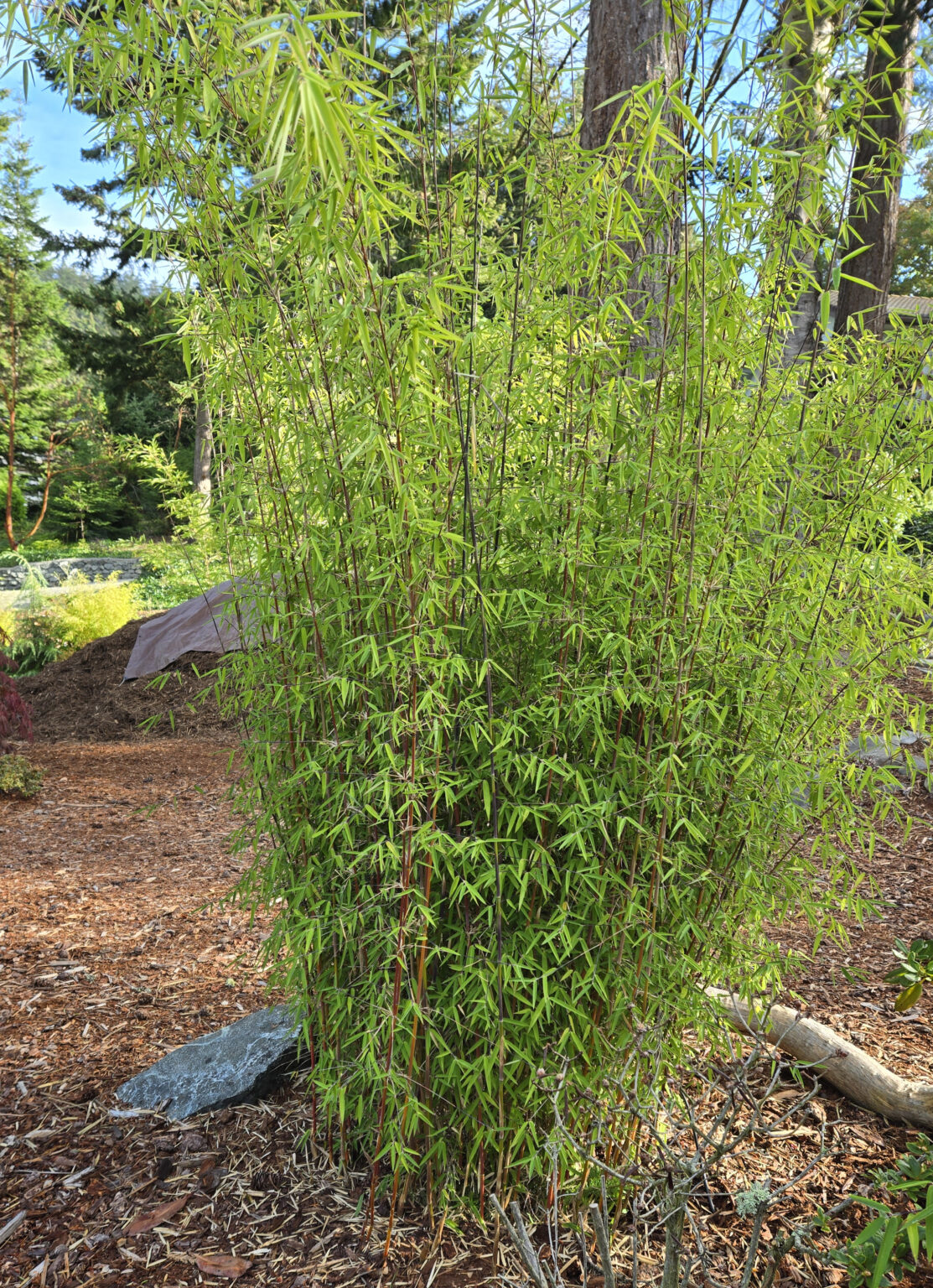
Fargesia nitida 'Jiuzhaigou'is a clumping bamboo. This cultivar is 'Red Fountain' with red canes. Many cultivar of this variety can be found with different colored canes. Photo by Kay Torrance

Fargesia nitida ‘Jiuzhaigou’is a clumping bamboo. This cultivar is ‘Red Fountain’ with red canes. Many cultivar of this variety can be found with different colored canes. © Photo by Kay Torrance

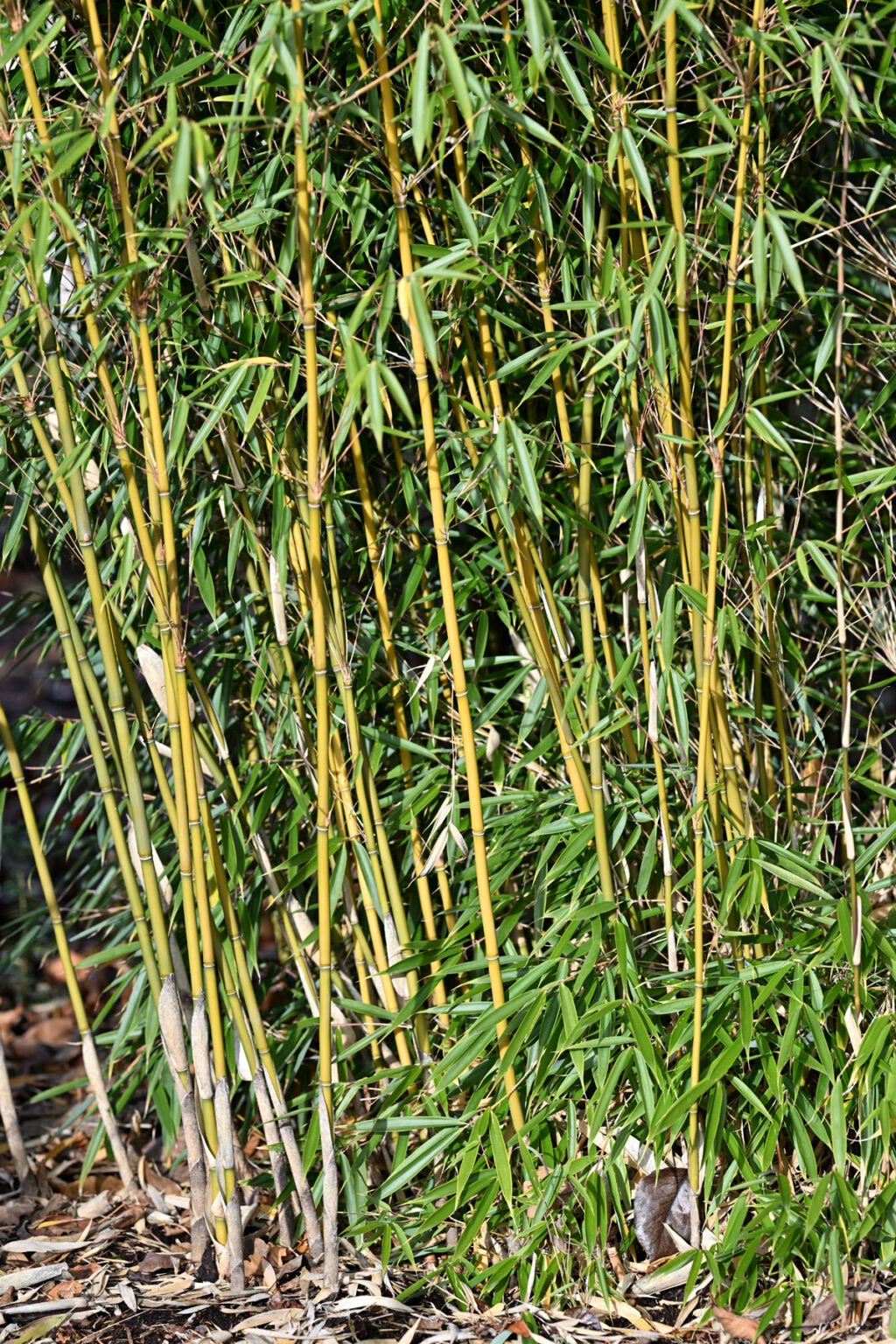
Fargesia robusta 'Campbell' is a clumping bamboo with ¾

Fargesia robusta ‘Campbell’ is a clumping bamboo with ¾” canes. © Photo by Kay Torrance.

Removing Shoots and Mowing
Another method of control is simply removing unwanted shoots at the ground level or just below. It is easiest to do in the spring when they are tender. They will not grow back. For smaller-diameter bamboo, you can use your lawn mower to run over unwanted culms anytime.
Pruning the Foliage
Bamboo foliage doesn’t need a lot of maintenance. Varieties with many horizontal branches can be legged up to showcase the culms better. If you need to control the height, bamboo is very tolerant of topping. However, it saves work to choose the right-sized bamboo for your location. 

You should thin the canes every year or two. If the canes are not thinned, the grove can become very dense and vase-shaped as culms compete for sunlight. Cut the canes anytime during the year at or below ground level, removing no more than a third of the canes each year. New canes are not as strong, so thin the oldest canes. Old canes have many uses, so think of this as harvest time.

Rejuvenation or Removal
Rejuvenation often requires removing a large portion of the bamboo grove. The easiest way to kill all or part of the plant is to remove the unwanted canes at ground level or just below it and not let them grow back. Remove bamboo with small-diameter canes with a lawn mower; larger canes will require a lopper or a saw. 

Bamboo needs nourishment from the canes and will die without it. It is best to use this method right after the new culms have reached full height in early summer. The plant has just expended a great deal of energy sending up the culms and will be severely weakened by pruning. It will try to regrow, so make sure to follow up. It can take one to three years before the plant is completely dead. Make sure to shut off irrigation and sprinklers in the area. This method leaves the roots in the ground but they will rot in a year or two.

If you need immediate removal of the plant and rhizomes, the only solution is digging. It is best done when the soil is moist. Cut the canes at one foot (or so) above the ground and use them to help pull out the rhizomes. Get all the rhizomes, but don’t worry about the fibrous roots. As for other methods, there are many: applying chlorine, salt, vinegar, and even gasoline. These contaminate the soil. They may kill the bamboo, but they will destroy the soil ecology and everything nearby. 

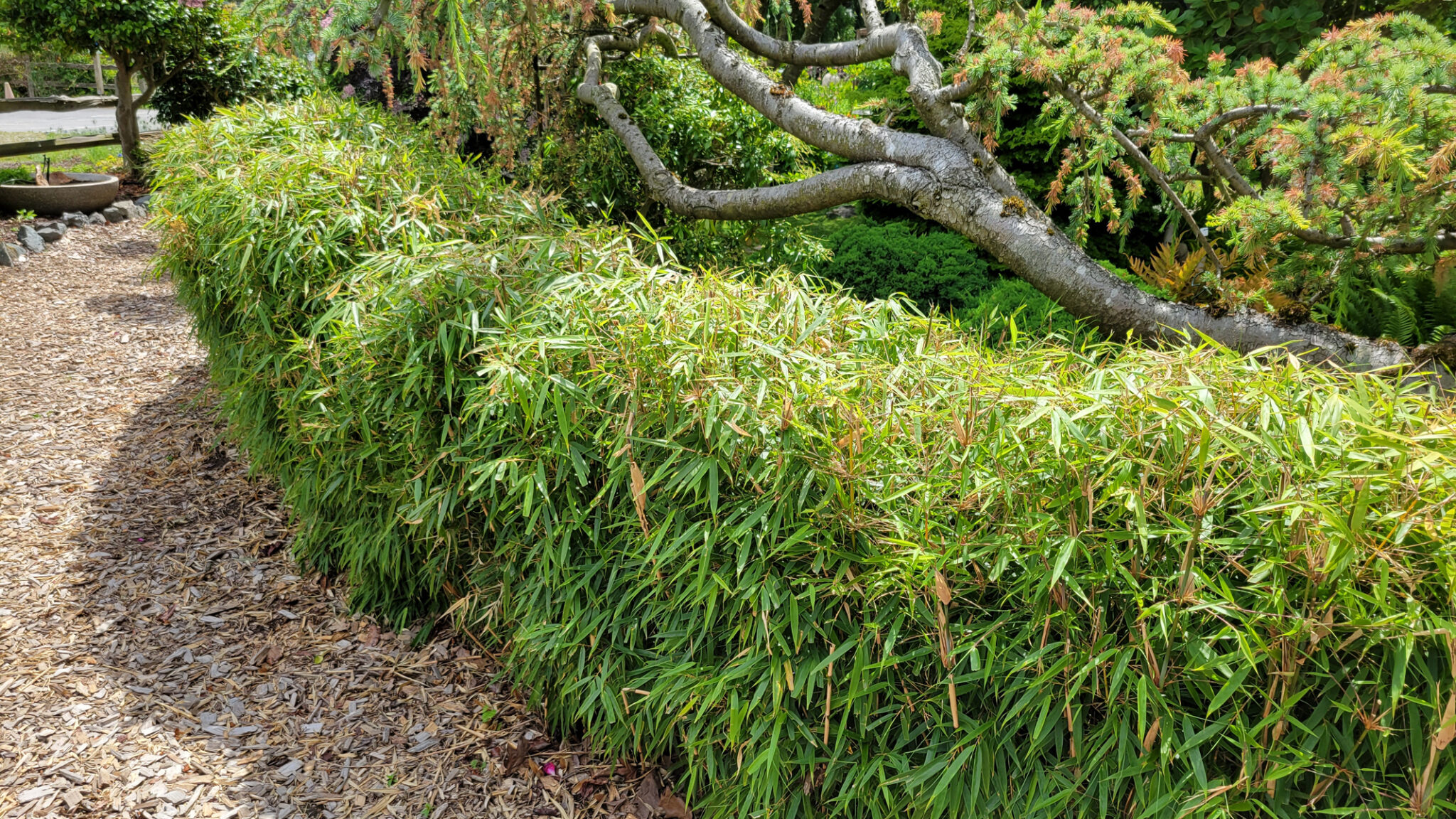
Fargesia dracocephala 'Rufa' 'Dragon's Head' at the WSU Discovery
Garden. This clumping bamboo has a loose weeping habitat so the hedge has
been pruned to keep it off the path. Bamboos tolerate pruning well as long as
adequate leaves are left for plant health. Photo by Kay Torrance

Fargesia dracocephala ‘Rufa’ ‘Dragon’s Head’ at the WSU Discovery Garden. This clumping bamboo has a loose weeping habitat so the hedge has been pruned to keep it off the path. Bamboos tolerate pruning well as long as adequate leaves are left for plant health. © Photo by Kay Torrance

Purchasing Bamboo
If you are still reading and anxious to start, don’t rush out and buy the first plant you find. Many nurseries carry only one or two varieties of bamboo. Often, they choose varieties that grow fast and are easily divided, which may not be what you want. 

When choosing plants:

  • Avoid plants that are pot-bound with circling roots. These plants will usually have the culms growing right next to the outer edge of the pots, and sometimes, the pots will bulge where the rhizomes are overcrowded.
  • Like most plants, a larger pot with more mature culms will establish quicker than a recently divided plant with one or two culms.
  • Pay attention to the label. Expect that it will take 3-5 years for plants to reach its established height. The old adage about the first year a plant sleeps, the second it creeps, and the third it leaps is very true of bamboo. It is normal for nursery wholesalers to prune the stalks when dividing or transporting stock, so don’t go by what you see for height.
  • Check the label for growing zones. Cold tolerance is important. Some lovely bamboos are marginal for our area. A hard, prolonged freeze might kill them, or they may die down to the ground. If the rhizomes survive, they can take years to recover.

If you can’t find what you want locally, consider mail order. Many bamboo specialty nurseries and Japanese botanical gardens have groves of mature plants for reference. Do research online. There are lots of pictures of bamboo staged with a person for scale. Plan to plant your bamboo in the spring or early summer to establish roots before any freezes. For the first summer, bamboo needs regular water and heavy mulch.

Variety Suggestions

  • Fargesia nitida ‘Jiuzhaigou’ is a short and slender clumping variety of bamboo that grows 8-10′ tall. Many colorful cultivars are available, such as ‘Red Fountain’ and ‘Black Cherry’. The canes are pencil-thin with tiny leaves. It has a dramatic vertical growth habit and is very manageable both individually and as a hedge.
  • Fargesia rufa ‘Sunset Glow’ is a small clumping bamboo that grows 5-10′ tall with 1/3″ red-orange canes, medium-sized leaves, and a weeping growth habit. Suitable as a shrub in a grouping or a short, dense hedge to provide color.
  • Fargesia dracocephala ‘Dragon’s Head’ is a clumping bamboo that grows 8-12′ with 1/2″ canes. It also has a weeping fountain-shaped appearance with medium-sized leaves that sway in the wind. Good for a dense hedge, but allow room for it to lean.
  • Fargesia robusta ‘Campbell’ is a clumping bamboo that grows to 12-15′ with ¾” canes. The canes start green but age to a pale yellow. Very upright and tight culm spacing with large leaves. Makes a very dense hedge or large 15-20′ grove. It tends to become vase-shaped if culms are not thinned to allow light to reach the center. Canes are straight and strong.
  • Qiongzhuea tumidissinoda, known as ‘Walking Stick’ bamboo, has ½” canes with enlarged nodes. It is only recommended for containers as it is an aggressive and agile runner. It grows 10-15′ but less in containers.
  • Pleioblastus viridistriatus is commonly called ‘Greenstripe’ bamboo. It is widely available and grows 2-3′ with tiny canes. It has chartreuse and cream-colored variegation in the leaves. It is unusual because it is deciduous, losing its leaves in the winter. It is a great container plant or tall ground cover. Due to its small size, many people control it with their lawnmower instead of barriers or pruning.

Finally, if you are looking for the impact of a bamboo forest, look for a medium-height running bamboo to plant inside a barrier or container. The iconic Phyllostachys nigra ‘black timber’ bamboo is a good choice. However, the variety is currently undergoing a mass flowering event. Bamboos only flower every 30-120 years, depending on the species. After flowering, the entire plant dies. Since most bamboo is propagated by division, the plants of a particular variety are all identical. They will die en mass worldwide until they return from the notoriously tricky seeds to germinate. That is what is happening now with the beloved black bamboo. For now, if you are looking for the aesthetics of a timber bamboo, try one of the Phyllostachys. The variegated Phyllostachys aureosulcata ‘Yellow Groove’ is a good choice that sports an occasional zigzag cane or perhaps the classic Semiarundinaria fastuosa ‘Red Temple’, for more color.


Is there a blog topic you’d like to learn more about?
Share your ideas with the blog editors in the comment section below.


RESOURCES:

Heinricher, J. and Flemmons, K. (2006) Discovering Bamboo. Boo-Shoot Gardens LLC

Meredith, Ted Jordan (2006) Timber Press Pocket Guide to Bamboos, Timber Press, Portland, OR

Farrelly, D. (1984) The Book of Bamboo: A Comprehensive Guide to This Remarkable Plant, Its Uses, and Its History.Sierra Club Books, San Francisco, CA

Stangler, C. (2001) The Craft & Art of Bamboo. Lark Books; New York, NY

American Bamboo Society. https://www.bamboo.org

WSU Vegetable Research and Extension. https://vegetables.wsu.edu/crops/bamboo/


Kay Torrance

AUTHOR:
Kay Torrance has been a Skagit County WSU Extension Master Gardener since 2019. She is garden coordinator of the Naturescape garden and pond in the Discovery Garden on SR 536 west of Mount Vernon. https://skagitmg.org/home/discovery-garden/


AMGPost_header5
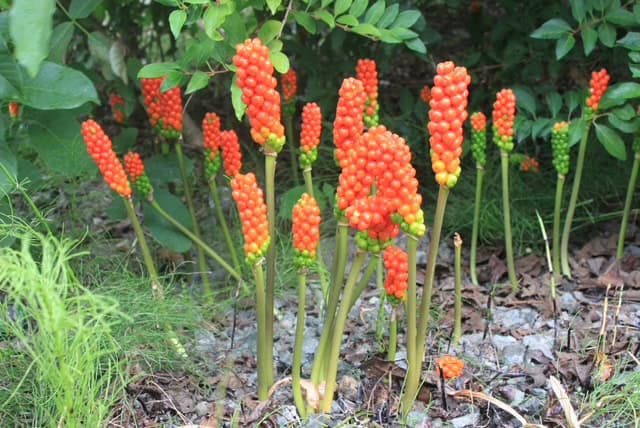
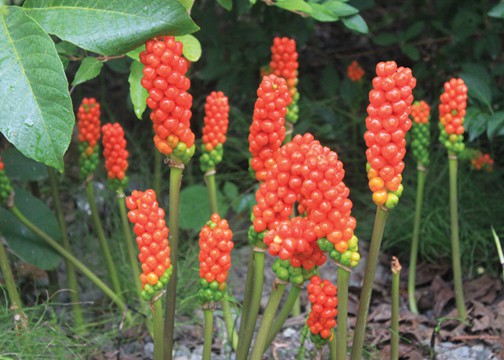
Italian Arum seed pods

Italian Arum: Beautiful, Poisonous and Invasive

Don’t Be Deceived by This Beautiful Ground Cover

              Subscribe to the Blog >

By Valerie Rose, Skagit County WSU Extension Master Gardener

What a deceptive plant! First of all, Italian Arum (Arum italicum) is not strictly Italian. Native to Asia, Europe, and North Africa, some botanical resources say it’s also found in southern Europe. Other common names include Cuckoo’s Pint, Italian Lily, and Orange Candle Flower. While many of these names point to Italy as the source of this problematic plant, its roots appear much more widespread.

Italian Arum in bloom

Flowers (April-June) are a yellowish unpleasant-smelling, fingerlike spadix with a pale hood, or spathe. © Washington State Noxious Weed Control Board

Italian Arum is also deceptively attractive. The bright orange berries brought color to an otherwise nondescript area of the yard, so I let it grow. Now I wish it had never found my address. It now appears in most of my garden beds, even in the lawn, where it has made friends with the equally intrusive buttercups. They’re conspiring to take over the whole yard, and I struggle to keep them at bay. We gardeners are seriously outnumbered.

My yard is not alone. In addition to being a pest in Skagit County, the plants are found between 10 and 100 acres in Whatcom, King, Skamania, and Clark Counties. More acres have been infested since that figure was published in 2018 by the Washington State Department of Agriculture (WSDA.) Italian Arum is also invading forest understories and wetlands, forming dense infestations, and crowding out native plants.

Because it is so invasive and poisonous to humans and animals, the WSDA classifies it as a Class C Noxious Weed. The WSDA describes Class C Noxious weeds as those “… already widespread in Washington. In some cases, counties may require property owners to control Class C weeds, but more often counties simply try to educate residents about why controlling them is a good idea.”

What about Class A and B weeds? The WSDA describes these categories:

“Class A Noxious Weeds are non-native species whose distribution in Washington state is still limited. Eradicating existing infestations and preventing new infestations are the highest priority. Eradication of all Class A plants is required by law.”

Italian Arum growing by a tree
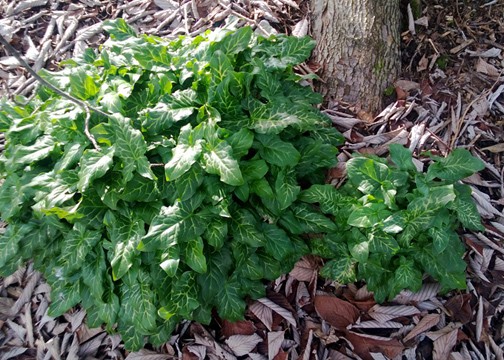
Arrowhead-shaped leaves can be all green or have cream-colored or silver-gray veins, purple splotches, or speckles. © Washington State Noxious Weed Control Board
Italian Arum tubers
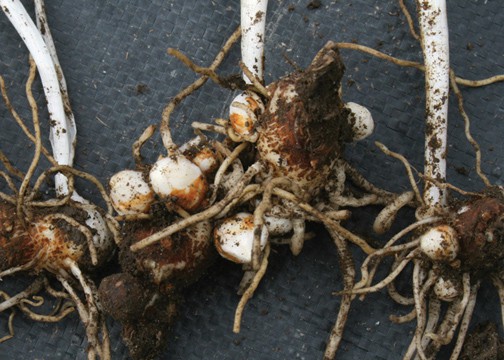
Thick underground tubers store much of the plant’s energy and water underground, which is why the tops regrow so easily when cut or mowed. © Washington State Noxious Weed Control Board

Class B noxious weeds are nonnative species whose distribution is limited to portions of Washington state but may be widespread in other parts. Class B noxious weeds are designated for mandatory control in regions where they are not yet widespread.”

Like many invasive plants, Italian Arum likely escaped from someone’s garden. Originally planted as an ornamental ground cover, it certainly does cover ground. The first documented site in Washington state was on San Juan Island in 2002. This (ob)noxious weed is currently invading the west coast of the US and lower mainland British Columbia and across the mid-Atlantic states.

Not only is this plant invasive, but it also contains calcium oxalates, poisonous to humans and animals. According to the North Carolina Extension Gardener Toolbox, the calcium oxalates, if ingested “…will cause throat and tongue swelling that will result in difficulty breathing or possible death.” Simple skin contact can cause mild to severe irritation. Always protect your skin when attempting to remove Italian Arum.

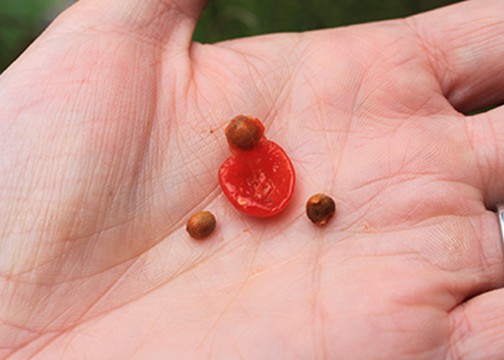
Unfortunately, the plant tolerates most soil types, is drought tolerant once established, and thrives in partial shade to full sun. Like many undesired plants, it has more than one reproductive strategy. It grows from both tubers and berries, reaching 12 – 18 inches tall. The arrow-shaped leaves appear in early autumn, with hood-like flowers blooming in April and May: their acrid odor attracts flies as pollinators. When the foliage withers, stalks emerge, eventually covered in clusters of berries. The plump berries are initially green, changing to a vivid orange-red. This dramatic show continues through August, giving birds plenty of time to snack on the berries, and then deposit the seeds around your yard and beyond – conveniently coated with fertilizer.

Once established, Italian Arum is maddeningly difficult to get rid of. According to the North Carolina Extension Gardener Plant Toolbox, “There are no effective ways to control the plant, and it is unresponsive to herbicides. Manual removal is difficult. If removed, all parts of the plant should be placed in the trash and not your compost bin.”

Italian arum seed pods
Spreading by both roots and seeds, Italian arum rapidly forms colonies. © Washington State Noxious Weed Control Board
Italian Arum seed pods
Spread by both tubers and seeds, Italian arum multiplies quickly, creating new plants. © Washington State Noxious Weed Control Board
Italian arum noxious weed infestation
2-acre infestation on Lopez Island actually worsened after it was repeatedly mowed, dug, torched (in winter), and then covered with a heavy tarp. © Washington State Noxious Weed Control Board

An Oregon State University Extension’s Ask An Expert webpage offers this: “Some suggest success by pouring boiling water on the plant’s roots. If using vinegar, a 20% vinegar solution is best. This type of vinegar, sometimes called horticultural vinegar, can be found at garden centers, farm stores, or online. Wear gloves and protective clothing to protect your skin from possible irritation. Follow-up work will be required to control any plants that develop from missed plant parts.” I will explore this strategy, as my annual ritual of carefully digging the roots and bulbs has not eliminated this invasion.

Don’t let the pretty leaves or colorful berries fool you into letting Italian Arum take root in your yard. And tell your friends and neighbors not to allow Italian Arum to charm its way into their gardens.


RESOURCES:

Valerie Rose

ABOUT THE AUTHOR:

Valerie Rose became a Master Gardener in 2009. A former journalist, she enjoys playing with words, and plants other than Italian Arum.


Questions about home gardening or becoming a Master Gardener may be directed to: Skagit County WSU Extension Office, 11768 Westar Lane, Suite A, Burlington, WA 98233; by phone: 360-428-4270; or via the website: www.skagit.wsu.edu/mg